

Table of Contents
- What Makes Baby Essentials Truly Durable
- Essential Newborn Clothing and Sleep Gear
- Diapering and Hygiene Necessities That Last
- Safety Gear Every Home Needs
- Developmental Toys and Sensory Play Essentials
- How to Save Money on Baby Gear Without Sacrificing Quality
- Frequently Asked Questions
Last Updated: September 24, 2026
What Makes Baby Essentials Truly Durable
Durability in baby gear means something specific: products that withstand repeated use, washing, and the inevitable chaos of family life without falling apart or losing function. It's not about premium pricing. A durable item survives the first year and beyond, often serving multiple children or reselling well when you're done.
The real difference between gear that lasts and gear that doesn't comes down to material quality, design simplicity, and honest engineering. Overly complex products fail faster. Simple, well-made items tend to outlast everything else in your nursery.
At The Nook and Nurture Company provides a curated selection of baby, parent, and home essentials designed to make a meaningful difference in your family life. Every item is thoughtfully chosen to support the little moments that matter most. We are dedicated to helping you nurture every corner of your home with products that combine quality, functionality, and care.
Essential Newborn Clothing and Sleep Gear
Newborn clothing that lasts through multiple children needs breathable fabrics, simple construction, and minimal decorative elements that catch and tear. Cotton and cotton-blend materials outperform synthetics for both durability and comfort against delicate skin.

Sleep gear, sheets, blankets, and sleep sacks, should be designed for frequent washing without pilling, shrinking, or losing elasticity. The best newborn sleep essentials are the ones you can throw in the machine weekly without worry. Look for reinforced seams and quality thread that won't unravel after dozens of washes.
Layering is key. A few quality basics in neutral colours work across seasons and pair with different layers. One well-made sleep sack serves from newborn through 12 months if you size up appropriately. This approach cuts down on the volume of clothing you actually need while ensuring everything coordinates.
Many new parents buy far more clothing than necessary. A minimalist approach, seven to ten bodysuits, five to seven sleepsuits, and quality layers, covers all scenarios while keeping laundry manageable. Durable baby essentials in this category are the ones that maintain their shape and colour through dozens of washes.
Diapering and Hygiene Necessities That Last
Nappy changing happens dozens of times daily in the first months. The gear supporting this process needs to be strong and easy to maintain. A quality changing mat, like the portable changing mats recommended by parenting experts, should have a waterproof surface that wipes clean instantly without absorbing moisture or odours.
Storage solutions matter as much as the changing surface itself. The Nappy Caddy Organiser (£19.99) keeps everything within reach: nappies, wipes, creams, and fresh clothes all in one portable container. Removable dividers mean you customise the layout as your baby's needs change. This single item eliminates the 3am scramble through drawers while your baby cries.

For cot-side storage, the Portable Baby Crib Storage Bag (£14.99) hangs directly on the rail with no installation required. Made from soft cotton, it holds a full pack of nappies plus wipes and creams. The open top design means one-handed access, essential when you're already holding a wriggly infant.
A foldable changing mat (£15.99) serves double duty: use it on the changing table at home and fold it into your changing bag for nappy changes anywhere. Waterproof backing and soft fabric mean it wipes clean and lasts through years of use.
Safety Gear Every Home Needs
Safety equipment is non-negotiable, but durability matters here too. Products that fail or require constant adjustment create frustration and false security. The challenge for budget-conscious parents is ensuring that affordable safety gear actually meets recognised standards rather than cutting corners on safety to reduce cost.
Understanding safety certifications for baby products: The most reliable way to verify that budget safety gear meets standards is to look for specific certifications on packaging or product listings. In the UK, look for the CE mark, which indicates the product meets European safety standards. For items like door latches and corner protectors, check for BS EN 71 certification (toy safety) or BS 8509 (safety barriers). Reputable manufacturers list these certifications prominently; if you can't find them, the product may not meet minimum safety requirements regardless of price.
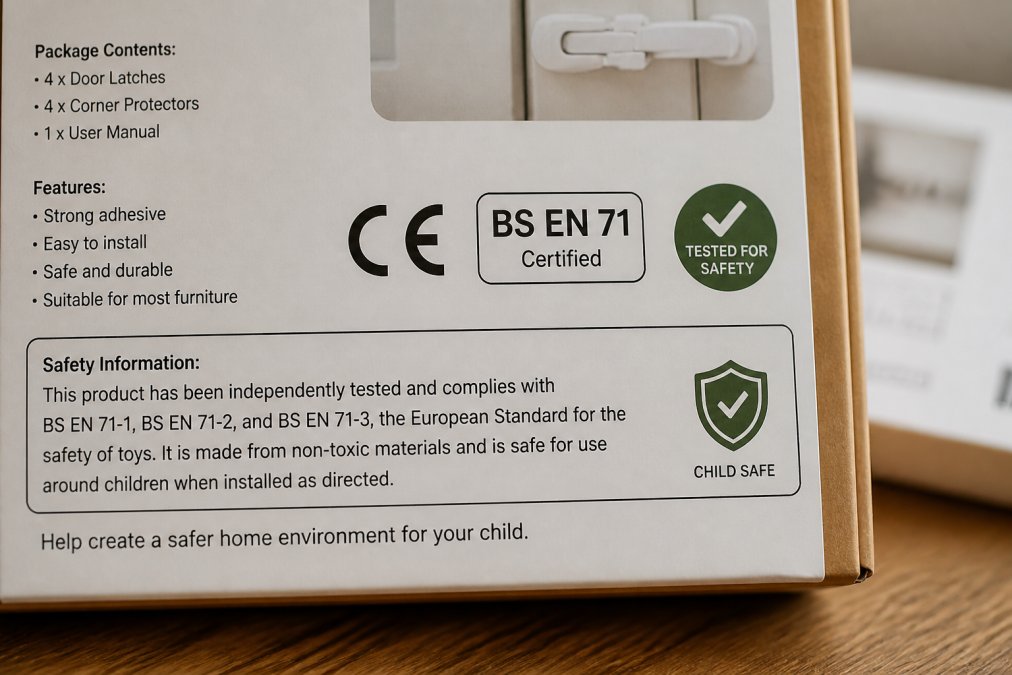
Verifying durability in safety equipment: Safety gear must remain effective over months or years of use. Door latches should use strong adhesive that doesn't weaken over time. Corner protectors should be made from food-grade silicone that doesn't harden, crack, or lose grip over time.
The 10x Door Safety Latches (£12.99) use strong adhesive backing with no drilling required. Once installed, they hold firm against determined little hands without loosening over months of use. Each pack includes ten latches, enough for all the doors in a typical home. They remain easy for adults to open one-handed while keeping toddlers safely contained.
Corner protectors prevent head injuries during the crawling and cruising stages. The 10x Silicone Table Corner Protectors (£7.99) are made from food-grade silicone that absorbs impact without hardening or cracking. They grip securely around corners of all sizes and stay in place through years of use. The neutral colours blend into your home rather than making it look like a padded cell.

Checking for common safety failures in budget products: Before purchasing, research common failure modes. Door latches fail when adhesive weakens or when the latch mechanism itself becomes loose. Read reviews mentioning 'stopped working after three months' or 'adhesive gave way', these indicate poor durability. Corner protectors fail when they slip off corners or become permanently deformed. If reviews mention 'fell off' or 'doesn't grip anymore,' the material quality is insufficient.
Comparing safety certifications across price points: A £12.99 door latch with strong adhesive is safer and more durable than a cheaper latch with unclear materials. When evaluating budget options, prioritise quality over price. A product that costs slightly more but carries verifiable safety standards provides better value than a cheaper product with no certification.
Installation and maintenance for long-term safety: Even well-made safety equipment fails if installed incorrectly or not maintained.
Both products represent a strong approach to safety durability: simple design, strong materials, and installation that lasts. Adhesive-backed latches and protectors with strong materials remain effective when properly installed and maintained.
Developmental Toys and Sensory Play Essentials
Toys that support early development need to survive constant use, chewing, dropping, and washing. The best durable baby essentials in this category are the classics, items that have worked for generations because they're simple and well-engineered.
The Newborn Sensory Box (£48.99) brings together high-contrast cards, tactile textures, and gentle sound elements designed for the critical first three months. The items pack neatly back into the box for portability and storage.
Stacking rings (£9.99) represent the gold standard of durable baby toys. Five colourful rings on a wobbly base teach sorting, sizing, and fine motor skills through simple, repetitive play. The design hasn't changed in decades because it works. One set lasts from six months through toddlerhood and often serves multiple children.
Rattles and teethers (£9.99) come in a gift set combining different shapes, textures, and sounds. Each piece is designed for tiny hands and safe for constant chewing. The variety keeps play interesting as your baby's interests develop.
Sensory balls (£9.99) offer six different textures in one pack, bumpy, smooth, ridged, spiky, grooved, and dimpled. Made from soft, durable PP material, they withstand squishing, dropping, rolling, and kicking. The six balls mean there's always one within reach, and they're light enough for little hands to grab and throw.
These toys share a common trait: they're simple enough to last, engaging enough to hold attention, and durable enough to pass to younger siblings or resell when you're finished.
How to Save Money on Baby Gear Without Sacrificing Quality
True affordability is measured by cost-per-use over the product's lifespan, not the initial price tag. Understanding this distinction transforms how you evaluate baby gear.
Calculating cost-per-use: Divide the purchase price by the number of times you'll use the item.
Frequently Asked Questions
What baby items are actually worth the investment for durability?
Focus on items that get daily use and withstand repeated washing or handling: changing mats, nappy organisers, safety gates, and developmental toys. These durable baby essentials see constant wear. Avoid trendy items with short lifespans. Look for products with removable, washable covers; sturdy construction; and simple designs that won't break easily. The Nappy Caddy Organiser (£19.99) and Portable Crib Storage Bag (£14.99) are designed to last through multiple children because they're made from durable materials and serve multiple purposes.
How can I save money on high-quality baby gear without compromising safety?
Buy multi-functional items that serve several purposes across different stages. A portable changing mat (£15.99) works at home, in the car, and at grandparents' houses. Sensory toys like the Stacking Rings (£9.99) and Sensory Ball Pack (£9.99) grow with your baby from 6 months through toddlerhood. Skip single-use items and character-branded products. Choose neutral, timeless designs you can pass down or resell. The Nook and Nurture Company's 30-day risk-free trial means you can test items before committing, reducing wasteful purchases.
Which baby essentials should I buy second-hand versus new?
Buy new: safety equipment (door latches, corner protectors), and items you can't verify the history of. Second-hand is fine for: changing mats (if thoroughly cleaned), toys (check for recalls and missing parts), storage solutions, and clothing if thoroughly washed. Always verify second-hand safety gear meets current safety standards, check that door latches and corner protectors haven't been damaged and still adhere properly. Never buy used car seats or cots unless you're certain of their accident history.
Are expensive baby brands always better quality than affordable options?
No. Quality depends on materials, design, and durability, not price. Many affordable durable baby essentials use the same breathable fabrics and sturdy construction as premium brands. The Nappy Caddy Organiser (£19.99) offers removable dividers and portable design comparable to products costing twice as much. Look for specific features: food-grade silicone in corner protectors, soft cotton in storage bags, and waterproof surfaces on changing mats. Read what materials are used, not just the brand name. The Nook and Nurture Company curates products for quality and value, not markup.


