

Table of Contents
- What Makes Educational Toys for Toddlers Worth Buying
- How to Choose Safe Toys for Toddlers
- The Benefits of Sensory Play for Toddlers
- Toys for Fine Motor Skills Development
-
Our Top Educational Toys for Toddlers: Tried and Tested Picks
- 1. Melissa & Doug Wooden Shape Sorting Cube
- 2. Hape Pound & Tap Bench with Slide Out Xylophone
- 3. Fat Brain Toys Dimpl
- 4. LEGO DUPLO My First Number Train (10954)
- 5. Fisher-Price Laugh & Learn Smart Stages Puppy
- 6. VTech Toot-Toot Drivers Fix & Fuel Garage
- 7. Orchard Toys Shopping List Game
- 8. Lovevery Play Kits
- Neurodiversity, Eco-Friendly Materials, and Budget Tips
- Storage and Organisation: Making the Most of Your Toy Collection
- Conclusion
Last Updated: August 12, 2026
Choosing the best educational toys for toddlers feels simple until you're standing in a toy aisle surrounded by flashing lights, competing claims, and bewildering price tags. At The Nook and Nurture Company, we've curated toys that genuinely support how toddlers learn. This guide cuts through the noise with tried and tested picks, the developmental science behind them, and honest advice on what's worth your money.
Quick Picks:
- Best Overall: Lovevery Play Kits, expert-designed, stage-specific, and thoughtful
- Best Budget Pick: Fat Brain Toys Dimpl, outstanding sensory value at a low price
- Best for Language Development: Fisher-Price Laugh & Learn Smart Stages Puppy
- Best Wooden Toy: Hape Pound & Tap Bench with Slide Out Xylophone
- Best for Group Play: Orchard Toys Shopping List Game
What Makes Educational Toys for Toddlers Worth Buying
Play-based learning is how toddlers' brains develop. An educational toy actively supports cognitive, physical, or social-emotional growth, not just one with letters printed on the side.
Play-Based Learning and Developmental Milestones
Play is essential for children's physical, intellectual, and social-emotional development. According to NHS guidance on child development, it's how young brains are wired to learn. Developmental milestones guide toy selection: a 12-month-old works on cause and effect; a 2-year-old develops language and spatial awareness; a 3-year-old tackles problem-solving and creative expression. The best toys meet children where they are, then stretch them slightly beyond. Buying toys pitched at the top of an age range often produces frustration rather than engagement.
How to Choose Safe Toys for Toddlers
Safety is the non-negotiable starting point. Every toy here is toddler-safe, but knowing what to look for protects you when shopping independently.
Age-Appropriate Design and Safety Standards
Toys sold in the UK must comply with the UK Toy Safety Regulations 2011. Look for the UKCA mark (or CE mark on older stock) and check for no small parts for children under 3, non-toxic finishes, no sharp edges, and secured battery compartments.
Wooden Toys vs Plastic Toys: Which Is Better?
Wooden toys tend to be more durable and sustainable with a tactile quality supporting sensory development. High-quality, BPA-free plastic is perfectly safe and highly functional. The Fat Brain Toys Dimpl uses food-grade silicone and sturdy plastic to excellent effect. The real question is material quality, not material type.
Toy Type |
Durability |
Sensory Quality |
Environmental Impact |
Best For |
|---|---|---|---|---|
Solid wood |
Very high |
Rich tactile feel |
Lower (sustainable options) |
Long-term play, heirloom quality |
BPA-free plastic |
High |
Smooth, lightweight |
Moderate |
Sensory toys, electronic features |
Food-grade silicone |
High |
Soft, pliable |
Low |
Sensory exploration, teething-safe |
Composite/painted |
Moderate |
Variable |
Higher |
Budget-friendly picks |
The Benefits of Sensory Play for Toddlers
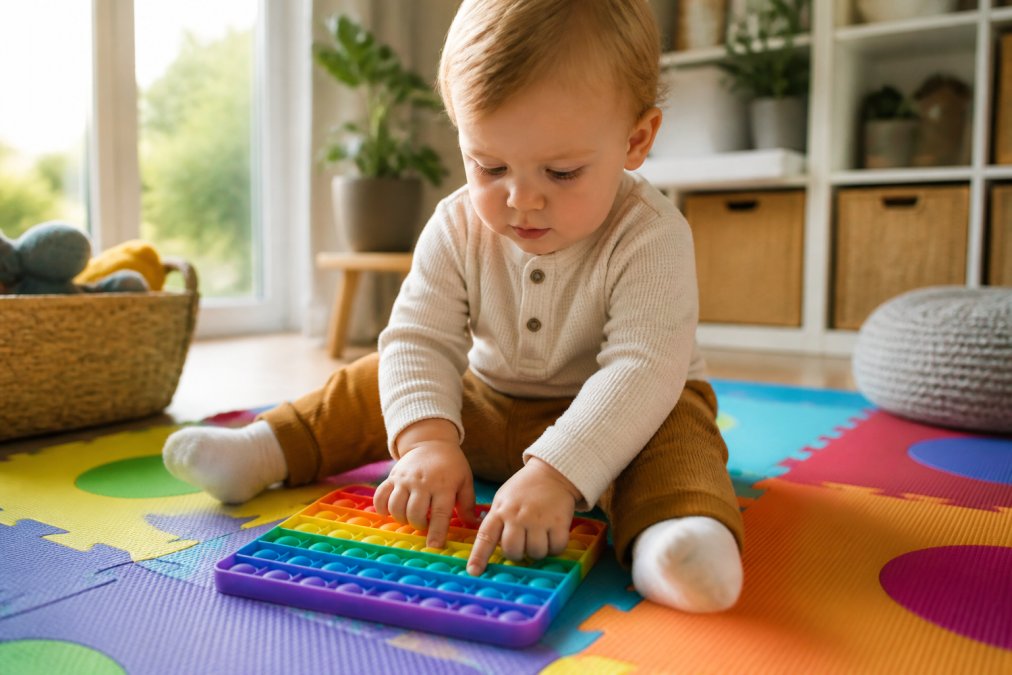
Sensory play engages a child's senses: touch, sight, sound, smell, and taste. For toddlers, tactile exploration builds neural connections and understanding of the world. Pressing silicone bubbles, pounding wooden pegs, or shaking a rattle develops hand-eye coordination, cause-and-effect understanding, and fine motor pathways for later writing and self-care. Children who engage regularly in rich sensory environments develop stronger attention spans and greater emotional regulation, particularly relevant for neurodiverse children who benefit from predictable, satisfying tactile feedback.
Toys for Fine Motor Skills Development
Fine motor skills are small, precise movements controlled by hand and finger muscles. Developing them early links directly to later academic skills like writing and self-care tasks. Shape sorters demand that a child rotate and align shapes, a deceptively complex task for a 2-year-old. Pounding benches build grip strength and hand-eye coordination. A good toy collection should include at least two or three toys specifically targeting hand strength and dexterity.
Our Top Educational Toys for Toddlers: Tried and Tested Picks
These eight picks represent the strongest options across developmental areas, price points, and play styles.
1. Melissa & Doug Wooden Shape Sorting Cube
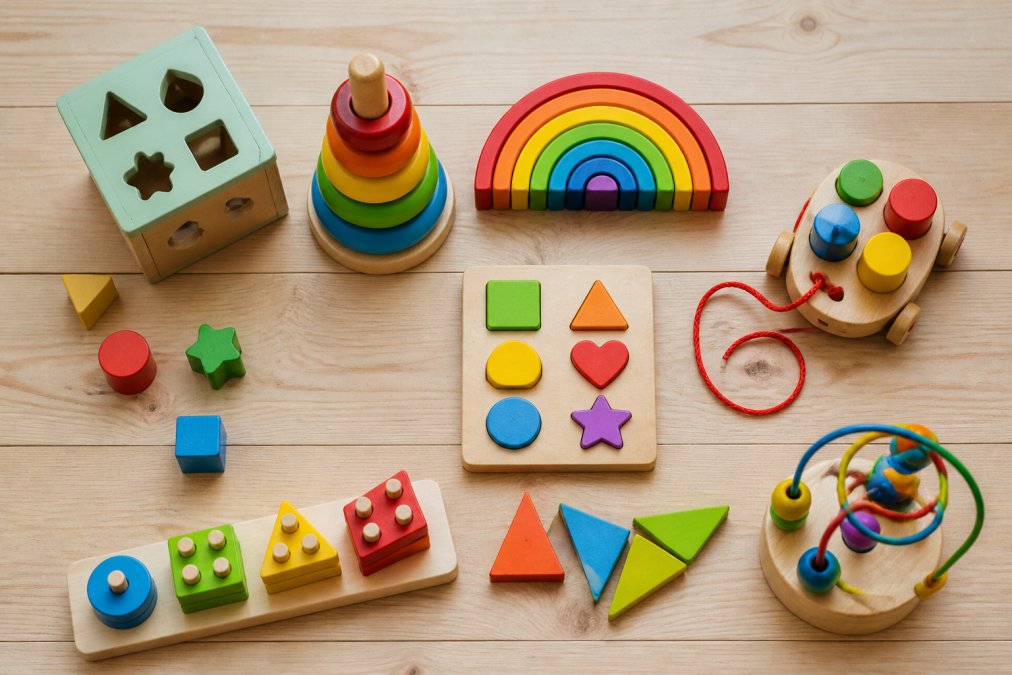
The Melissa & Doug Wooden Shape Sorting Cube is the benchmark for shape sorters. Twelve chunky, brightly coloured shapes fit through corresponding holes in a sturdy hardwood cube. The hinged lid means shapes are easy to retrieve without parental help, keeping the play loop going independently.
Best for: Toddlers aged 2-4 years working on shape recognition, colour identification, and fine motor skills.
Pricing: £12.99 (one-time purchase)
What works: The wooden construction is genuinely durable and survives multiple children. The 12-shape variety keeps the challenge interesting longer than simpler 4-shape sorters.
2. Children’s Xylophone
Our Xylophone is where sensory play and fine motor development intersect here. Made from sustainable wood with water-based, non-toxic finishes.
Best for: Toddlers from 12 months, particularly those who respond strongly to auditory stimulation.
Pricing: £9.99 (one-time purchase)
What works: Award-winning construction reflects genuine quality.
3. Fat Brain Toys Dimpl
Five silicone bubbles in varying sizes and colours are set into a BPA-free plastic frame. Toddlers push the bubbles through from one side, then the other. It holds attention remarkably well, particularly for younger toddlers from 6 months.
Best for: Babies and toddlers from 6 months for sensory exploration, cause-and-effect learning, and fine motor development.
Pricing: £7.09 - £11.99 (one-time purchase)
What works: Food-grade silicone is safe for mouthing. It's portable, easy to clean, and excellent for travel.
4. LEGO DUPLO My First Number Train (10954)
Number recognition and early counting wrapped in the universally loved DUPLO format. Ten number bricks load onto a train with moving wheels, and three DUPLO figures add imaginative play potential. The larger brick size suits toddler hands from around 18 months.
Best for: Toddlers aged 18 months and up for number recognition, fine motor skills, and creative building.
Pricing: £9.95 - £18.00 (one-time purchase)
What works: DUPLO bricks last across years of play and multiple children. The number focus adds genuine early learning value.
5. Fisher-Price Laugh & Learn Smart Stages Puppy
The Smart Stages Puppy addresses language acquisition. Over 80 songs, sounds, and phrases introduce the alphabet, body parts, colours, and first words. Three learning levels adjust content as the child grows, from 6 months through age 4.
Best for: Infants and toddlers aged 6 months to 4 years, particularly those in early language development.
Pricing: £14.99 - £28.58 (one-time purchase)
What works: The soft, cuddly format makes it appealing as a comfort object and learning tool. Five interactive buttons with lights engage multiple senses simultaneously.
6. VTech Toot-Toot Drivers Fix & Fuel Garage
Imaginative play and early language development combine in this interactive garage playset. Seven SmartPoint locations trigger educational responses, and multiple play areas support extended, varied play sessions.
Best for: Toddlers aged 1-5 years who enjoy vehicle play and benefit from role-playing scenarios.
Pricing: £34.99 - £64.99 (one-time purchase)
What works: The range of play areas means this toy grows with the child across a meaningful age span. Role-playing scenarios support social-emotional skills development.
7. Orchard Toys Shopping List Game
Most toys on this list are for independent play. The Orchard Toys Shopping List Game requires 2-4 players, making it one of the best options for developing social-emotional skills and turn-taking. Players collect everyday items matching their shopping list in a matching and memory format.
Best for: Children aged 3-7 years developing memory, vocabulary, and social play skills.
Pricing: £7.99 - £9.99 (one-time purchase)
What works: The gameplay is genuinely engaging rather than artificially educational. The shopping context extends naturally into real-life conversations about food and household items.
8. Lovevery Play Kits
Lovevery delivers subscription-based play kits every 2-3 months, each designed by child development experts for a specific developmental window from birth to age 4. Every kit includes a Play Guide explaining the developmental purpose behind each item.
Best for: Parents who want expert guidance on age-appropriate toys without the research burden.
Pricing: £80.00 - £120.00 per kit (subscription model)
What works: Research-backed curation eliminates guesswork entirely. Sustainable and organic materials align with eco-conscious purchasing. The Play Guide transforms the kit into a developmental resource.
Neurodiversity, Eco-Friendly Materials, and Budget Tips
Neurodiversity-Friendly Toy Choices
Neurodiverse toddlers often have specific sensory preferences that standard toy guides don't address. The National Autistic Society guidance on sensory differences highlights that sensory sensitivities are among the most common and impactful experiences for autistic children. For toddlers who seek strong tactile input, the Fat Brain Toys Dimpl and Hape Pound & Tap Bench provide satisfying, predictable sensory feedback. For sensory-avoidant children, softer toys like the Fisher-Price Smart Stages Puppy offer engagement without overwhelming input.
Sustainability and Non-Toxic Materials
Eco-friendly toy choices affect child safety, particularly for toddlers who mouth toys regularly. Look for water-based paints, FSC-certified wood, BPA-free and food-grade silicone, and minimal plastic packaging. The Lovevery Play Kits use sustainable and organic materials throughout, making them the strongest eco-conscious choice on this list.
Budget-Friendly DIY Educational Activities
Many effective early learning experiences cost almost nothing: treasure baskets filled with safe household objects of varying textures, water play with cups and spoons, cardboard box play, and sorting games with dried pasta or socks. Rotating toys in and out of storage rather than having everything available at once produces the same engagement as a new purchase, without the cost.
Storage and Organisation: Making the Most of Your Toy Collection
A well-organised toy space directly affects how much educational value children extract from their toys. When everything is piled in one box, toddlers struggle to make choices. Low, open shelving at toddler height allows independent selection and return, building autonomy. Separate containers by category and rotate regularly to maintain novelty without overwhelming the space. Label containers with pictures for pre-readers, supporting early literacy while making the system functional.
According to EYFS statutory framework guidance, early years environments supporting independent access to resources are associated with stronger self-directed learning outcomes.
Storage Type |
Best For |
Capacity |
Independence Level |
|---|---|---|---|
Open low shelving |
Display and selection |
Medium |
High |
Fabric bins |
Soft toys, building sets |
Large |
Medium |
Clear lidded boxes |
Puzzle pieces, small parts |
Small-medium |
Low (adult help needed) |
Rotating toy library |
Managing large collections |
Variable |
High (with rotation system) |
Choosing educational toys for toddlers is easier when you know what you're looking for: age-appropriate design, durable materials, and a clear developmental purpose. The Nook and Nurture Company offers a curated selection of educational toys and home essentials chosen with exactly this in mind, backed by a 30-day risk-free trial and guaranteed next-day shipping. If a toy doesn't suit your child, the full refund process is straightforward. Browse the collection and find the right fit for your toddler's current stage.
Frequently Asked Questions
What are the best educational toys for a 2-year-old?
At age two, toddlers benefit most from open-ended toys that build fine motor skills, language acquisition, and problem-solving. Shape sorters, wooden puzzles, stacking rings, and simple building bricks like LEGO DUPLO are consistently strong choices. Look for age-appropriate, non-toxic, and durable materials. Toys that introduce cause and effect, colour recognition, and early counting give the best developmental return at this stage.
How do educational toys support early years development?
Educational toys for toddlers support cognitive growth, sensory development, and social-emotional skills through play-based learning. A shape sorter builds spatial awareness and hand-eye coordination. A musical toy stimulates auditory processing and early language. Even simple tactile exploration with different textures develops sensory pathways. The key is choosing toys that match your child's current developmental milestones while giving them enough challenge to grow.
Are wooden toys better than plastic for toddler development?
Wooden toys are often more durable, free from BPA and phthalates, and made from sustainable materials, making them a popular choice for parents prioritising safety and longevity. They also tend to be open-ended, encouraging imaginative play. Plastic toys are not automatically inferior; BPA-free, food-grade silicone and recycled plastics can be equally safe. The deciding factors are the toy's construction quality, safety certification to UK toy safety regulations (BS EN 71), and how well it suits your child's age.
What should I look for when buying safe toys for toddlers?
Check that any toy carries the CE or UKCA mark, which confirms it meets UK toy safety regulations under the Toys (Safety) Regulations 2011. Avoid small parts for children under three due to choking risk. Prioritise non-toxic finishes and durable materials that can withstand active play. For sensory toys, confirm that silicone or plastic components are BPA-free. Age guidance on packaging is a useful starting point, but always factor in your individual child's development.
How can I encourage learning through play at home without spending a lot?
Many high-value educational activities cost very little. Sorting household objects by colour or size builds the same cognitive skills as a shape sorter. Filling containers with dried pasta develops fine motor skills and sensory exploration. Board books from the library support language acquisition at no cost. When you do buy toys, focus on open-ended options that grow with your child rather than single-use novelty items, which tend to lose a toddler's engagement quickly.
This article was written using GrandRanker


