

Table of Contents
- Why Nursery Organization Matters for Safety and Sanity
- How to Organise Toddler Toy Clutter Without Breaking the Bank
- Small Nursery Storage Ideas That Actually Work
- DIY Nursery Organisation Hacks on a Budget
- Decluttering and Purging: A Growth-Stage Approach
- Organize Baby Clothes and Essentials by Zone
- Label Everything for Quick Access and Safety
- Conclusion
Why Nursery Organisation Matters for Safety and Sanity
Awell-organised nursery supports safety, efficiency, and your own mental health. When everything has a designated place, you spend less time searching for nappies at 3am and more time caring for your baby (peer-reviewed research).
A disorganised space creates constant low-level stress. Every time you can't find something quickly, frustration builds. When you implement a system, decision fatigue drops and you actually enjoy spending time in the space.
Safety is the foundation. Accessible storage means you're not reaching over your baby's head to grab supplies (the CDC). Secure shelving prevents toppling accidents. Clear labelling ensures you grab the right item in an emergency. Growth-stage planning, organising in a way that adapts as your child develops, prevents complete reorganisation every 18 months. Budget-friendly solutions don't mean compromising on safety; they mean being intentional about what you buy and how you use it.
How to Organise Toddler Toy Clutter Without Breaking the Bank
The core problem with toy clutter is visibility. When everything lives in one massive toy box, your toddler can't see what's available, so they tip the whole thing out (peer-reviewed research). The solution isn't buying more storage, it's breaking the mess into manageable pieces.
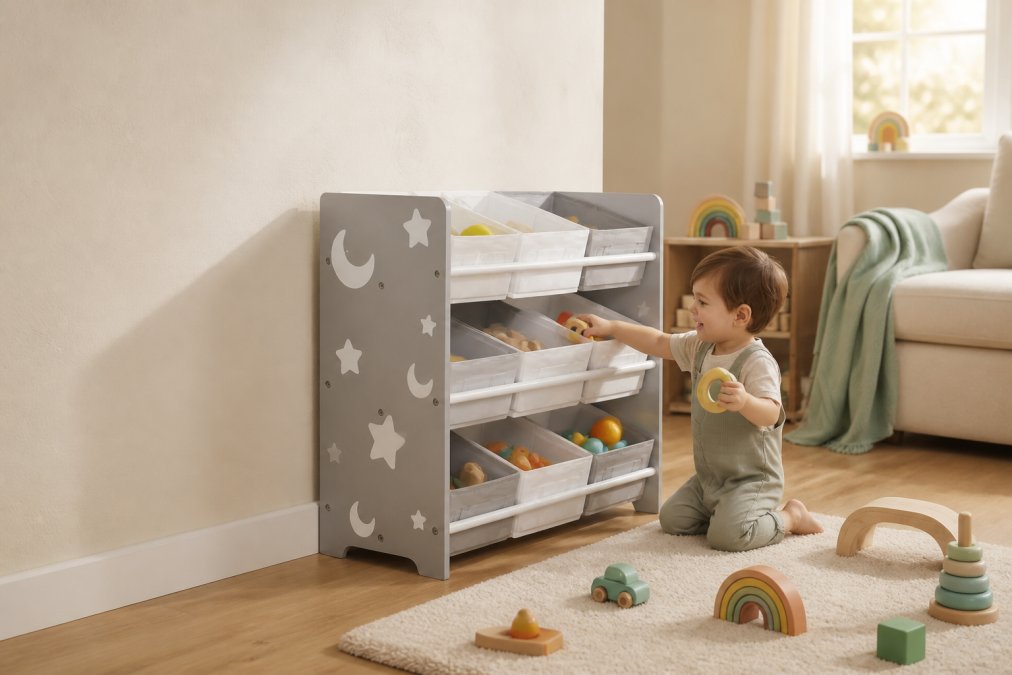
Use Multi-Purpose Storage Baskets
Storage baskets contain clutter, are accessible to toddlers, and work with any décor. The key is choosing baskets with clear visibility so children can see what's inside without dumping everything.
The ZONEKIZ Storage Unit with 9 Removable Storage Baskets (£49.99) solves this elegantly. Nine separate baskets mean nine categories: blocks, soft toys, vehicles, books, puzzles, and more. This teaches your toddler that things have homes. When they want to play with blocks, they know exactly which basket to open. When done, they know where blocks go.

The Explorers Storage Units with 6 Boxes (£49.99) offers a similar approach with six compartments, ideal for smaller rooms. Both units keep toys off the floor, which means safer movement and easier cleaning.
Implement a Rotation System
Toy rotation is budget-friendly organisation at its most clever. You don't need 50 toys; you need 15 toys that rotate every two weeks. Your child stays engaged because everything feels fresh, you maintain control over clutter, and storage becomes manageable.
Divide toys into three or four groups. Keep one group accessible in the nursery. Store the others in a cupboard, under the bed, or in the attic. Every two weeks, swap. Your toddler rediscovers forgotten toys. This approach also reveals which toys actually get played with. After three rotations, you'll notice certain items never come out of storage, candidates for decluttering.
Label each group clearly: "Rotation 1, Vehicles and Tracks" or "Rotation 2, Building Blocks." This takes 30 seconds per bin and saves hours of confusion later.
Small Nursery Storage Ideas That Actually Work
Small spaces demand ruthless prioritisation. Every item must earn its place. The strategy isn't adding more storage, it's using vertical space, choosing multi-purpose furniture, and being honest about what you actually need.
Maximise Vertical Space with Shelves and Pegboards
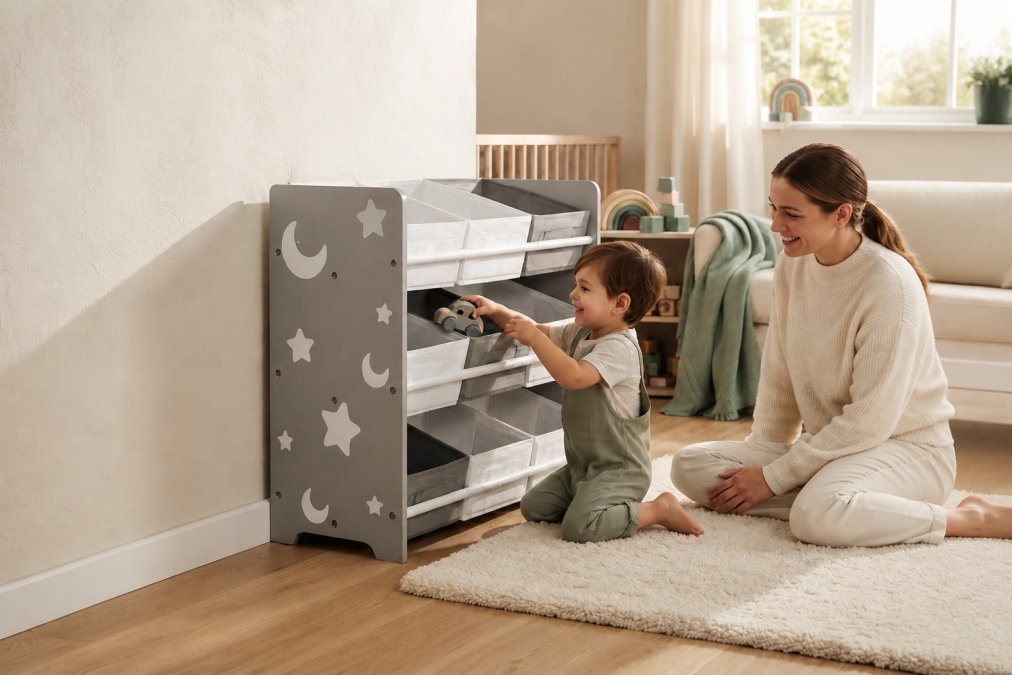
Vertical storage is non-negotiable in small nurseries. Floating shelves, wall-mounted pegboards, and hanging organisers transform blank walls into functional storage without consuming floor space.
Floating shelves work best for frequently used items: books, decorative baskets, or nappy supplies. Install them at toddler eye level so your child can reach their own books and toys. Pegboards offer flexibility, rearrange hooks and baskets as your child grows. A pegboard that holds nappy supplies now can hold art supplies next year.
Wall-mounted organisers, fabric pockets, hanging shoe racks, or over-door hooks capture dead space. An over-door organiser holds nappies, wipes, creams, and small items without taking up any floor or shelf space. The rule: if it's on the floor, it's taking up space your child needs to play or move safely.
Choose a Changing Table with Built-In Storage
A changing table with integrated storage handles both functions in one piece of furniture. The Nappy Caddy Organiser (£19.99) is a compact example, holding everything you need for nappy changes in one place. If you're investing in a changing table, look for one with drawers, shelves, or baskets built underneath.

A changing table with storage serves as a focal point for organisation. Everything nappy-related lives in one zone. Multi-purpose furniture is the secret to small-space organisation. A dresser with a changing pad on top gives you storage for clothes plus a changing surface. Every piece of furniture should serve at least two functions.
DIY Nursery Organisation Hacks on a Budget
The most affordable storage solutions are the ones you make yourself. Before buying new organisers, look at what you already own and what you can repurpose.
Repurpose Household Items and Thrift Store Finds
Your home already contains storage solutions you've overlooked. Mason jars hold small items like hair clips or teething toys. Old baskets become toy storage. Shoe boxes, lined with wrapping paper, become drawer dividers.
Thrift stores are goldmines for budget-friendly nursery organisation. A wooden shelving unit that cost £80 new might be £15 at a charity shop. A vintage dresser becomes a changing table with a pad on top. Before buying anything new, audit what you own. Do you have baskets in the loft? Shelves in the garage? These items have a second life in the nursery.
When shopping secondhand, inspect for safety. Vintage furniture should be stable and free from sharp edges. Thrifted baskets should be clean and structurally sound.
Create Drawer Dividers from Cardboard
Drawer dividers are expensive if you buy them new. Cardboard versions cost nothing and work just as well. Cut sturdy cardboard boxes into strips, cover them with fabric or wrapping paper, and arrange them in drawers to create compartments.
This works for any drawer: baby clothes, socks, vests, bibs, or small toys. Each category gets its own compartment. Your toddler learns to put things back in the right place. The beauty of cardboard dividers is flexibility, rearrange them as your child grows. Fabric scraps or old tea towels can line the cardboard for a finished look.
Decluttering and Purging: A Growth-Stage Approach
Decluttering isn't a one-time event, it's a scheduled process that happens as your child grows. What works for a newborn doesn't work for a toddler. What works for a toddler doesn't work for a preschooler.
A common mistake is keeping items "just in case." Baby clothes that don't fit anymore. Toys your child has outgrown. These things take up space and mental energy. Set a quarterly decluttering schedule. Every three months, spend 30 minutes reviewing what's actually being used. Toys that haven't been touched in two rotation cycles? Gone. Clothes that don't fit? Gone. Items you're keeping out of guilt? Gone.
Digital inventory management helps here. Take photos of toys before storing them. Keep a simple spreadsheet of what's in rotation and when it was last used. This prevents the "I know we have that somewhere" problem that leads to buying duplicates.
Organise Baby Clothes and Essentials by Zone
Clothing organisation in a small nursery requires strategic zoning. Don't spread baby clothes across multiple drawers; concentrate them in one area. This reduces decision fatigue and makes dressing your child faster.
A zone is a designated area for a specific category. The nappy zone is where nappies, wipes, and creams live, probably near the changing table. The clothing zone is where everyday outfits, socks, and vests are stored. The sleep zone is where bedding and blankets live.
Within the clothing zone, organise by type rather than size. Keep everyday outfits in one drawer, special occasion clothes in another, sleep clothes in a third. Seasonal rotation works for clothing too. Store winter clothes elsewhere during warm months, reclaiming that space for items you're actually using.
The Storage Unit with 6 Water Hyacinth Drawers (£149.95) from The Nook and Nurture Company offers dedicated space for this zoning approach. Six drawers mean six categories: everyday clothes, sleep clothes, special occasion, socks and accessories, nappies and supplies, and blankets or seasonal items.

Label Everything for Quick Access and Safety
Labels serve two purposes: they make finding things faster, and they teach your child where things belong. Use clear, simple labels. A picture plus text works best for toddlers who can't read yet.
Label at your child's eye level on storage units so they can find things independently. Label the inside of drawers so you remember what goes where. Safety labelling is non-negotiable. If a drawer contains choking hazards, label it clearly. If a shelf is off-limits, label it.
Digital labelling complements physical labels. A photo of each storage zone on your phone means you remember where everything is. A simple spreadsheet of toy rotation groups means you never forget which items are stored where.
A well-organised nursery is the foundation of a functioning household. The strategies here prioritise safety, accessibility, and growth-stage planning without requiring a large budget. The Nook and Nurture Company's storage solutions, from the 9-basket storage units to the nappy caddy organiser, are designed specifically for this approach. Start with one zone, build the system gradually, and adjust as your child grows. The investment in organisation now saves time, stress, and money for years to come.
Frequently Asked Questions
Q: What are the best budget-friendly ways to organise a nursery?
A: Start with multi-purpose storage baskets (around £50 for a unit with nine compartments), use vertical space with affordable shelves, and repurpose items you already own. Implement a toy rotation system to reduce clutter without buying more storage. Label everything clearly for quick access. Focus on one zone at a time, changing table, wardrobe, toy area, rather than overhauling the entire nursery at once. This prevents overwhelm and spreads costs over time.
Q: How can I maximise storage in a small nursery?
A: Use vertical storage solutions like floating shelves, pegboards, and wall hooks instead of consuming floor space. Choose a changing table with built-in drawers or a nappy caddy organiser (£19.99) to keep essentials within arm's reach. Install a closet rod at two heights, one for current clothes, one for items your child will grow into. Store seasonal items in under-bed containers and use drawer dividers to separate baby clothes by type. Every wall and corner counts in a small space.
Q: Are there DIY storage solutions for baby rooms?
A: Yes. Create drawer dividers from cardboard boxes or old fabric scraps to organize baby clothes and supplies without spending money. Repurpose mason jars for small items like hair clips or buttons, use pegboards with hooks for accessible storage, and convert old shelving units from thrift stores into toy organizers. Label everything with a label maker or hand-written tags. These hacks cost minimal money while adding personalized storage that fits your nursery's layout and your baby's needs.
Q: How often should I declutter a nursery to keep it organised?
A: Declutter every three months as your child grows and outgrows items. Remove clothes that no longer fit, toys they've lost interest in, and duplicates. A quarterly schedule prevents overwhelming buildup while aligning with growth stages, newborn to 3 months, 3 to 6 months, and so on. Between deep cleans, spend 10 minutes daily tidying one zone. This approach keeps the nursery functional, safe, and psychologically calming for both you and your child.
This article was written using GrandRanker


