

Table of Contents
- Why Parents Are Looking for a buybuybaby Alternative
- Nursery Furniture Safety Standards You Need to Know
- Building Your Newborn Essentials Checklist
- Affordable Baby Gear UK: Where to Save and Where to Spend
- Nursery Essentials That Earn Their Place
- Second-Hand and Resale: Stretching Your Nursery Budget Further
- Conclusion
- Frequently Asked Questions
Last Updated: September 11, 2026
Why Parents Are Looking for a buybuybaby Alternative
A buybuybaby alternative for nursery essentials now matters to UK parents because the old one-stop superstore model has thinned out, and the remaining options rarely combine physical reassurance with genuine curation. Parents tell us they want fewer, better-chosen products and a returns process that doesn't punish guessing wrong.
Large-format baby retail has contracted, and parents now compare specifications online and order in smaller batches. That creates two problems the old model solved by accident: you can't touch the cotbed before you buy it, and nobody tells you which items on a newborn checklist you can safely skip.
Below, we break down the safety standards that govern nursery furniture, build a realistic newborn essentials checklist, and show where to spend and where to save. If you're replacing a legacy registry, the goal is simple: fewer items, better quality, and a clear route back if something doesn't work.
Nursery Furniture Safety Standards You Need to Know
Nursery furniture safety standards in the UK are set by British and European standards, not by any single retailer, and they cover entrapment, suffocation, falls, and tip-over. Check that the product states which standard it meets, a retailer's own assurance is not a substitute.
Key UK Safety Marks and What They Mean
BS EN 716 covers domestic children's cots and folding cots, governing cot dimensions, mattress fit, and bar gaps to prevent limbs and heads becoming trapped. BS EN 747 applies to bunk beds and high beds, including guard rail and ladder requirements. BS EN 12221 covers changing units, which is why a proper changing table carries an anti-tip wall bracket, as ours does.

For any furniture in a child's room, the practical checks are:
- Bar spacing on cots, which must be narrow enough to prevent a head passing through
- Mattress fit, with no gap wider than two fingers between mattress and cot side
- Anti-tip anchoring on changing units, wardrobes, and shelving
- Rounded edges and no accessible sharp fixings
- Non-toxic, wipe-clean finishes, since everything ends up in a mouth
The British Standards Institution guidance on child use and care articles sets out the current standards, and the Office for Product Safety and Standards publishes recall and safety information for nursery products sold in the UK. Buy from sellers who state the standard, not just the style.
Building Your Newborn Essentials Checklist
A newborn essentials checklist should be short. Most first-time parents overbuy, then discover a baby uses a fraction of it in the first three months. Buy the first month, not the first year.
What You Actually Need vs. What You Can Skip
What you need from day one: a safe sleep space (a cot or bedside crib meeting BS EN 716), a mattress that fits it exactly, six to eight sleepsuits, six vests, two or three cellular blankets or a correctly fitted sleep bag, muslins, nappies, wipes, a changing mat, a nappy caddy, a thermometer, and a car seat if you're driving.

What you can skip or delay: a full nursery of furniture before the baby arrives, a bottle warmer if you're breastfeeding, a steriliser if you're not, a top-and-tail bowl, most "newborn" toys, and a pram if you've bought a travel system. A travel system combines pushchair and car seat compatibility, and it's worth buying once rather than twice.
Safe sleep guidance is consistent and worth following exactly: baby on their back, in their own cot or crib in your room for the first six months, with a firm mattress and no pillows, bumpers, or loose bedding. The NHS guidance on reducing the risk of sudden infant death explains the current advice in full.
Affordable Baby Gear UK: Where to Save and Where to Spend
Affordable baby gear in the UK comes down to one principle: spend on safety and sleep, save on anything outgrown in weeks. A car seat, cot mattress, and safe sleep space are not places to cut corners; clothing, toys, and decor are. The difference between a £600 nursery and a £2,000 one is rarely the cot, it's whether parents bought the first year in one go.
Where to spend: car seats, cot mattresses, a proper changing unit at a comfortable height, and storage that outlasts the baby stage. Where to save: newborn clothing (buy small, accept hand-me-downs), toys for the first three months, and decorative items.
| Category | Spend or Save | Why | Typical UK Price Band |
|---|---|---|---|
| Car seat | Spend | Safety-critical, used daily | £100-£300 |
| Cot mattress | Spend | Safe sleep, firmness matters | £50-£150 |
| Changing unit | Spend | Back health, years of use | £100-£200 |
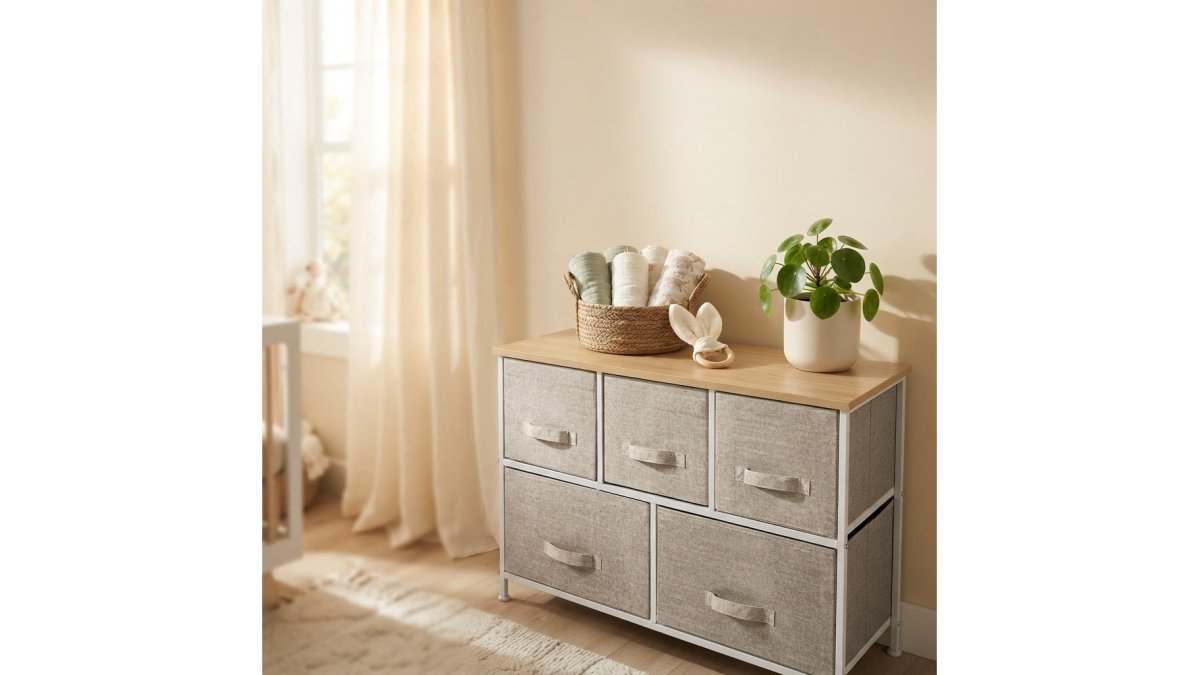
| Nursery dresser | Spend | Outlasts the baby stage | £50-£100 |
| Newborn clothing | Save | Outgrown in weeks | £20-£50 total |
| Decor and toys | Save | Low safety risk, short lifespan | £20-£60 |
Our own changing unit sits at £144.49, and the five-drawer nursery dresser at £54.99, both of which fall inside the bands above without stretching to designer pricing. For a full breakdown of how UK parents are shifting their spending, the Office for National Statistics family spending data tracks household expenditure patterns.
The Cost Mechanics Nobody Explains
The spend/save rule works because baby gear divides into two cost curves. Safety-critical items have a flat curve: a £150 cot mattress costs the same whether you use it six months or three years, so cost-per-month falls the longer it serves. Clothing and toys have a steep curve: a £30 bundle of newborn sleepsuits lasts roughly eight to twelve weeks, working out at several pounds per wear.
That maths changes what "affordable" means. A £200 changing unit used daily for three years costs under 20p a day. A £40 decorative mobile used for four months costs about 33p a day. The cheaper item is the more expensive one per use.
Timing Your Spend Across the First Year
Most parents buy everything in the third trimester, the most expensive way to do it. A staged approach spreads the cost and reduces waste:
- Before birth: safe sleep space, mattress, car seat if driving, six to eight sleepsuits, six vests, muslins, nappies, changing mat, thermometer.
- Weeks 1-6: add only what you actually reach for, a nappy caddy, a second sleep bag, more muslins. Wait on sterilisers and bottle warmers until you know your feeding route.
- Months 3-6: add the cot if you started with a bedside crib, a high chair, and weaning kit. This is also when the first clothing clear-out happens.
- Months 6-12: add safety gates, socket covers, and cupboard locks. Cheap individually but they add up, so budget for them rather than discovering them in one shop.
Where the Real Savings Sit
The three levers that move the total most are: accepting hand-me-downs for clothing and non-safety gear, buying safety-critical items new but at the lower end of the band, and resisting the urge to buy the full nursery before the baby arrives. A cot meeting BS EN 716 at £120 does the same job as one at £400, the extra spend buys finish and brand, not safety.
Nursery Essentials That Earn Their Place
Nursery essentials that earn their place are the items you touch daily: a changing surface at the right height, a nappy caddy that travels with you, storage that keeps the floor clear, and a dresser for the endless tide of tiny clothes. Everything else is optional.
A changing unit at 90cm means you change nappies standing comfortably rather than bent double, and ours converts to a dresser once the nappy stage ends. The nappy caddy at £19.99 keeps nappies, wipes, creams, and a spare vest in one portable place, vital at 3am with one hand free. The portable crib storage bag at £14.99 hangs on the cot rail so nappies are within arm's reach.

For sleep, a cool mist aroma diffuser at £14.99 adds gentle moisture and doubles as a soft night light. For development, the Newborn Sensory Box at £48.99 covers the high-contrast visuals and tactile textures that support early brain development in the first six months.
Storage and Organisation for Small Spaces
Small nurseries fail for one reason: everything is stored at adult height, so nothing gets put away. The fix is vertical storage with baskets at child height. Our 9-basket storage unit at £49.99 breaks mess into nine categories across three tiers, and the 6-box Explorers unit at £49.99 is sized for ages three to eight so a child can tidy independently.
Second-Hand and Resale: Stretching Your Nursery Budget Further
Second-hand and resale is the single biggest lever on nursery cost, and it's safe for most categories if you know what to check. Clothing, toys, books, and storage furniture are fine used. Car seats are not, unless you know the full history and it has never been in a collision. This is where the real savings, and the real risks, sit.
What Is Safe to Buy Pre-Loved
The dividing line is whether an item has a safety function that degrades invisibly.
- Safe used: clothing, muslins, blankets (wash hot first), toys without batteries or with intact battery compartments, books, storage baskets, shelving, and non-upholstered furniture such as dressers and wardrobes.
- Use with care: cots and cotbeds (check bar spacing and that all fixings are present), high chairs (check the harness and that the tray locks), and prams (check the brake, the fold mechanism, and the fabric for tears).
- Avoid used: car seats, cot mattresses, and any item with a known recall. A car seat's history is invisible, a single collision can compromise the shell even if it looks fine, and a used mattress can be too soft or contaminated.
What to Check on Second-Hand Nursery Furniture
Bring a tape measure and a checklist. For cots, confirm bar spacing meets BS EN 716 and no bars are missing or cracked. For changing units and dressers, confirm the anti-tip bracket is present and drawers run smoothly. Check the finish for exposed board, which splinters and is hard to clean. For anything with a harness, check straps aren't frayed and the buckle releases cleanly.
A missing anti-tip bracket is the most common reason a second-hand unit becomes unusable, and replacements are not always available for discontinued models. Ask for a photo of the fixings bag before you travel.
Where to Source Pre-Loved Gear
The UK resale market runs across several channels, each with different trade-offs:
- Local selling platforms and community groups: best for bulky furniture you can collect, and you can inspect before paying. Downside is travel and no returns.
- Dedicated resale marketplaces: wider reach and often buyer protection, but you're relying on photos and descriptions.
- Charity shops and baby banks: cheapest for clothing and small items, but stock is unpredictable.
- Nearly-new sales and school or church sales: good for bundles of clothing and toys in one trip.
Set up a saved search for the exact model names you want rather than browsing categories. Nursery furniture sells quickly, and alerts beat refreshing listings.
Consolidating a Registry Across Niche Retailers
If your registry is at a legacy retailer that's winding down, or spread across smaller shops, consolidation is the fix:
- List every item you actually need in one place, regardless of where it's sold.
- Mark which items are safety-critical, those get bought new from a retailer that states the standard.
- Convert gift value into the safety-critical items first, then fill the gaps with second-hand finds.
- Keep one running document of what's been bought, by whom, and from where, so you don't end up with three nappy caddies and no mattress.
The problem isn't finding an alternative retailer, it's managing a list that no longer lives in one shop. A single consolidated list, split into safety-critical and flexible items, is what makes a multi-retailer registry work.
Conclusion
Building a nursery without a legacy superstore means making more decisions yourself, and the hard part is knowing which items are safety-critical and which are marketing. The Nook and Nurture Company curates baby, parent, and home essentials with parents and babies in mind, backed by a 30-day risk-free trial with a full refund if you're not satisfied, guaranteed next-day shipping, and 100% secure payments with SSL encryption. Start with the safety-critical pieces, add storage before clothes, and let the rest wait until you know what your baby actually needs.
Frequently Asked Questions
What are the NHS recommended baby essentials?
The NHS suggests focusing on the basics for your newborn essentials checklist: at least six sleepsuits, six vests, plenty of nappies, muslin squares, a safe cot or Moses basket, and a car seat for travel. You will also need feeding supplies, whether breastfeeding or formula, plus a changing mat and gentle toiletries. The NHS advises against overbuying, as babies grow quickly and many items go unused. Start with the essentials and add as you learn what works for your family.
What are the essentials for a nursery?
A safe sleep space is the priority: a cot or cotbed that meets current safety standards, a firm mattress with no gaps, and fitted sheets. You will also need storage for clothes, nappies, and muslins, such as a dresser or storage unit. A changing mat or changing unit helps with nappy changes, and a dim night light or diffuser supports sleep. Blackout blinds, a room thermometer, and a comfortable chair for feeding are also useful. Everything else is optional.
What are the best baby shops for nursery furniture in the UK?
Rather than one large retailer, many parents now use a mix of sources. Specialist online shops curate nursery essentials with safety certifications and clear return policies. Second-hand marketplaces offer solid wood cotbeds at lower prices. For new items, look for retailers that list safety marks such as BS EN 716 for cots and BS EN 12221 for changing units. The best shop is the one that stocks furniture meeting these standards and has responsive customer service.
How do I choose safe nursery furniture according to UK standards?
Check for British and European safety standards: BS EN 716 for cots, BS EN 12221 for changing units, and BS EN 14749 for storage furniture. Look for anti-tip wall brackets on tall units and rounded edges on anything near a baby. Avoid second-hand mattresses unless you know their history, as they can pose a suffocation risk. For affordable baby gear UK, prioritise safety over style, and always check that the furniture is stable, has no gaps that could trap limbs, and uses non-toxic finishes.
Is there a free government baby box in the UK?
There is no universal free baby box across the UK. Scotland offers the Baby Box to all newborns, containing clothes, bedding, and toiletries. In England, Wales, and Northern Ireland, some local councils and health trusts run their own schemes, often for families on lower incomes. It is worth checking with your midwife or health visitor, as availability varies by area. These boxes typically cover newborn essentials and can save you money on your newborn essentials checklist.


