

Table of Contents
- What Makes Nursery Furniture Chemical-Free and Safe
- Understanding Baby Furniture Safety Standards in the UK
- How to Choose Safe Nursery Furniture: A Practical Guide
- Low VOC Nursery Furniture: What It Means and Why It Matters
- Top Chemical-Free Nursery Furniture Brands
- Non-Toxic Mattresses and Bedding for the Nursery
- Caring for Chemical-Free Furniture and Extending Its Life
- Conclusion
Last Updated: August 20, 2026
What Makes Nursery Furniture Chemical-Free and Safe
Chemical-free nursery furniture eliminates harmful substances commonly found in standard furniture manufacturing. At The Nook and Nurture Company, we understand that parents want safe spaces where children can grow without toxic chemical exposure.
Standard nursery pieces often contain volatile organic compounds (VOCs), formaldehyde, flame retardants, and phthalates, substances that off-gas into the air and accumulate in your baby's body over time. Chemical-free alternatives use solid hardwood, water-based finishes, and natural adhesives instead.
Key materials and chemicals to avoid
Formaldehyde appears in particleboard, MDF, and plywood used in budget furniture; it's a known respiratory irritant and potential carcinogen. Volatile organic compounds (VOCs) come from synthetic paints, stains, and varnishes and off-gas continuously, especially in warm nurseries with limited air circulation. Flame retardants, legally required on upholstered items in many regions, include chemical versions like polybrominated diphenyl ethers (PBDEs) linked to developmental issues. Phthalates, used to soften plastics and vinyl, can leach into dust and be ingested by babies. Heavy metals like lead and cadmium sometimes appear in imported furniture and painted surfaces.
Look for furniture that explicitly avoids these materials. Certifications help, but reading labels matters, manufacturers using safer alternatives often highlight this prominently.
Why solid wood and natural finishes matter
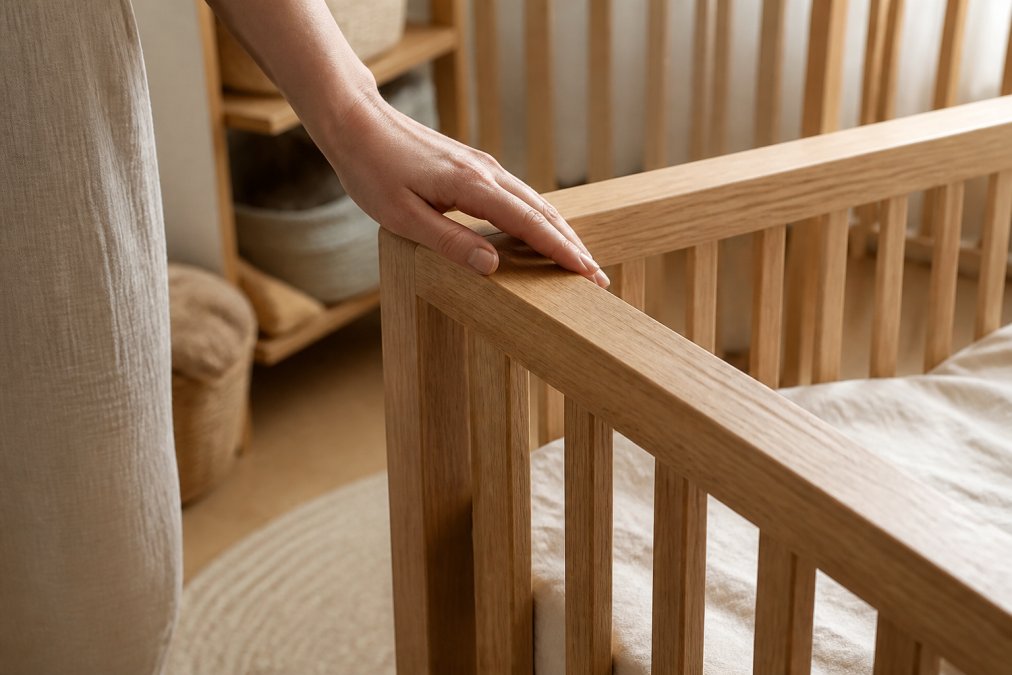
Solid hardwood furniture eliminates formaldehyde risk entirely. Unlike engineered wood, which relies on adhesives and binders, solid wood requires no chemical glues. Oak, beech, birch, and walnut are popular choices and durable enough to last through multiple children.
Water-based finishes dry through evaporation rather than chemical reaction, releasing minimal VOCs. Oil finishes (like linseed or tung oil) cure naturally and create a protective seal without synthetic polymers. Solid wood with natural finishes costs more upfront but often lasts decades, can be refinished, and retains value for second-hand purchases.
Understanding Baby Furniture Safety Standards in the UK
Navigating safety standards is essential because regulations vary by product type and manufacturing location. The UK enforces specific standards for nursery furniture to distinguish genuinely safe pieces from marketing claims.
BS EN standards and GOTS certification
British Standards (BS) and European Norms (EN) set mandatory requirements for furniture safety, stability, and materials. BS EN 1129 covers safety of furniture for children, including tests for stability, sharp edges, choking hazards, and toxic substance limits. Furniture sold in the UK must meet these standards, though enforcement varies.
The Global Organic Textile Standard (GOTS) applies specifically to organic cotton bedding and textiles. It certifies that fabrics are grown without synthetic pesticides or fertilisers and processed without harmful chemicals. GOTS certification requires third-party testing and annual audits, making it one of the most rigorous textile standards available.
GREENGUARD Gold and third-party testing
GREENGUARD Gold certification is the gold standard for low-chemical furniture. It tests finished products for over 10,000 chemicals and sets strict limits on VOC emissions and formaldehyde, far stricter than legal minimums. When you see GREENGUARD Gold on a crib, dresser, or changing table, you know it's been independently tested and verified to emit minimal off-gases.
Third-party testing is the key differentiator. Self-certifications and manufacturer claims are useful starting points, but independent testing carries real weight. Full product testing, from raw materials through assembly and finishing, is what you're looking for.
How to Choose Safe Nursery Furniture: A Practical Guide
Choosing chemical-free nursery furniture doesn't require becoming a chemist. A practical approach combines label reading, direct questions to manufacturers, and understanding what certifications actually mean.
Reading labels and verifying certifications
Start with the product label or manufacturer's website. Look for explicit statements about materials: "solid oak," "water-based finish," "natural latex," "organic cotton." Vague language like "eco-friendly" or "natural-looking" means nothing without specifics.
Check for certifications listed on the label or packaging. GREENGUARD Gold, FSC, GOTS, and Cradle to Cradle are legitimate third-party certifications. If a label claims certification but provides no verification number or link, contact the manufacturer and ask for proof.
Questions to ask manufacturers
Direct communication with makers reveals a lot. Ask these specific questions:
On materials: "What wood species are used? Is it solid or engineered?" "What adhesives are used in assembly?" "What is the paint or stain, brand name and type?"
On finishing: "Is the finish water-based, oil-based, or polyurethane?" "What is the VOC content?" "How long does off-gassing continue after manufacture?"
On testing: "Has the finished product been tested for VOCs, formaldehyde, or other chemicals?" "What certifications has it earned?" "Can you provide test reports?"
If a manufacturer becomes evasive or defensive, that's information too. Companies confident in their practices answer directly.
Low VOC Nursery Furniture: What It Means and Why It Matters
Low-VOC furniture is a specific category within chemical-free options. VOCs are organic compounds that evaporate at room temperature, and in a nursery, that's a genuine concern.
Off-gassing and air quality in the nursery
Off-gassing is the process by which VOCs escape from materials into the air. New furniture, especially pieces with synthetic finishes, glues, and upholstery, off-gases most heavily in the first few weeks and months. Babies breathe faster than adults and inhale more air relative to body weight, so they're exposed to higher concentrations of whatever is in the air.
Low-VOC furniture dramatically reduces this risk. Products tested and certified as low-VOC emit minimal compounds, meaning the air in your nursery stays cleaner. Ventilation helps regardless of furniture choice, but starting with low-VOC furniture is the foundation.
Water-based finishes and natural adhesives
Water-based finishes are the practical solution to VOC emissions from stains and varnishes. They dry through evaporation of water, leaving minimal chemical residue. Natural adhesives used in assembly matter equally. Formaldehyde-based glues are cheap and effective, which is why they're standard in budget furniture. Plant-based or water-based adhesives cost more but eliminate this exposure.
Oil finishes (linseed, tung, or Danish oil) are another low-VOC option. They penetrate the wood and cure slowly, creating a natural protective layer. They require more maintenance than polyurethane, but they're genuinely low-chemical.
Top Chemical-Free Nursery Furniture Brands
Finding brands that genuinely prioritise chemical-free manufacturing is the practical next step. The market includes solid options at various price points.
Solid hardwood specialists with transparent sourcing
Brands that build furniture from solid wood and publish their material specifications stand out. Look for manufacturers that publish detailed sourcing information: which forests their wood comes from, whether it's FSC-certified, and how they select suppliers. Transparency here signals genuine commitment.
Solid wood furniture is inherently more chemical-free than engineered alternatives because there's no particleboard, no MDF, and no adhesive-heavy construction. When evaluating solid wood brands, check whether they offer refinishing services.
Eco-certified manufacturers with sustainability focus
Some brands pursue multiple certifications: GREENGUARD Gold, FSC for wood, and sometimes Cradle to Cradle. These certifications are expensive to maintain, so brands that hold them are genuinely invested in safety and sustainability. Eco-certified manufacturers often publish annual sustainability reports and third-party test results.
Budget-friendly options without compromising safety
Chemical-free furniture doesn't have to mean luxury pricing. Some manufacturers use engineered wood but source low-formaldehyde versions and finish them with water-based products. Budget brands that offer GREENGUARD Gold certification are particularly valuable because the certification covers the entire finished product. Second-hand furniture is another budget option worth considering. Used solid wood pieces from established brands are often cheaper than new budget furniture and inherently safer because off-gassing has already occurred.
Non-Toxic Mattresses and Bedding for the Nursery
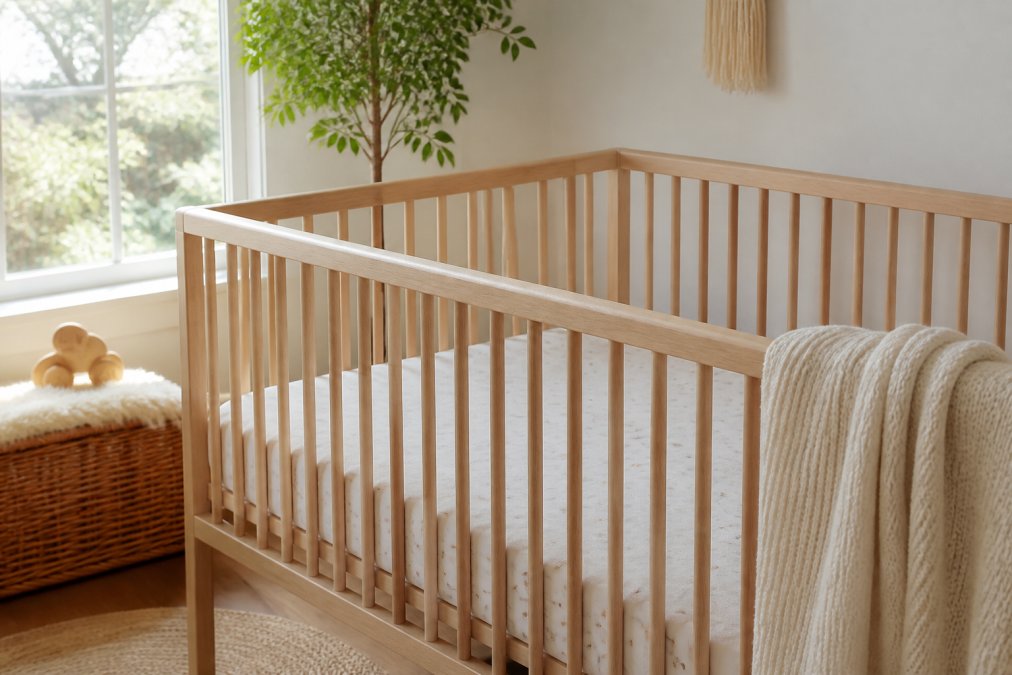
A crib mattress is where your baby spends 12-16 hours daily, making it one of the most important chemical-free choices in the nursery.
Natural latex and coconut coir alternatives
Natural latex mattresses are made from rubber harvested from rubber trees. They're naturally antimicrobial, dust-mite resistant, and durable. Dunlop or Talalay latex are the options; Dunlop is firmer and more affordable, Talalay is softer and more expensive. The key word is "natural." Synthetic latex and blended latex don't offer the same benefits and may contain VOCs.
Coconut coir (fibre from coconut husks) is another natural option, often used as a mattress layer. It's breathable, naturally antimicrobial, and biodegradable. Hybrid mattresses combine natural latex with coconut coir, offering a balance of comfort and affordability.
Organic cotton and flame retardant safety
Mattress covers and bedding matter as much as the core. Organic cotton certified by GOTS is grown without synthetic pesticides or fertilisers and processed without harmful chemicals.
Flame retardants are legally required on crib mattresses in the UK. Chemical flame retardants have raised health concerns, particularly for infants. Natural alternatives like mineral-based flame retardants or inherently flame-resistant fibres (like wool) are safer options. Wool is naturally flame-resistant and antimicrobial, making it an excellent mattress cover material.
Caring for Chemical-Free Furniture and Extending Its Life
Chemical-free furniture requires slightly different maintenance than standard pieces, but the effort is minimal and extends the life significantly.
DIY maintenance with non-toxic cleaners
Avoid commercial furniture polish and cleaners, which contain VOCs and synthetic fragrances. Instead, use simple alternatives: a damp microfibre cloth for dust, a mixture of white vinegar and water for spots, and food-grade mineral oil or beeswax for wood conditioning.
For solid wood, mineral oil or linseed oil restores the finish and keeps the wood from drying out. For stains, white vinegar diluted with water works on most spills. A paste of baking soda and water removes stubborn marks without chemicals.
Recycling and second-hand safety considerations
One underrated advantage of chemical-free furniture is its value in the second-hand market. Parents actively seek solid wood and low-VOC pieces, so your furniture retains resale value.
When buying second-hand chemical-free furniture, inspect for damage, verify the brand and construction, and ask the seller about the piece's history. Solid wood furniture often improves with age; surface marks can be sanded and refinished with water-based stain. Off-gassing is less of a concern with second-hand pieces because most occurs in the first months.
Creating a chemical-free nursery protects your baby's developing respiratory system and reduces long-term chemical exposure. The choices you make now, from solid wood furniture with water-based finishes to organic cotton bedding with natural flame retardants, compound over time.
At The Nook and Nurture Company, we've curated a selection of nursery furniture and bedding that meets these standards, so you don't have to research every brand individually. Our team evaluates certifications, reviews material sourcing, and verifies third-party testing to ensure every piece supports your family's wellbeing. Explore our chemical-free nursery collection with confidence, knowing each item has been thoughtfully chosen for safety and quality, backed by our 30-day risk-free trial and next-day shipping guarantee.
| Brand Type | Key Features | Best For | Certification Focus |
|---|---|---|---|
| Solid hardwood specialists | Durable, refinishable, transparent sourcing | Long-term investment | FSC, GREENGUARD Gold |
| Eco-certified manufacturers | Balanced cost, multiple certifications, published standards | Safety-conscious budget | GREENGUARD Gold, Cradle to Cradle |
| Budget-friendly options | Lower cost, water-based finishes, second-hand value | First-time parents | GREENGUARD Gold verification |
| Natural latex mattresses | Antimicrobial, durable, breathable | Chemical-free sleep | GOTS bedding certification |
| Hybrid mattresses | Affordability with natural materials | Balanced choice | Natural latex + coconut coir |
According to UK legislation on furniture safety standards, all furniture sold in the UK must meet BS EN 1129 requirements, but exceeding these minimums distinguishes genuinely safe pieces. Research from studies on VOC exposure in indoor environments demonstrates that off-gassing from furniture contributes measurably to nursery air quality, particularly in sealed or poorly ventilated spaces. The GOTS certification standards for organic textiles require rigorous testing throughout the supply chain, making GOTS-certified bedding a reliable choice for parents prioritising chemical-free materials.
Frequently Asked Questions
What should I look for in chemical-free nursery furniture?
Look for solid hardwood construction, water-based finishes, and certifications like GREENGUARD Gold or GOTS. Avoid furniture treated with flame retardants, formaldehyde, or containing phthalates. Request test reports from manufacturers confirming low-VOC status and heavy metal-free materials. Check labels for specific adhesives used and ask about off-gassing before purchasing.
Are there specific safety standards for nursery furniture in the UK?
Yes. Nursery furniture must meet BS EN standards, which cover stability, durability, and safety. Cribs must comply with BS EN 716, changing tables with BS EN 1697, and wardrobes with BS EN 13486. These standards ensure furniture won't tip, collapse, or pose entrapment risks. Always verify certification documentation before buying.
How do I identify low VOC nursery furniture?
Low-VOC furniture uses water-based stains and paints instead of solvent-based ones, natural latex adhesives, and untreated solid wood. Check product descriptions for 'low-VOC' or 'zero-VOC' claims, and request third-party test certificates. GREENGUARD Gold certification guarantees low volatile organic compound emissions. Avoid furniture with strong chemical smells, which indicates off-gassing.
Why is solid wood better for a non-toxic nursery?
Solid hardwood is naturally free from formaldehyde, unlike particleboard or MDF, which use adhesives containing volatile organic compounds. Hardwoods don't off-gas harmful chemicals and are more durable, lasting through multiple children. They're easier to clean with non-toxic methods and can be safely refinished with water-based products without introducing new chemicals into the nursery environment.
This article was written using GrandRanker


