

Table of Contents
- What You'll Need Before You Start
- How to Clean Baby Toys with Vinegar and Other Natural Options
- Cleaning Wooden Baby Toys Without Warping or Cracking
- Step-by-Step: Cleaning Plastic, Plush and Electronic Toys
- How Often to Wash Baby Toys (and When to Disinfect Instead)
- Products to Avoid and Common Cleaning Mistakes
- Drying, Storing and Recycling Toys Safely
- Frequently Asked Questions
Last Updated: September 25, 2026
What You'll Need Before You Start
Learning how to clean baby toys naturally and safely starts with a few simple supplies you likely already own. This guide from The Nook and Nurture Company walks you through every material type, from plastic rattles to plush bears.
Babies put everything in their mouths. That makes toy hygiene a daily concern, not a weekly chore.
You do not need harsh chemicals. A few store-cupboard basics do the job:
- White vinegar
- Baking soda
- Mild dish soap
- Hydrogen peroxide
- A microfiber cloth
- A soft brush or toothbrush
- Warm water
Cleaning baby toys is really about matching the method to the material. Plastic can be submerged. Wood cannot. Electronics need a wipe-down only.
Get that match wrong and you risk warping, cracking, or water damage.
How to Clean Baby Toys with Vinegar and Other Natural Options
White vinegar is the workhorse of natural toy cleaning. It cuts surface grime and leaves no harsh residue when diluted properly.
Mix one part white vinegar with one part warm water in a spray bottle. That is your all-purpose solution for hard toys.
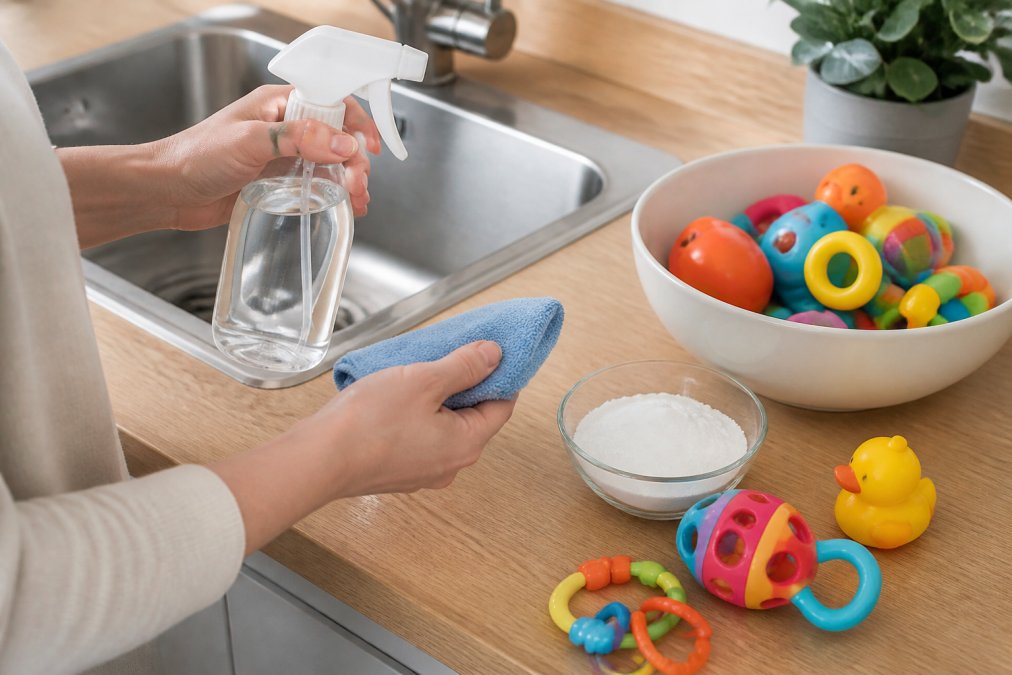
For a deeper clean, you can submerge plastic toys in the solution for a few minutes.
Which Natural Agent Suits Which Material
Most guides tell you to reach for vinegar and baking soda without saying where they cause damage. The table below is the quick-reference version we wish came with every toy.
| Material | White vinegar (1:1 with water) | Baking soda paste | Hydrogen peroxide | Mild dish soap |
|---|---|---|---|---|
| Hard, non-porous plastic | Safe, submerge 5 min | Safe on light marks | Safe, spot-test colours | Safe |
| Painted or printed plastic | Safe if sealed; avoid on flaking paint | Avoid, abrasive on print | Spot-test first | Safe |
| Natural wood, oiled | Avoid, dulls the finish | Avoid, lifts oil | Avoid | Damp wipe only |
| Natural wood, sealed/lacquered | Damp wipe only | Avoid | Avoid | Damp wipe only |
| Silicone teethers | Safe | Safe | Safe | Safe |
| Plush and fabric | Avoid, leaves odour | Avoid | Avoid | Safe, diluted |
| Electronic and battery toys | Wipe only, never near openings | Avoid | Wipe only | Wipe only |
| Metal parts (clips, bells) | Brief wipe, dry at once | Avoid | Avoid, can pit | Safe |
White Vinegar Solution for Plastic and Hard Toys
Plastic and hard toys are the easiest to clean because they tolerate moisture. Here is the routine:
- Mix equal parts white vinegar and warm water
- Submerge the toys for 5 minutes
- Scrub crevices with a soft brush
- Rinse under running water
- Air dry on a clean towel
Baking Soda Paste and Hydrogen Peroxide for Stubborn Marks
Baking soda paste lifts dried food, crayon marks, and sticky residue. Mix three parts baking soda with one part water until it forms a thick paste.
Cleaning Wooden Baby Toys Without Warping or Cracking
Wood needs a different approach. Never submerge wooden toys in water. The grain absorbs moisture, which causes swelling, warping, and cracking as it dries.
Step-by-Step: Cleaning Plastic, Plush and Electronic Toys
Different materials need different methods. Here is the breakdown by toy type.
| Toy Type | Method | Water Contact | Drying Time |
|---|---|---|---|
| Plastic and hard toys | Submerge, scrub, rinse | Full | 1-2 hours |
| Plush and stuffed animals | Surface clean or machine wash | Minimal to full | 6-12 hours |
| Electronic and battery toys | Wipe only | None | Immediate |
| Wooden toys | Damp wipe | Minimal | Immediate |
Plastic Toys: Submerge, Scrub, Rinse, Air Dry
Plastic toys are the most forgiving. Submerge them in warm soapy water or your vinegar solution.
Plush Toys and Stuffed Animals: Surface Clean or Machine Wash
Check the care label first. Many plush toys survive a gentle machine wash; others are surface-clean only.
Electronic and Battery-Operated Toys: Wipe and Dry Carefully
Electronic toys are the trickiest. Water and circuitry do not mix.
How Often to Wash Baby Toys (and When to Disinfect Instead)
How often to wash baby toys depends on use. A toy that lives in a mouth needs more attention than one on a shelf.
A simple hygiene routine looks like this:
- Daily: wipe toys that go in the mouth
- Weekly: clean all hard and plastic toys
- Monthly: wash plush toys and deep-clean the toy box
- As needed: after illness, spills, or playdates
Products to Avoid and Common Cleaning Mistakes
Some cleaning products have no place near a baby's toys. Bleach, ammonia, and heavy-duty kitchen sprays leave residue that a teething baby will ingest.
Avoid these entirely:
- Bleach and chlorine cleaners
- Ammonia-based sprays
- Scented all-purpose cleaners
- Fabric softener on plush toys
- Dishwasher detergent on painted wood
Drying, Storing and Recycling Toys Safely
Drying matters as much as washing. Trapped moisture causes mould, and mould spores are a real concern for infants.
Drying Times by Material
How long a toy needs to dry depends on what it is made of and how much water it took on. These are the working ranges most parents settle into:
- Hard plastic, submerged: 1-2 hours on a rack, longer if there are hollow cavities or squeakers
- Silicone teethers: 30-60 minutes
- Wooden toys, damp-wiped: dry immediately with a towel, then air for 15 minutes
- Plush, surface-cleaned: 4-6 hours
- Plush, machine-washed: 8-12 hours, often overnight
- Electronic toys, wiped: dry at once with a microfiber cloth
Storage Hygiene: The Step Most Guides Skip
A clean toy dropped into a grimy toy box is dirty again within minutes. Storage is where the cleaning work either holds or unravels.
- Wipe storage bins and baskets weekly with a damp cloth and mild soap. Rinse and dry fully before refilling.
- Choose open baskets or mesh bags over sealed lids. Air circulation stops moisture from sitting against the toys.
- Keep a separate bin for toys that go in the mouth. That bin gets wiped daily.
- Do not store plush toys in a sealed box while still slightly damp. If in doubt, give them another hour in the air.
- Rotate toys rather than cramming everything into one container. Fewer toys per bin means each one gets more air and less contact with grime.
When to Repair, When to Recycle, When to Bin
Not every toy is worth cleaning again. Porous materials hold bacteria in ways a surface wipe cannot reach, and a toy that stays damp inside will keep re-contaminating everything it touches.
Consider retiring a toy when:
- It has a crack, split seam, or hole that lets water into the filling or interior
- It has been wet inside for more than a day and smells musty
- The surface is flaking, peeling, or shedding paint or print
- It is a bath toy that squirts cloudy water no matter how often you clean it
- It is a plush toy that has been through illness and cannot be machine washed
Frequently Asked Questions
How do I clean baby toys non-toxic?
Use white vinegar diluted with equal parts water for plastic and hard toys, or a baking soda paste for stubborn marks. Rinse thoroughly with clean water and air dry completely. For plush toys, a hot water cycle with a laundry sanitizer works well. Avoid bleach-based or alcohol-heavy products on anything your baby mouths, and always check wooden toys for cracks before cleaning.
Is it safe to use vinegar on my baby's plastic toys?
Yes. White vinegar is a natural disinfectant that breaks down surface grime and helps limit bacterial growth without leaving harsh residue. Mix equal parts white vinegar and water, wipe the toy with a microfiber cloth, then rinse thoroughly. Don't submerge toys with battery compartments or speaker holes. Let the toy air dry fully before handing it back to your baby.
How often should I clean baby toys?
Wipe plastic and hard toys at least once a week, and clean plush toys every two to four weeks. Increase the frequency during cold and flu season, after playdates, or any time a toy has been dropped outside or mouthed by a baby who is unwell. Toys used during meals or nappy changes should be cleaned daily. A simple hygiene routine keeps germ transmission low without turning cleaning into a daily chore.
Can I put stuffed animals in the washing machine?
Most plush toys without electronic parts or glued-on decorations can go in the washing machine on a gentle cycle at 30°C. Place them inside a pillowcase or mesh laundry bag first to protect stitching and fur. Use a mild detergent and skip fabric softener. Air dry completely, ideally in direct sunlight, before the toy goes back to your baby. Check for loose eyes or ribbons before washing.


