

Table of Contents
- Step 1: Build Your Newborn Nursery Essentials Checklist
- Step 2: Choose the Best Baby Safety Gates for Stairs
- Step 3: Baby Proofing Tips for Living Rooms and Kitchens
- Step 4: Stock the Kitchen and Freezer Before Baby Arrives
- Step 5: Sort the Laundry, Cleaning and Household Staples
- Step 6: Handle the Admin, Digital Prep and Pet Integration
- Step 7: Make Space for Postpartum Recovery and Night Feeds
- Conclusion: Prepare Your Home for a New Baby Without the Overwhelm
- Frequently Asked Questions
Last Updated: September 21, 2026
Step 1: Build Your Newborn Nursery Essentials Checklist
Learning how to prepare your home for a new baby starts with the nursery.
Safe Sleep Basics: Cot, Moses Basket and Firm Flat Surface
Safe sleep is the most important item on the list, and it is simple. Babies should sleep on a firm, flat surface in the same room as you for the first six months, on their back, with no pillows, duvets, bumpers or soft toys in the sleep space (the NHS).

That means:
- A cot that meets current safety standards, with a mattress that fits with no gaps at the sides
- A Moses basket for daytime naps in the early weeks, kept off the floor and away from pets
- A swaddle or well-fitted sleeping bag instead of loose blankets
- A firm, flat surface every time, including for naps
Changing Station Setup and Nappy Storage
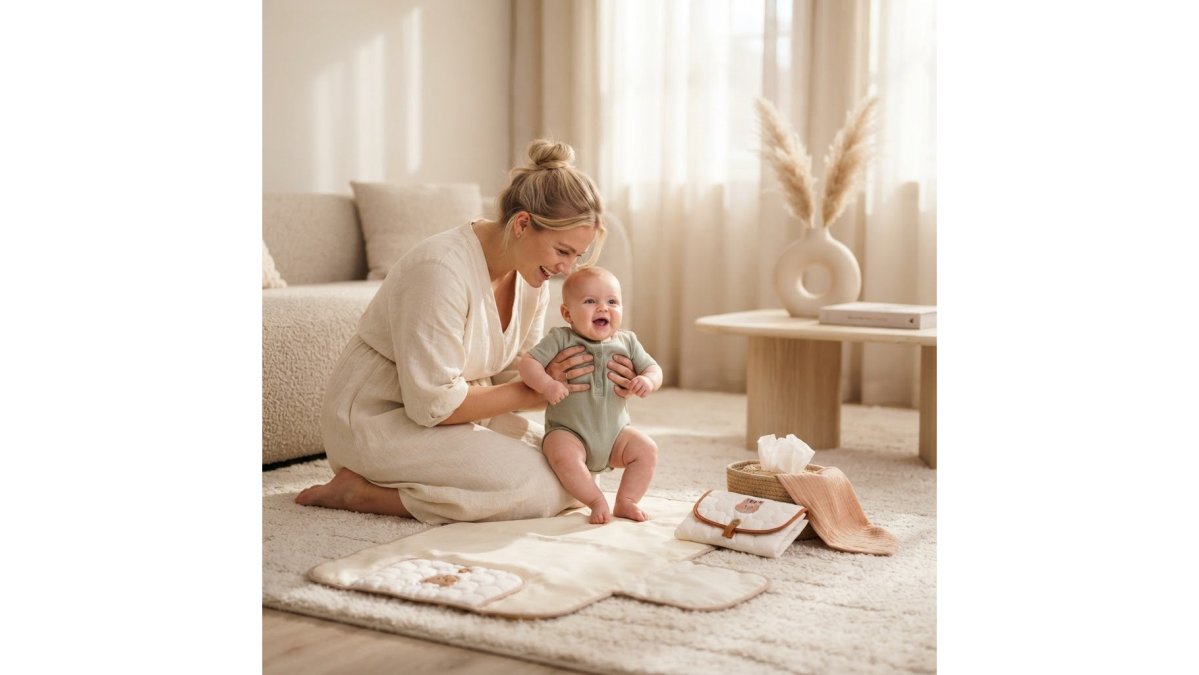
A changing station is a waist-height surface where you change nappies, with everything within one arm's reach. The Shefa Kids 880 Baby Changing Unit sits at 90cm, so you change standing comfortably rather than bent double. Its three deep drawers hold nappies, wipes and creams in the top, vests and sleepsuits in the middle, and muslins and blankets in the bottom, and the removable top converts it into a dresser once nappy days end.

Step 2: Choose the Best Baby Safety Gates for Stairs
The best baby safety gates for stairs are wall-mounted, screw-fitted gates that open both ways and are certified to the relevant safety standard. Pressure-fit gates suit doorways and room dividers, but not the top of a staircase, where a determined toddler can push them loose.
When choosing, check three things:
- The gate is fitted to the wall with screws, not held by pressure
- It has a one-handed opening mechanism, because you will be carrying a baby
- The bar spacing is narrow enough that a small head cannot pass through
Step 3: Baby Proofing Tips for Living Rooms and Kitchens
Baby proofing tips for living rooms and kitchens come down to one principle: get on the floor and look at your home from your baby's height. The hazards you spot from 60cm up are rarely the ones that matter.
Door Latches, Corner Protectors and Cupboard Locks
Silicone corner protectors cushion the impact when a cruising baby meets a table edge. The 10x Silicone Table Corner Protectors (£7.99) are food-grade silicone, which matters because everything at that height ends up in a mouth. They fix with adhesive strips and peel off cleanly.

Step 4: Stock the Kitchen and Freezer Before Baby Arrives
Stocking the kitchen before your due date pays back most in the first six weeks. On days you are too tired to cook, the only decision should be which container to defrost, not what to make.
Batch Cooking That Actually Works
Cook double batches of the meals you already eat, portion, label with the date, and freeze flat so they stack. Aim for roughly two weeks of evening meals, around 14 portions for two adults, more if you want leftovers for lunches.
A practical system:
- Cook one large recipe at a time and portion immediately into single or double servings
- Cool food quickly, spread portions on a tray rather than stacking hot containers, then freeze
- Freeze flat in bags or shallow containers so they stack and defrost faster
- Label every container with the dish name and date
- Use within three months for best quality
The Store Cupboard and One-Handed Eating
Beyond the freezer:
- Keep a shelf of easy staples: pasta, rice, tinned tomatoes, tinned beans, oats, stock cubes
- Buy one-handed snacks, nuts, oatcakes, fruit, cereal bars
- Stock tea, coffee, long-life milk and sugar near the kettle
- Freeze a few single portions for days you eat at odd hours
- Keep a water bottle by your feeding chair and refill it whenever you pass the kitchen
If friends offer to help, ask for a meal rather than a gift, people are usually glad to be told exactly what helps. A simple online meal roster, or a shared note on your phone, saves coordinating offers in the first fortnight.
Food Safety and Reheating
Reheat frozen meals until piping hot all the way through, and do not refreeze anything already defrosted and reheated. Keep a fridge thermometer if unsure, the fridge should sit at 5°C or below and the freezer at -18°C or below.
The Second-Hand Angle
You do not need to buy new to stock a kitchen for a newborn. Second-hand slow cookers, freezer containers and even chest freezers are widely available and often barely used. Check that electrical items are safe, and clean and sterilise containers before first use. A second-hand chest freezer can double your batch-cooking capacity for a fraction of the new price, and holds its value if you sell it on later.
Step 5: Sort the Laundry, Cleaning and Household Staples
The laundry mountain arrives faster than anyone warns you: a newborn can generate several outfit changes a day, before you count muslins, bedding and your own clothes.
Build a Laundry System, Not Just a Basket
Set yourself up before the baby arrives:
- Run a dedicated laundry basket for baby items
- Pre-wash and organise baby clothes by size, newborn sizes at the front
- Keep a small basket in the nursery for dirty items
- Wash baby clothes separately for the first few months with non-biological detergent, skipping fabric conditioner
- Keep a stain treatment stick or spray near the changing station, most baby stains set within hours
Run one baby load every other day rather than letting it build. Smaller, more frequent loads are easier to fold and put away, and stop the mountain becoming a weekend job.
Cleaning Products and Household Staples
Move cleaning products to a high or locked cupboard. A baby's skin and airways are more sensitive than an adult's, so many parents prefer gentler, fragrance-free options for the first few months. Choose what you are comfortable using around a newborn and store it out of reach.
- Nappies and wipes in the sizes you will actually need, do not over-buy newborn sizes
- Bin bags, kitchen roll, laundry detergent
- Toilet roll, hand soap, hand sanitiser for the changing area
- A caddy of nappies, wipes and a spare change of clothes on each floor
The Second-Hand Sourcing Angle
Most guides tell you to buy everything new. You do not have to, it is one of the biggest avoidable costs of a first baby. Second-hand baby clothes, muslins, bedding and even nursery furniture are widely available and often barely used, because babies grow out of things within weeks.
What is safe to buy second-hand:
- Clothes, muslins, blankets, and bedding, wash thoroughly at 60°C before first use
- Cots, Moses baskets, and changing units, check for stability, missing fixings, and any signs of damage
- Prams and pushchairs, check the brakes, harness, and folding mechanism
What to buy new:
- Mattresses, a second-hand mattress may not be firm enough and may not fit your cot correctly
- Car seats, you cannot verify a second-hand seat's history, and a seat involved in a collision may have hidden damage
- Anything that goes in a baby's mouth or is used for feeding, unless it can be fully sterilised
The Admin That Saves You Later
While you are sorting the house, sort the paperwork too. Set up a shared digital folder for health records, appointment letters and benefits paperwork, register the birth, add your baby to your GP surgery, and save key numbers, midwife, health visitor, GP, NHS 111, somewhere you can find them one-handed.
Step 6: Handle the Admin, Digital Prep and Pet Integration
This is the step most guides skip entirely, and it saves the most stress later. Administrative and digital preparation is not glamorous, but it stops you filling in forms at 3am with a baby on your shoulder.
Work through it in one sitting:
- Register the birth and apply for a birth certificate
- Add your baby to your GP surgery and register with a health visitor
- Check your parental leave, pay and any workplace benefits
- Set up a shared calendar or notes app for feeds, appointments and medication
- Save key numbers: midwife, health visitor, GP, NHS 111
- Back up your phone and free up storage for photographs
Step 7: Make Space for Postpartum Recovery and Night Feeds
Postpartum recovery needs a physical space in your home, not just good intentions. Set up a comfortable feeding station before the baby arrives, because you will spend more hours there than anywhere else.
The essentials for a night feed station:
- A supportive chair with armrests, plus a footstool
- A night light bright enough to feed by and dim enough not to wake everyone
- Water and a snack within reach
- A phone charger, because the battery always dies at the worst moment
- Nappies, wipes and a spare babygrow, so you do not have to leave the room
Conclusion: Prepare Your Home for a New Baby Without the Overwhelm
No amount of preparation removes the overwhelm of the first few weeks. What it does is remove the avoidable problems, so your energy goes to your baby rather than a missing mattress sheet at midnight.
Frequently Asked Questions
When should I start baby-proofing my home before my baby arrives?
Start the main baby-proofing tasks around 30 to 34 weeks, while you still have energy and mobility. Focus first on the areas your baby will use daily: the nursery, living room and stairs. Fitting safety gates, door latches and corner protectors early means you are not rushing once your baby starts crawling. You can add smaller items, like cupboard locks, later as your baby becomes more mobile.
What are the most important safety checks for a newborn's nursery?
Check that the cot or Moses basket has a firm, flat mattress that fits snugly with no gaps at the sides. Keep the sleep space clear of pillows, bumpers and loose bedding. Secure any furniture, including the changing unit, to the wall. Fix a baby monitor and a night light away from the cot, and make sure blind cords are tied up out of reach. These steps reduce the biggest risks in the first year.
How can I organise my home to make night feeds easier?
Set up a small night feeding station in your bedroom with nappies, wipes, a burp cloth, spare vests and a dim night light. Keep a flask of water and snacks nearby so you do not need to go downstairs. In the kitchen, store bottles, formula and feeding equipment together at waist height. A changing mat kept upstairs saves trips to the nursery during the night.
What should I do about my pets before bringing a new baby home?
Introduce your pet to baby sounds and new routines in the weeks before your due date. Set up any barriers, such as a stair gate, so your pet gets used to them early. Never leave a pet alone with a newborn, even a calm one. Keep a basket of pet toys and treats handy so you can reward calm behaviour during feeds and nappy changes, which helps your pet adjust to the change.


