

Table of Contents
- Why Natural Baby Essentials Matter
- Organic Cotton Clothing and Non-Toxic Materials
- Safe Sleep Environment and Chemical-Free Bedding
- Non-Toxic Baby Gear Checklist
- Eco-Friendly Nappy and Changing Supplies
- How to Save Money on Baby Gear Without Compromising Safety
- Natural Skincare and Bath Time Essentials
- Conclusion
Last Updated: August 28, 2026
Why Natural Baby Essentials Matter
Newborns have delicate, developing skin that absorbs more readily than adult skin, making exposure to harsh chemicals a genuine concern (peer-reviewed research). When you buy natural baby essentials online, you're choosing products formulated without synthetic dyes, parabens, phthalates, and other irritants that can trigger allergies, rashes, or sensitivities in vulnerable infants.
Many parents discover the importance of natural products the hard way, through nappy rash or eczema flare-ups that clear only after switching to gentler formulations. At The Nook and Nurture Company, we are dedicated to helping you nurture every corner of your home with products that combine quality, functionality, and care.
Natural products are also gentler on the environment. Organic cotton clothing biodegrades naturally, eco-friendly nappies break down faster than conventional disposables, and chemical-free skincare doesn't leach microplastics into waterways. Chemical-free formulations often perform as well as, or better than, their synthetic counterparts without the side effects.
Organic Cotton Clothing and Non-Toxic Materials
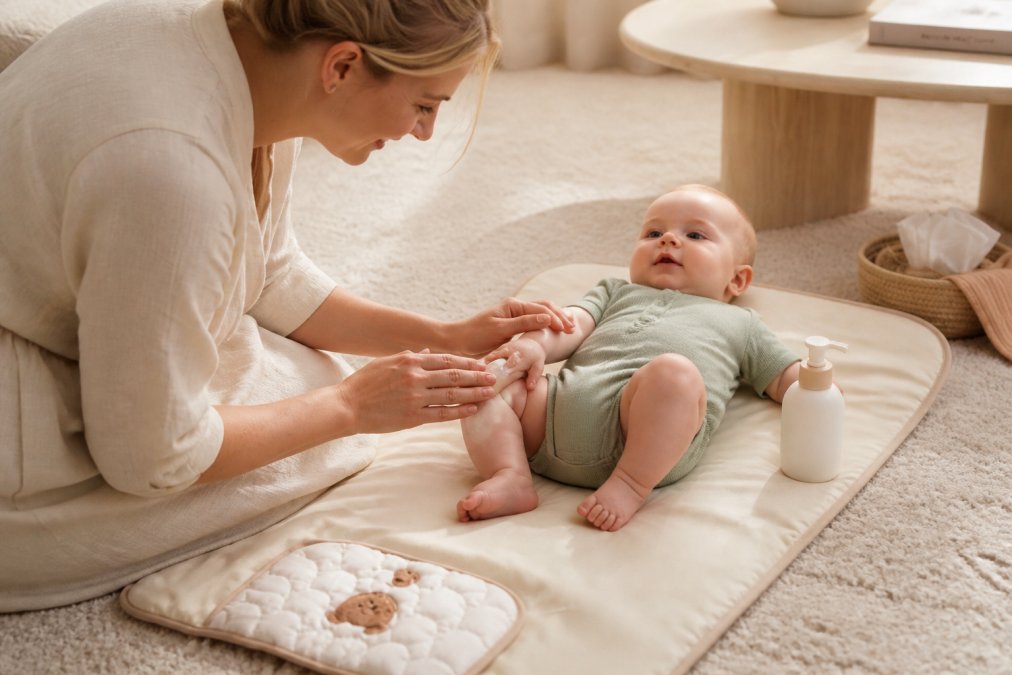
Organic cotton is the foundation of safe baby clothing. Unlike conventional cotton, which is treated with pesticides and synthetic fertilisers, organic cotton is grown without these inputs and processed with natural dyes or low-impact alternatives. For a newborn whose skin is still developing, organic cotton means fewer irritants and lower allergy risk.
When buying natural baby essentials online, prioritise clothing made from certified organic cotton. Look for certifications like GOTS (Global Organic Textile Standard) that verify the supply chain from farm to finished garment. These certifications ensure the entire production process meets strict environmental and safety standards.
Natural fibres beyond cotton also deserve consideration. Merino wool is hypoallergenic, temperature-regulating, and naturally antibacterial, ideal for layering and sleepwear. Bamboo viscose (when produced with closed-loop manufacturing) is soft, breathable, and biodegradable. Linen is durable and becomes softer with every wash.
Organic cotton clothing retains its softness through dozens of washes, while conventional cotton often becomes stiff and fades quickly. Merino wool resists odours naturally, reducing washing frequency. These durability gains mean you'll replace items less often, saving money and reducing waste.
When selecting clothing, avoid items with synthetic dyes, plastic buttons, or elastic containing latex or PVC. Many brands claim "natural" while using conventional cotton treated with synthetic finishes. Genuine natural clothing is usually more expensive upfront, but the longevity and safety justify the investment.
Safe Sleep Environment and Chemical-Free Bedding
A safe sleep environment starts with chemical-free bedding. Conventional cot mattresses are often treated with flame retardants, synthetic chemicals that can off-gas and potentially irritate a baby's respiratory system. Natural mattresses use untreated natural materials like organic cotton covers, natural latex, or coconut coir as flame barriers instead.
When shopping for cot bedding, choose organic cotton sheets and blankets. Organic cotton is softer, breathes better, and doesn't retain heat the way synthetic blends do, important for reducing overheating, a risk factor in sudden infant death (the CDC). Fitted sheets should be snug enough that they won't come loose during the night, with minimal bedding in a newborn's cot.
Natural latex mattresses are hypoallergenic, dust-mite resistant, and free from petroleum-based foams. Coconut coir mattresses are breathable and naturally antimicrobial. If you choose a conventional mattress, wrap it in an organic cotton protector to create a barrier between your baby's skin and chemical residues.
A Cool Mist Aroma Diffuser, like the one available from The Nook and Nurture Company at £14.99, can help maintain optimal humidity levels in the nursery, reducing congestion and supporting better sleep without chemical air fresheners. Proper humidity (around 40-60%) prevents dry skin irritation and supports respiratory comfort.
Darkness and quiet matter as much as chemical safety. Blackout curtains made from natural fabrics help establish sleep cues, while a white noise machine masks household sounds without requiring batteries or synthetic fragrances.
Non-Toxic Baby Gear Checklist
Building a nursery with non-toxic essentials means evaluating each item for hidden chemicals. Many baby products are treated with flame retardants, stain repellents, or off-gassing plasticisers.
Essential Non-Toxic Baby Gear:
-
Changing table and mat: Look for solid wood (untreated or finished with natural oils) rather than particleboard, which can off-gas formaldehyde. The Baby Changing Mat from The Nook and Nurture Company (£15.99) is foldable, waterproof, and gentle on newborn skin, small enough for your changing bag but protective enough for any surface.

Baby Changing Mat -
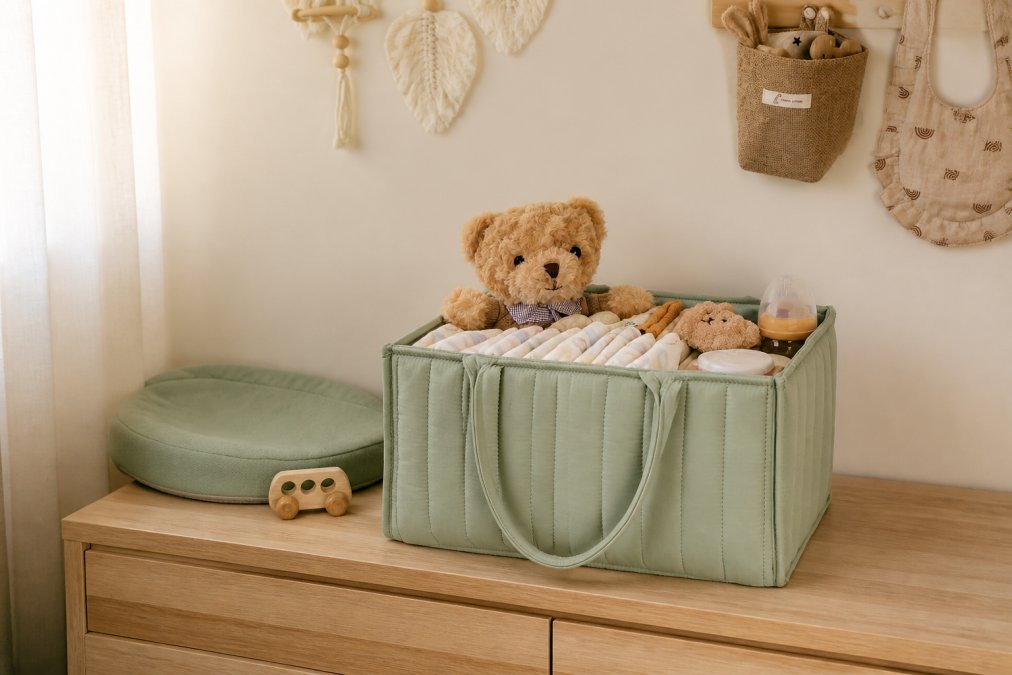
Nappy storage: Avoid plastic organisers treated with BPA or phthalates. The Nappy Caddy Organiser (£19.99) uses natural materials with removable dividers, keeping everything within reach during night changes.
-
Crib storage: A Portable Baby Crib Storage Bag (£14.99) hangs directly on the cot rail, keeping nappies, wipes, and creams accessible without taking up floor space.
-
Clothing storage: Wooden dressers are safer than particle board. Line drawers with unbleached muslin or organic cotton to protect clothes from dust.
-
Air quality: A Cool Mist Aroma Diffuser (£14.99) maintains humidity without synthetic fragrances.
-
Flooring: Hard flooring (wood, tile) is easier to keep clean than carpet. If you prefer carpet, choose natural wool or untreated jute.
-
Lighting: Soft, dimmable lighting reduces stimulation and supports sleep. Look for LED bulbs with warm colour temperature (2700K or lower).
-
Textiles: Curtains, rugs, and blankets should be organic cotton, wool, or linen. Avoid synthetic fabrics treated with stain repellents or flame retardants.
Eco-Friendly Nappy and Changing Supplies
Nappies are one of the largest waste streams in any household with a baby. A child in conventional disposable nappies generates roughly one tonne of nappy waste before potty training, waste that takes 450+ years to decompose in landfill (the EPA).
Biodegradable disposable nappies use plant-based materials instead of petroleum-derived plastics and break down within 5 years in industrial composting facilities. Brands using bamboo pulp, sugarcane-based plastics, and chlorine-free bleaching are widely available online. The trade-off: they cost more than conventional nappies and still require industrial composting infrastructure.
Cloth nappies are the lowest-impact option if you have access to frequent washing. Modern cloth nappies are fitted, absorbent, and come in fun patterns. You'll need 15-20 nappies to rotate through washing cycles, plus waterproof covers. The upfront cost (£150-300 for a full set) is offset by reuse across multiple children. The environmental cost of water and electricity for washing is still lower than manufacturing disposables.
Hybrid nappies split the difference: a reusable waterproof cover with disposable or compostable inserts. This reduces waste compared to full disposables while maintaining convenience.
Consider your lifestyle honestly. If frequent washing isn't realistic, cloth nappies will frustrate you. If budget is tight, conventional nappies are cheaper upfront. If you want a middle ground, biodegradable disposables or hybrids offer a practical compromise.
For wipes, cotton wipes are gentler on skin than synthetic fibres. If using disposable wipes, choose those made from plant-based materials without alcohol or fragrance. Many parents make their own by cutting organic cotton flannel into squares and storing in a container with water and a drop of gentle baby wash.
Nappy rash cream should be free from zinc oxide, parabens, and synthetic fragrances. Natural alternatives using calendula, shea butter, or coconut oil work as well as conventional options without the chemical load.
How to Save Money on Baby Gear Without Compromising Safety
Budget constraints are real for most families, but safety can't be compromised. The key is spending strategically: investing in essentials used daily and finding savings on items with shorter lifespans or less direct skin contact.
Prioritise spending on items with daily skin contact: Bedding, clothing, nappies, and skincare products are worth the premium for natural, chemical-free versions. Your baby spends 16+ hours per day in contact with these items.
Save on items with less direct contact: Nursery furniture, decor, and storage can be conventional or secondhand. A wooden dresser from a secondhand shop is often cheaper and more durable than new particle board.
Buy secondhand strategically: Clothing, toys, and furniture are safe to buy used. Avoid secondhand mattresses (hygiene concerns) and car seats (safety standards change). Websites like Vinted and Facebook Marketplace often have excellent deals on barely-worn items.
Batch purchases and subscriptions: Many eco-friendly nappy and wipe brands offer subscription discounts. Buying in bulk reduces per-unit cost.
DIY where practical: Making your own nappy cream (coconut oil, shea butter, calendula) costs pennies compared to branded versions. Cloth wipes from old organic cotton sheets are free.
Choose multi-use products: The Nappy Caddy Organiser (£19.99) works from newborn through toddlerhood. Organic cotton clothing in neutral colours can be passed between children.

Avoid marketing traps: "Baby" versions of products often cost more than adult equivalents. A standard humidifier works fine if you keep it clean. Marketing creates perceived needs; critical evaluation saves money.
Use trial periods: The Nook and Nurture Company offers a 30-day risk-free trial on all products. Order items, test them in your home, and return anything that doesn't work.
The real savings come from avoiding wasteful purchases. Focus on essentials, choose quality over quantity, and you'll spend less while getting better products.
Natural Skincare and Bath Time Essentials
A newborn's skin doesn't need much. Water alone is sufficient for the first few weeks. When cleansing is necessary, use a soft organic cotton cloth with lukewarm water.
Gentle cleansing: A natural baby wash should contain no more than 5-7 ingredients. Avoid sulfates (which strip natural oils), parabens, and synthetic fragrances. Plant-based cleansers like coconut oil are gentler than chemical alternatives. Many parents use a tiny amount of adult-grade natural soap designed for sensitive skin.
Moisturising: Newborn skin often needs no moisturiser if bathing is brief and infrequent. If dryness appears, pure oils (coconut, almond, or jojoba) work better than lotions. Shea butter is naturally rich and hypoallergenic. Avoid products with mineral oil, silicones, or synthetic fragrances.
Nappy rash prevention and treatment: The best prevention is frequent nappy changes and air time. If rash develops, a natural balm with calendula or coconut oil typically resolves it within days.
Bath time setup: Keep baths brief (5-10 minutes), use warm water, and pat skin dry gently. A soft natural sponge is safer than synthetic alternatives. Apply moisturiser to damp skin to lock in hydration.
Sun protection: Babies under 6 months shouldn't have direct sun exposure. After 6 months, mineral sunscreen (zinc oxide or titanium dioxide) is safer than chemical sunscreens. Look for products specifically formulated for babies.
Teething and oral care: Once teeth emerge, a soft natural bristle toothbrush and water are sufficient. For teething, natural rubber teethers or cloth teethers cooled in the fridge provide relief. The Rattles and Teethers Gift Set (£9.99) includes safe, natural teethers designed for sore gums.

A Cool Mist Aroma Diffuser (£14.99) running in the bathroom creates a calm atmosphere during bath time.
Choosing natural baby essentials is an investment in your child's health and your family's peace of mind. When you buy natural baby essentials online from The Nook and Nurture Company, you're getting products thoughtfully selected to combine safety, functionality, and care. Our 30-day risk-free trial means you can test items in your home and return anything that doesn't work, no questions, full refund. With next-day shipping and 100% secure payments, building a natural nursery has never been more straightforward. Start with essentials like the Nappy Caddy Organiser (£19.99) or the Baby Changing Mat (£15.99), and expand from there as your baby's needs evolve.
Frequently Asked Questions
Q: What certifications should I check for on natural baby products?
A: Look for certifications like GOTS (Global Organic Textile Standard) on clothing, which guarantees organic cotton without synthetic pesticides. For skincare, check for dermatologically tested labels and COSMOS or ECOCERT marks. These third-party certifications verify that products meet strict standards for organic ingredients and safe manufacturing. Always cross-reference product labels with official certification databases to confirm authenticity, as legitimate certifications are your strongest guarantee of genuinely non-toxic baby essentials.
Q: How can I verify if baby products are truly non-toxic?
A: Request ingredient lists directly from retailers and cross-reference them against known harmful chemicals. Avoid products listing synthetic fragrances, parabens, phthalates, and BPA. Natural baby essentials should display transparent ingredient sourcing and third-party testing results. Read parent reviews that specifically mention ingredient transparency and safety testing. The Nook and Nurture Company's curated selection includes products vetted for safety, with detailed ingredient information available for every item, giving you confidence in what you're purchasing for your baby.
Q: Is it cheaper to buy natural baby essentials online?
A: Online shopping often offers better pricing than high street retailers because curated platforms eliminate middlemen markups. Compare prices across specialist retailers rather than assuming all natural products cost more. Many online stores offer bundle deals and loyalty benefits. The Nook and Nurture Company provides competitive pricing on essentials like the Nappy Caddy Organiser at £19.99 and the Baby Changing Mat at £15.99, plus next-day shipping and a 30-day risk-free trial, making it easier to save money while ensuring quality without compromise.
Q: What are the NHS recommended essentials for newborn babies?
A: The NHS emphasises safe sleep (firm mattress, no pillows or bumpers), appropriate clothing layers to prevent overheating, and gentle cleansing with water rather than harsh soaps. Natural baby essentials align with these guidelines by offering organic cotton bedding, chemical-free skincare, and breathable clothing in natural fibres like merino wool. Newborns benefit from minimal product exposure, making simple, non-toxic options ideal. Focus on the basics: safe sleep environment, appropriate clothing, and gentle care products, everything else is supplementary to your baby's core needs.
Q: Are organic baby clothes better for newborns?
A: Yes, organic cotton clothes are gentler on newborn skin, which is more sensitive and permeable than older children's skin. Organic cotton is grown without synthetic pesticides or fertilisers, reducing the risk of skin irritation and allergic reactions. Merino wool is another excellent natural fibre that regulates temperature naturally without overheating. Newborns spend most of their time in clothing, so choosing organic materials minimises chemical exposure during this critical developmental stage. The investment in natural fibres typically pays off through fewer skin issues and greater comfort for your baby.
This article was written using GrandRanker


