

Table of Contents
- Why Natural Sensory Play Materials Matter for Babies
- Safe Natural Materials for Babies: What to Use and What to Avoid
- DIY Sensory Play Ideas for Babies Using Everyday Household Items
- The Benefits of Heuristic Play for Infants and Treasure Baskets
- Cleaning, Storing, and Organising Your Natural Sensory Materials
- Age-by-Age Guide to Natural Sensory Play Materials
- Frequently Asked Questions
Last Updated: September 14, 2026
Why Natural Sensory Play Materials Matter for Babies
A baby's brain forms more than a million neural connections every second in the first year, much of that wiring built through touch, sound, and movement (pubmed.ncbi.nlm.nih.gov). Natural sensory play materials for babies are everyday objects made from wood, fabric, metal, and food-safe substances that let an infant explore texture, weight, and sound safely. At The Nook and Nurture Company, we see parents gravitate towards these materials because they feel calmer than plastic and hold up to daily handling. Below, we'll show you which materials work, which to avoid, and how to clean and store them.

How Sensory Play Supports Early Brain Development
Sensory play is any activity that deliberately engages a baby's senses to build neural pathways. Each new texture, sound, or temperature strengthens brain-body connections:
- Fine motor skills develop as babies grasp, release, and pass objects between hands
- Hand-eye coordination improves when they track a moving object and reach for it
- Cognitive awareness grows through cause and effect, such as dropping a spoon to hear it clatter
- Proprioception and the vestibular system are stimulated by lifting, tipping, and rocking movements
A common mistake is treating sensory play as entertainment rather than development. Five minutes with a wooden spoon and a metal bowl does more for hand-eye coordination than a flashing electronic toy, because the baby controls the action.
Safe Natural Materials for Babies: What to Use and What to Avoid
Safe natural materials share three characteristics: untreated or finished with food-safe coatings, too large to fit entirely inside a baby's mouth, and no loose parts shed under pressure. The table below summarises the most reliable options.
| Material | Best For | Watch Out For |
|---|---|---|
| Untreated wood | Teething, grasping | Splinters, rough edges, untreated pine softens when mouthed |
| Organic cotton fabric | Tactile exploration | Loose threads, dye transfer from non-colourfast fabrics |
| Wool and felt | Textured fabrics play | Shedding fibres, felting when washed hot |
| Stainless steel | Sound and weight | Sharp rims, cold surfaces in winter |
| Food-safe silicone | Mouthing babies | Worn or torn edges, cheap fillers in low-grade products |
| Woven seagrass or rattan | Treasure basket fillers | Splintering if dried out, loose weave strands |
Why Material Size Matters More Than Material Type
A common pattern in nursery settings is that the material itself is safe but the size is wrong. The benchmark used by many early years practitioners is the small parts cylinder: if an object fits entirely inside a cylinder roughly the size of a 35mm film canister, it is a choking risk for a baby under three (PRISM: Narrative style risk assessment - non-compliant toy with a detachable part). For mouthing babies, any item should be at least 4cm in diameter and 6cm long.
This is why a wooden egg cup works but a wooden bead does not, and a metal whisk is safe but a metal bottle cap is not. Shape and rigidity matter too: a soft fabric ball that compresses to fit inside a mouth is riskier than a rigid wooden ring of the same diameter.
Taste-Safe and Edible Options for Mouthing Babies
Mouthing is how babies gather information about the world, so anything they can hold will probably end up in their mouth. Taste-safe options include cooked and cooled pasta, plain porridge oats, mashed banana, and homemade edible paint made from flour and water, letting a baby explore messy play without worrying about what they swallow.
For edible paint, use two tablespoons of plain flour to one tablespoon of cold water, whisked smooth and coloured with a little fruit purée. Cook gently for a minute or two to thicken, cool completely, and use within 48 hours from the fridge.
"Edible" does not mean "unsupervised." A baby should always be within arm's reach during any sensory activity, and never left alone with food-based materials because of the risk of over-consumption or gagging.
Natural Materials to Avoid for Infants
Avoid anything that can splinter, shed, or fit entirely inside a mouth. Raw rice and dried beans are common in sensory bins but present a choking risk for babies under three. Unfinished wicker and untreated pine can splinter, and dried flowers and potpourri break into small pieces.
Other materials to avoid include:
- Acorns, conkers, and whole nuts, the perfect size and shape for choking, and some are toxic if chewed
- Small shells, brittle edges can cut gums, and they shatter into sharp fragments
- Unfinished metal hardware, washers, bolts, and screws may have sharp threads or zinc coatings
- Feathers, shed barbules that can be inhaled, and carry dust mites
- Rawhide or leather chews, soften into a choking hazard as they break down
Cleaning and Sanitising Natural Materials
Natural materials need more care than plastic because they absorb moisture and harbour bacteria differently. A simple routine keeps them safe without damaging them.
- Wood: wipe with a damp cloth and mild soap, then dry immediately. Never soak wooden items, as this causes warping and cracks that trap bacteria. For deeper cleaning, a vinegar-and-water solution (one part white vinegar to three parts water) is effective and food-safe.
- Fabric: machine wash on a hot cycle (60°C where the fabric allows), or hand wash and air dry in direct sunlight, which has a natural sanitising effect (Laundry policy).
- Metal: wash in warm soapy water and dry fully to prevent rust. A paste of bicarbonate of soda and water removes tarnish from stainless steel without scratching.
- Woven natural fibres: brush off loose debris, then wipe with a barely damp cloth. Avoid soaking, which weakens the weave.
- Edible materials: discard after each session. Cooked pasta and oats should not be reused.
A cleaning caddy with diluted vinegar, a microfibre cloth, and a soft brush makes the five-minute clean-down after each session quick and consistent.
Storing Natural Materials Safely
For storage, use breathable cotton drawstring bags rather than sealed plastic containers, which trap moisture and encourage mould. Label each bag by material type, and keep a shallow open basket on a low shelf so your baby can choose their own play. Check stored materials every few weeks for splintering wood, fraying fabric, or rust; anything deteriorated should be repaired or retired, because a damaged item is more likely to break apart in a baby's hands or mouth.
DIY Sensory Play Ideas for Babies Using Everyday Household Items
DIY sensory play ideas for babies do not require a shopping trip. Your kitchen and linen cupboard already hold most of what you need.
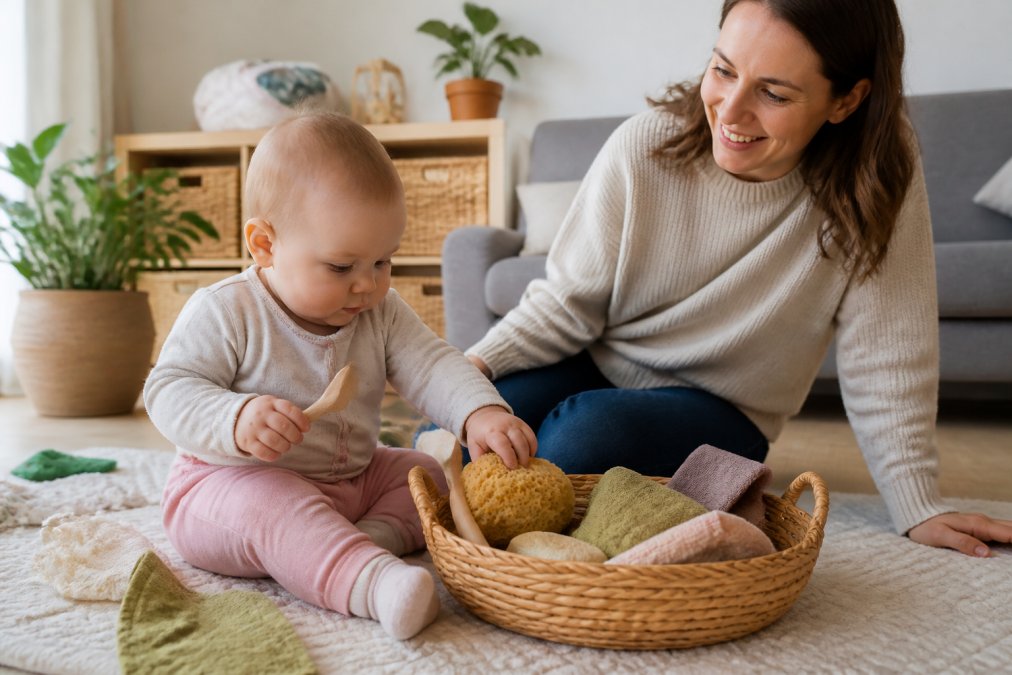
Here are five ideas to try this week:
- Wooden spoon and metal bowl. Let your baby bang the spoon against the bowl to explore sound and cause and effect.
- Fabric swatch basket. Fill a small basket with offcuts of cotton, wool, and felt for textured fabrics exploration.
- Sponge squeeze. Dampen a clean natural sponge and let your baby squeeze it over a bowl of water during bath time.
- Egg box sorting. A simple egg box and a set of chunky shapes make an early matching game that builds fine motor skills.
- Scarf pull. Tuck a lightweight cotton scarf into a cardboard tube and let your baby pull it free.
Each of these supports discovery-based learning while costing nothing.

The Benefits of Heuristic Play for Infants and Treasure Baskets
Heuristic play is a structured approach where babies explore everyday objects with no fixed outcome, usually delivered through a treasure basket. The benefits of heuristic play for infants include longer attention spans, independent problem-solving, and richer exploratory play.
A treasure basket typically holds 20 to 30 objects made from natural materials: a wooden egg cup, a metal whisk, a small woven ball, a leather keyring. The key is variety of texture, weight, and sound rather than quantity. Sit it beside a baby who can sit unaided and let them choose, open-ended play works best when the baby leads.
Cleaning, Storing, and Organising Your Natural Sensory Materials
For storage, use breathable cotton drawstring bags rather than sealed plastic containers, which trap moisture and encourage mould. Label each bag by material type, and keep a shallow open basket on a low shelf so your baby can choose their own play.
Age-by-Age Guide to Natural Sensory Play Materials
Most guides lump 'babies' together, but the right material changes dramatically as your baby's abilities develop. This progression aligns specific natural materials with the milestones they support.
0 to 3 Months: Visual Tracking and Early Tactile Awareness
At this stage, babies are developing the ability to focus on objects and follow them with their eyes. Their hands are often clenched, and they are not yet reaching deliberately.
- High-contrast black and white cards, support visual tracking and contrast sensitivity, which is still developing
- Soft fabric squares in solid, bold colours, gentle against the skin and easy to bring into the visual field
- Gentle rattles made from untreated wood or food-safe silicone, introduce auditory stimulation and the earliest cause-and-effect awareness
A common pattern is that parents offer too many objects at once. One or two items at a time is plenty; the goal is sustained attention, not variety.
3 to 6 Months: Grasping and Hand-Eye Coordination
Between three and six months, the grasping reflex gives way to deliberate reaching. Babies bring objects to their mouth to explore and start passing items between hands.
- Wooden rings, easy to grip and safe to mouth, supporting the palmar grasp
- Fabric balls in different textures, encourage two-handed exploration and rolling
- Sensory balls with contrasting textures, build tactile discrimination and hand-eye coordination
- Large wooden spoons, light enough to lift and bring to the mouth, and safe for teething
This is the stage where a baby learns that their actions have consequences. Dropping a wooden ring and hearing it clatter teaches cause and effect more effectively than any electronic toy.

6 to 9 Months: Exploratory Play and Problem-Solving
By six months, most babies can sit unaided and have developed the pincer grasp. They are actively curious and will test objects by banging, dropping, and mouthing.
- Treasure baskets filled with natural objects, support independent exploration and sustained attention
- Egg box sorting with chunky natural shapes, builds early matching and fine motor skills
- Woven baskets and seagrass balls, introduce new textures and weights
- Metal whisks and spoons, explore sound, weight, and cause and effect
9 to 12 Months: Deliberate Action and Early Stacking
In the final quarter of the first year, babies begin to act with intention. They can stack, post, and retrieve objects, and understand simple words and gestures.
- Simple stacking rings made from untreated wood, build fine motor control and spatial awareness
- Posting boxes with natural wood shapes, develop problem-solving and hand-eye coordination
- Cause-and-effect toys such as a rainbow rainmaker, reward deliberate action with sound and movement
- Textured fabric books, support language development alongside tactile exploration
This is also the stage where babies begin to imitate. Showing them how to drop a wooden ball into a box, then handing them the ball, is a powerful teaching moment.
Developmental Milestones Alignment
Linking materials to milestones helps you choose with purpose. The table below maps common milestones to the natural materials that support them.
| Milestone | Typical Age | Natural Materials That Help |
|---|---|---|
| Visual tracking | 0-3 months | High-contrast cards, soft fabric squares |
| Palmar grasp | 3-6 months | Wooden rings, fabric balls, large spoons |
| Pincer grasp | 6-9 months | Egg box sorting, small woven balls |
| Object permanence | 6-9 months | Posting boxes, treasure baskets |
| Deliberate stacking | 9-12 months | Wooden stacking rings, nesting cups |
| Cause and effect | 6-12 months | Metal bowls and spoons, rainmakers |
That said, every baby develops at their own pace. Use these ranges as a guide, not a deadline, and follow your baby's cues. If a material is consistently ignored or causes frustration, it may simply be too advanced or too simple for where your baby is right now.
Rotating Materials to Match Development
Review your baby's materials every four to six weeks. If they have mastered an object, retire it or store it for a younger sibling; if they are frustrated, introduce something slightly more challenging. This keeps the collection responsive to their development without constant new purchases.
Frequently Asked Questions
What are some good sensory materials for infants?
For babies under six months, high-contrast items like black-and-white cards and soft textured fabrics work well because their visual tracking is still developing. From six months, introduce safe natural materials such as smooth wooden rings, large fabric scraps, and taste-safe items like cooked pasta or plain yoghurt for messy play. Always supervise mouthing and check items are larger than a choke hazard.
What are some DIY sensory play ideas for babies?
Fill a shallow tray with cooked spaghetti or jelly for taste-safe messy play. Create a treasure basket using a low woven container filled with wooden spoons, metal whisks, and fabric squares. Make a sensory bag by sealing hair gel and large beads inside a zip-lock pouch taped to the floor. These DIY sensory play ideas for babies use items you likely already own and cost very little.
How do I ensure natural sensory materials are safe for my baby?
Wash all natural materials thoroughly before first use and check for loose parts, splinters, or rough edges. Avoid small stones, dried beans, and anything that fits through a toilet roll tube, as these are choking hazards. For mouthing babies, choose food-grade or taste-safe options. Supervise all sensory play and rotate materials regularly, discarding anything that shows wear or damage.
What are the benefits of using natural materials for baby sensory play?
Natural materials offer varied textures, weights, and temperatures that manufactured plastic toys rarely match. Wooden rings feel warm, fabric scraps drape and fold, and metal spoons reflect light. This variety supports tactile exploration, fine motor skills, and cognitive awareness. Natural materials also tend to be free from synthetic chemicals, which matters for babies who mouth everything they hold.
Are there specific natural materials to avoid for infants?
Avoid small stones, dried beans, uncooked rice, and anything small enough to swallow. Steer clear of materials treated with varnish, paint, or chemical preservatives unless labelled child-safe and non-toxic. Some natural items like conkers and acorns are choking hazards and can be toxic if eaten. Always check that wooden items are smooth and unfinished or finished with food-safe oil.
How does sensory play support early development in babies?
Sensory play builds neural connections across multiple brain areas at once. Grasping a wooden ring develops hand-eye coordination and fine motor skills. Dropping a fabric square teaches cause and effect. Listening to a rainmaker supports auditory stimulation. Each texture, sound, and movement adds to your baby's understanding of the world, supporting sensory integration and developmental milestones from proprioception to visual tracking.


