

Table of Contents
- Travel Crib vs Playpen: Key Differences at a Glance
- Defining Travel Cribs and Playpens
- Safe Sleep Guidelines for Babies: What Each Option Offers
- How to Choose a Baby Travel Cot: Portability, Weight and Setup
- Travel Cot Mattress Safety and Comfort Standards
- Versatility: Sleep, Play, and Containment
- Which Option Is Right for Your Family?
- Frequently Asked Questions
Last Updated: September 26, 2026
Travel Crib vs Playpen: Key Differences at a Glance
Choosing between a travel crib vs playpen for baby travel is one of those decisions that seems straightforward until you're standing in a shop trying to fold one up with a toddler hanging off your leg. Both promise safe sleep and containment. Both fold down. But they solve different problems, and picking the wrong one can mean either hauling unnecessary weight across an airport or arriving at your destination without a proper sleep space.
At The Nook and Nurture Company, we've helped families navigate this choice by breaking down what each option actually does, where safety standards matter, and which setup makes sense for your specific travel scenario.
The short version: a travel crib prioritises safe sleep; a playpen prioritises safe play and containment. Some families need both. Most need one. Here's how to know which.

Defining Travel Cribs and Playpens
A travel crib is a portable sleep space designed to meet safe sleep guidelines for babies. It features a firm, supportive mattress base, enclosed sides for safety, and dimensions that comply with safety standards for unsupervised sleep. Travel cribs are built for overnight use and napping, they're sleep furniture.
A playpen is a containment space designed for supervised play and temporary use. It has mesh or panel sides for visibility, a soft floor mat, and an open-top design. Playpens are not designed for unsupervised sleep, though some parents use them for short naps. They're play furniture.
The distinction matters because safety standards differ. A travel cot must meet BS EN 12227:2010, the UK standard for baby sleep furniture. A playpen meets the same standard but is tested for play containment, not sleep support. The mattress firmness, structural integrity, and side height all differ between the two.

Think of it this way: you wouldn't use a playpen as your primary sleep solution for a week-long holiday. You also wouldn't buy a travel crib just to keep your baby contained while you make dinner. They're designed for different purposes, and that design difference is where the real choice lies.
Safe Sleep Guidelines for Babies: What Each Option Offers
Safe sleep guidance from organisations supporting infant health emphasises a firm, flat surface in a dedicated sleep space (the NHS). A travel crib meets this requirement. It has a rigid mattress base, enclosed sides, and a secure frame designed specifically for sleep.
A playpen can provide a safe temporary nap space, but it's not the primary recommendation for overnight sleep. The softer floor mat, mesh sides, and open-top design prioritise visibility and play over the firm sleep surface that safe sleep guidelines recommend.
For families travelling for a week or longer, a travel cot becomes the better choice because it meets safe sleep standards consistently. For short visits or day trips where your baby might nap in your arms or in a pushchair, a playpen offers flexibility without the bulk.
The key distinction: if you're sleeping away from home for multiple nights, your baby needs a proper sleep space that complies with safe sleep standards. A travel crib delivers that. A playpen is a backup option for occasional naps, not a primary sleep solution.
How to Choose a Baby Travel Cot: Portability, Weight and Setup
The best travel cot balances portability with functionality, but the real measure of usability isn't just weight, it's the physical and cognitive load on parents during repeated setup and takedown cycles.
Ergonomic considerations for parents matter more than manufacturers acknowledge. A travel crib that requires you to thread poles through fabric sleeves, then lock them into corner brackets, demands fine motor control and spatial awareness you may not have after a 6-hour drive. Look for designs with push-fit assembly or click-together frames that require minimal hand strength and no tools. The best systems use colour-coded poles or numbered sections so assembly is intuitive even when you're exhausted. Conversely, a playpen with a pop-up frame or accordion-style collapse requires almost no cognitive load, you pull, it expands, you're done. This matters more than manufacturers' marketing suggests, particularly for solo parents or those with limited upper-body strength.
Weight matters more than you'd think, but not just for transport. Check the weight before buying. A crib that's awkward to carry will be used less frequently, which defeats the purpose of owning it.
Frame stability during assembly is a safety detail often overlooked. Some travel cribs have a two-stage locking system: the frame clicks together, then you deploy a secondary lock to secure the mattress base. Others use a single-stage system where the mattress locks as the frame expands. Single-stage systems are faster and less error-prone, there's less chance you'll forget the secondary lock and discover a wobbly mattress mid-sleep. Test the frame for wobble before you buy. A crib that rocks side-to-side during assembly will rock during use, which unsettles babies and worries parents.
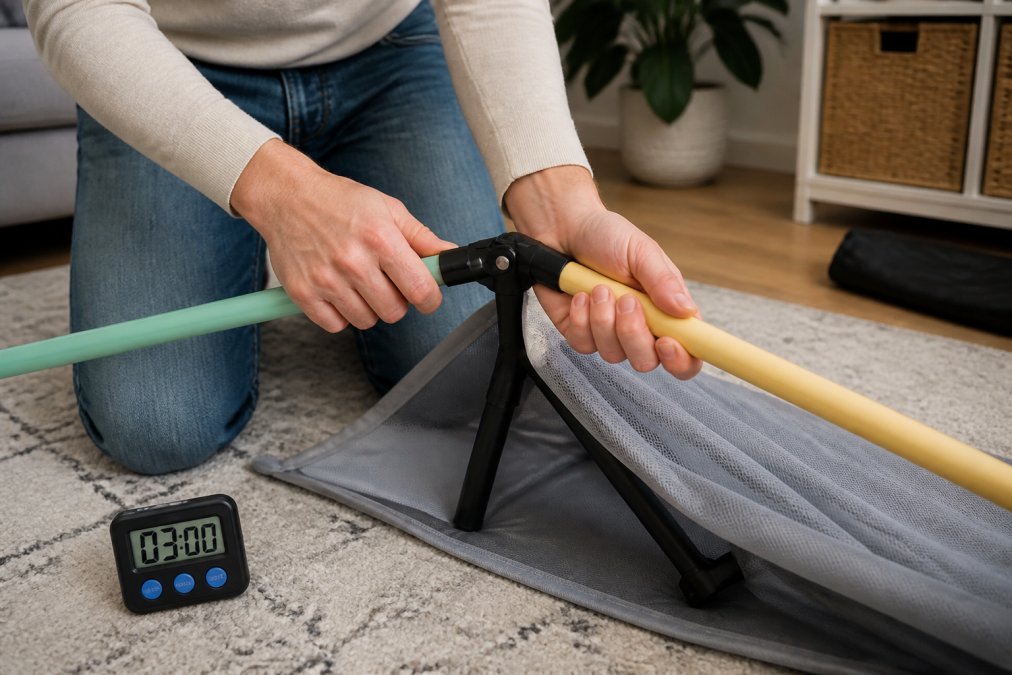
Setup speed matters for tired parents, but so does breakdown speed. Playpens have a clear advantage here: most fold flat with a single motion and pack into a carry bag in under 60 seconds.
Consider how often you travel and for how long. Weekly trips warrant a lightweight, quick-deploy option with minimal assembly steps. Twice-yearly holidays to the same location might justify a slightly heavier travel crib if it means better sleep quality for your baby and less repeated assembly stress. If you're flying and every kilogram counts, a lightweight playpen (typically 3-5 kilograms) might be the practical choice. If you're driving and space isn't the constraint, a travel crib's weight is less of an issue, but assembly ergonomics become more important because you'll be setting it up in unfamiliar, often cramped spaces.
Travel Cot Mattress Safety and Comfort Standards
The mattress is where travel cribs and playpens diverge most significantly. A travel crib mattress must be firm, firm enough that it doesn't sag under your baby's weight, firm enough that it supports their spine properly.
A playpen's floor mat is softer and more cushioned. It's designed for comfort during play, not for proper spinal support during sleep.
The Nook and Nurture Company's All Stars Playpen includes a matching padded floor mat that's perfect for play but wouldn't meet safe sleep standards for extended overnight use. It's comfortable for a 30-minute nap or an afternoon of play. It's not ideal for 8 consecutive hours of sleep night after night.
If mattress quality is your priority, a travel crib wins. If you're using it for occasional naps and supervised play, a playpen's softer surface is acceptable and often more comfortable for active play.
Versatility: Sleep, Play, and Containment
Here's where playpens earn their place in many family homes. A playpen does multiple jobs: it's a safe play space, a containment zone for toys, a nap spot, and a portable barrier. You can set it up in a living room, fold it away, take it to a friend's house, and set it up again in minutes.
A travel crib does one job exceptionally well: it provides a safe sleep space. It's not designed for play. You wouldn't put toys inside it or expect your toddler to spend an afternoon playing in it. It's sleep furniture, full stop.
For families who travel frequently and want flexibility, a playpen's versatility is valuable. For families who need a dedicated sleep space and don't mind carrying specialised equipment, a travel crib's focus on sleep quality matters more.
Many families end up with both: a travel crib for the main bedroom and a playpen for the living room. That setup gives you safe sleep at night and safe play during the day.
Which Option Is Right for Your Family?
Choose a travel crib if you're travelling for more than a few nights, if your baby is under 18 months old, or if safe sleep compliance is your priority. Travel cribs are the right choice when sleep quality and safe sleep standards matter more than portability.
Frequently Asked Questions
What is the main difference between a travel crib and a playpen?
A travel crib is designed primarily for sleep, with a firm mattress and enclosed sides for safe overnight rest. A playpen serves multiple purposes: safe containment during play, temporary napping, and activity supervision. Travel cribs meet specific sleep safety standards; playpens prioritise visibility and interaction. For families needing a portable sleep space that meets safe sleep guidelines for babies, a travel crib is the better choice. For flexible daytime use and occasional naps, a playpen offers more versatility.
Can a baby safely sleep in a playpen overnight?
Check that your playpen meets the current safety standard for baby playpens. The mattress should be firm, the surface breathable, and there should be no gaps where a baby could become trapped. Always follow the manufacturer's age and weight guidelines and ensure the sleep surface is completely flat and secure.
How do I choose a baby travel cot that meets safety standards?
Look for certification to the UK standard for portable baby sleep equipment. Check that the mattress is firm and fits snugly without gaps. The frame should be sturdy with no sharp edges or pinch points. Verify weight capacity and age limits match your baby's current size. Test the setup mechanism yourself before travel to ensure you can assemble it quickly and securely. A travel cot mattress safety rating should be clearly stated by the manufacturer.
Which is more portable for family holidays: a travel crib or playpen?
Playpens generally win on portability. Most fold flat into compact carry bags, weighing 4-6 kg, and fit easily in car boots or overhead luggage. Travel cribs are bulkier when packed, though lightweight models exist. Setup time matters too: playpens often deploy in seconds with a simple click mechanism, whilst travel cribs may require frame assembly. If you're moving between multiple locations or using public transport, a playpen's quick-deploy design and packability make it the more travel-friendly choice. For stationary holidays where you need dedicated sleep space, a travel crib's structural integrity and mattress quality justify the extra bulk.
Choosing the right gear for baby travel doesn't have to mean compromise. The Nook and Nurture Company's range of playpens, from the compact JOY Collapsible Playpen to the spacious All Stars option, gives you safe, certified containment that fits your travel style. With next-day shipping and a 30-day risk-free trial, you can test your choice and return it if it doesn't work for your family. Browse our curated selection and find the travel gear that makes your family trips easier.


