

Table of Contents
- Best Baby Essentials for First-Time Parents: What You Actually Need
- When to Buy Newborn Essentials: Timing Your Purchases
- Nappy Changing and Hygiene Essentials
- Safe Baby Sleeping Environment Guidelines
- How to Choose Non-Toxic Baby Products
- Budget-Friendly vs Premium Essentials: Where to Invest
- Storage and Space-Saving Solutions for Nurseries
- Conclusion
Last Updated: August 30, 2026
Best Baby Essentials for First-Time Parents: What You Actually Need
The first weeks with a newborn are overwhelming. You're sleep-deprived, anxious, and surrounded by conflicting advice. Baby shops are packed with thousands of items, each promising to be essential. Most aren't. At The Nook and Nurture Company, we provide a curated selection of baby, parent, and home essentials designed to make a meaningful difference in your family life.
This guide covers the best baby essentials for first time parents, a curated breakdown of what genuinely makes a difference in those critical early months, not a shopping list of everything available. We'll show you where to invest and where to save, and help you understand which products solve real problems versus those designed to make you feel guilty for not buying them.
The reality is simple: you don't need hundreds of items. You need the right ones in the right places at the right time.
When to Buy Newborn Essentials: Timing Your Purchases
Most first-time parents start shopping too early and buy too much. The optimal window for purchasing best baby essentials for first time parents is between weeks 20 and 28 of pregnancy, early enough to spread purchases out, late enough that you're not storing items for months.
Newborn sizes are notoriously inconsistent across brands. If you buy everything at 16 weeks pregnant, you'll either have mountains of items that don't fit or you'll need to shop urgently in week 39 when you're exhausted.
Split your purchasing into two phases. Phase one (weeks 20-24) covers big-ticket items: a changing unit, a safe sleep space, and a travel system if you're buying one. Phase two (weeks 28-32) covers clothing, nappies, wipes, and smaller items. This timing means you're buying closer to your due date when you have a better sense of your baby's likely size.
Safety gear is the exception. Corner protectors, door latches, and safety locks should be installed before baby arrives. NHS guidance on preparing for a newborn recommends having essentials in place by week 36 to avoid last-minute stress.
Nappy Changing and Hygiene Essentials
Nappy changes happen 8-12 times daily in the first weeks, roughly 3,000 changes in the first year alone (peer-reviewed research). Organisation isn't a luxury, it's survival.
A changing surface at the right height is essential. The Shefa Kids 880 Baby Changing Unit at £144.49 sits at 90cm, the ergonomic height for standing changes. The removable top transforms it into a dresser once nappy days end. Three deep drawers hold everything within arm's reach: nappies in the top, wipes and creams in the middle, spare clothing below.
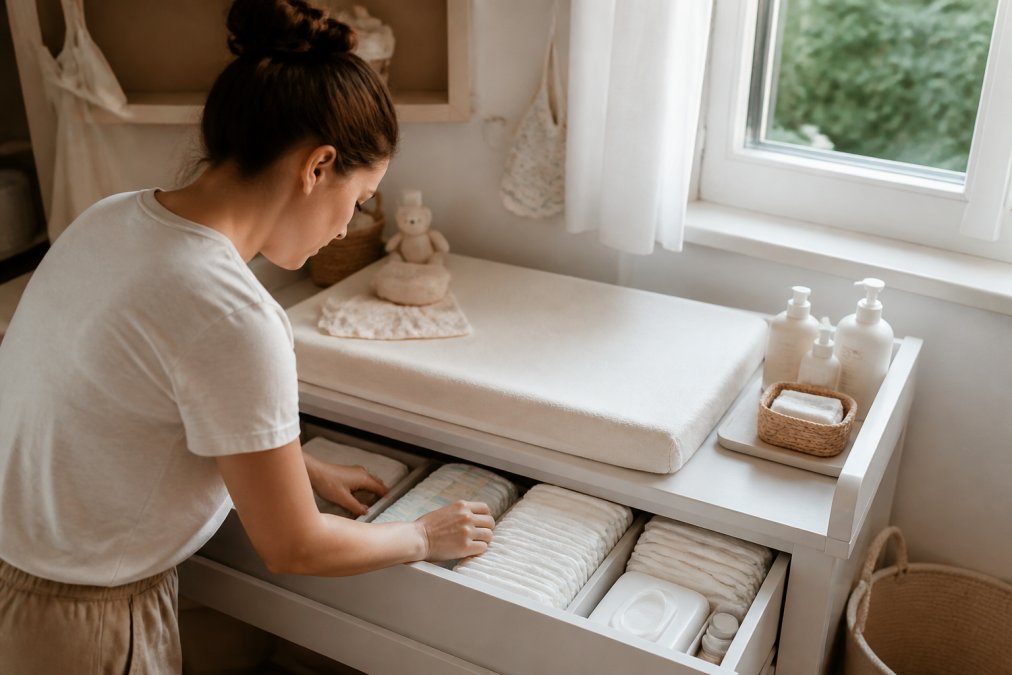
The Nappy Caddy Organiser at £19.99 is the single most useful item for the first six months. It holds everything you need for a change in one place: nappies, wipes, creams, nappy sacks, and a spare vest. Removable dividers let you customise the layout. The portable handles mean you carry the entire changing kit from room to room instead of fumbling through drawers at 3am.

For on-the-go changes, the Baby Changing Mat at £15.99 is compact enough for any changing bag. At 70cm by 50cm, it folds away neatly and provides a clean, waterproof surface for changes anywhere.

Most parents underestimate nappy consumption. A newborn uses 8-12 nappies daily, 250-350 per month (the CDC). Buy more than you think you'll need; unopened packs don't expire.
Barrier creams prevent nappy rash. Look for products with zinc oxide or petroleum jelly as the primary ingredient. Avoid creams with fragrance or essential oils; newborn skin often reacts poorly. Apply cream preventatively at each change rather than reactively once rash appears.
The Portable Baby Crib Storage Bag at £14.99 hangs directly on your cot or changing table rail. At 3am when you're half-asleep, having nappies within arm's reach means you don't need to stumble across a dark room.
Safe Baby Sleeping Environment Guidelines
A safe sleep space is non-negotiable. Babies should sleep on their backs, on a firm surface, in a smoke-free environment, without pillows, bumpers, or loose bedding. These are evidence-based safety measures that dramatically reduce the risk of sudden infant death syndrome.
A firm cot mattress specifically designed for a cot is essential. It should fit snugly with no gaps around the edges. Most cots come with a mattress, but if you're buying separately, check that it meets British Standards Institution (BSI) safety standards.
The sleep environment matters significantly. A cool, dark, quiet room promotes better sleep for both baby and parents. The Cool Mist Aroma Diffuser at £14.99 adds gentle moisture to the air, particularly helpful during dry winter months. The soft LED light provides a gentle glow without harsh brightness, and the auto power-off feature prevents worry.
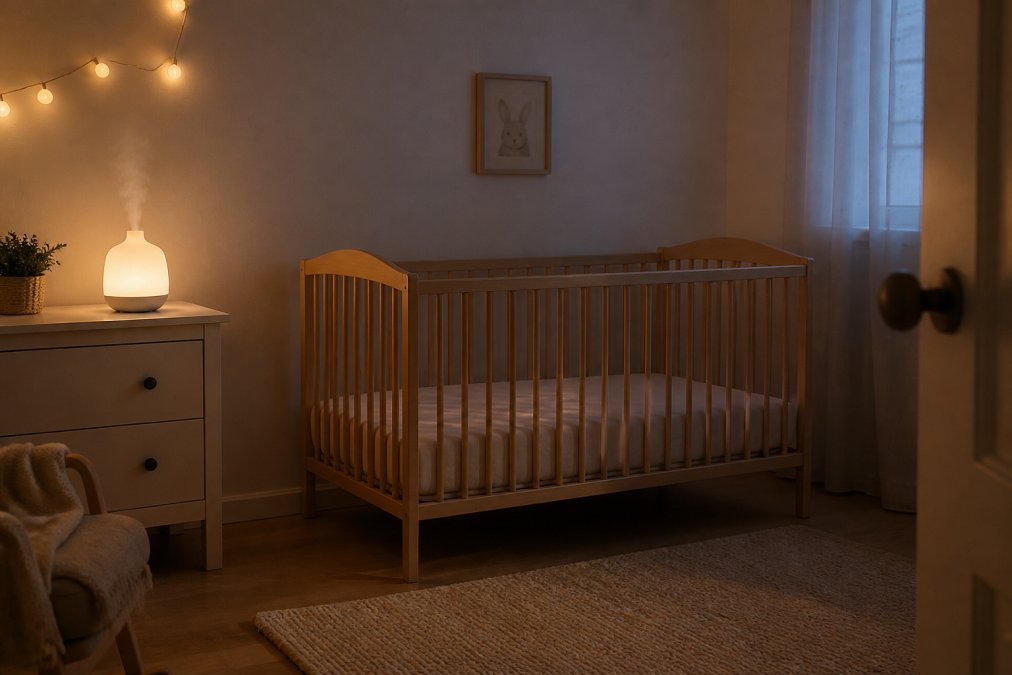
Room temperature matters more than most parents realise. Overheating increases SIDS risk. The ideal temperature is 16-20°C. A room thermometer helps you monitor this. Dress your baby appropriately for the temperature rather than piling on blankets.
A baby monitor with video capability lets you check on your baby without entering the room. Look for monitors with temperature display, two-way talk, and night vision.
White noise or gentle sounds can help babies sleep longer by masking household noises.
How to Choose Non-Toxic Baby Products
Babies' skin is more permeable than adult skin, so what touches their body matters. But "natural" doesn't automatically mean safe, and "chemical-free" is impossible.
Products in direct contact with your baby's skin for extended periods deserve careful vetting: nappies, clothing, bedding, and skincare products.
For nappies, look for brands that publish their ingredient lists. Avoid nappies treated with fragrance or lotions, which can irritate sensitive skin. Plain, unscented nappies work best for most babies.
Clothing should be soft and breathable. Natural fibres like cotton and bamboo are gentler on skin than synthetic materials. Avoid clothing with heavy dyes or finishes.
Newborns don't need lotions, oils, or potions. Water and a soft cloth are enough for most cleaning. If your baby has dry skin, a simple, fragrance-free moisturiser is sufficient. Avoid products with essential oils, alcohol, or complex ingredient lists.
When you do buy skincare products, check for dermatological testing. Products marked "dermatologically tested" have been evaluated for skin safety.
Budget-Friendly vs Premium Essentials: Where to Invest
Price doesn't always indicate quality. Some items are worth the investment; others are marketing-driven expenses.
Invest in items that directly affect safety and daily comfort. A proper changing unit (£144.49) saves your back and lasts years. A good travel system is used multiple times daily for 2-3 years.
The Yookidoo Urban Gymotion Lay to Sit-Up Playmat at £69.99 adapts through three stages of development. Rather than buying three separate playmats, one multi-stage mat grows with your baby and provides developmental support at each stage.
Save money on clothing. Newborns grow rapidly and wear items for weeks at most. Budget brands work fine. You'll need multiple vests, bodysuits, and sleepsuits because laundry happens constantly, but expensive designer baby clothes serve no purpose.
Nappies and wipes are worth comparing. Premium brands aren't necessarily better; what matters is fit and your baby's skin reaction. Buy a small pack of a few brands and test them.
Safety items like corner protectors (£7.99 for 10) and door latches (£12.99 for 10) are inexpensive and essential. Never compromise here.
| Category | Budget Option | Premium Option | Worth the Investment? |
|---|---|---|---|
| Changing Unit | Basic dresser + mat | Shefa Kids 880 (£144.49) | Yes, ergonomics matter daily |
| Clothing | High-street basics | Designer brands | No, babies outgrow quickly |
| Nappies | Store brand | Premium brand | Test both, fit matters more than price |
| Safety Gear | Standard protectors | Premium protectors | Yes, safety is non-negotiable |
| Playmat | Single-stage mat | Yookidoo (£69.99) | Yes, multi-stage use justifies cost |
| Sensory Toys | Basic rattles | Newborn Sensory Box (£48.99) | Yes, supports early development |
Storage and Space-Saving Solutions for Nurseries
Nurseries are small spaces filled with surprisingly large amounts of stuff. Without organisation, they become chaotic quickly.
The Nappy Caddy Organiser at £19.99 consolidates changing supplies into one portable container, eliminating the need for multiple drawers and shelves.
Vertical storage is your friend in small nurseries. Wall-mounted shelves hold nappies, wipes, and clothing without consuming floor space. A tall, narrow changing unit takes up less floor area while providing more storage.
The Portable Baby Crib Storage Bag at £14.99 hangs on the cot rail, using space that would otherwise be wasted.
Store only clothing that fits now. Outgrown clothing can be boxed and stored elsewhere. Newborns don't need many toys. The Newborn Sensory Box at £48.99 and Rattles and Teethers Gift Set at £9.99 provide developmental play without clutter. Rotate toys rather than displaying everything at once.

Sustainable and Eco-Friendly Baby Essentials
Environmental concerns are valid, but don't let guilt drive purchasing decisions. Some eco-friendly options make sense; others are marketing.
Cloth nappies are the most discussed eco-friendly option, but they're not practical for all families. They require washing, drying, and storage. If you have time and energy for cloth nappies, they reduce waste significantly. If you're already overwhelmed, disposable nappies are fine.
Natural fibres in clothing and bedding are genuinely better for your baby's skin. Organic cotton clothing is softer and less likely to irritate. It costs slightly more but lasts longer.
Secondhand items are the most sustainable choice. Baby equipment is used briefly and often in excellent condition. The one exception is mattresses, always buy new for safety reasons.
Wood toys and natural materials are preferable to plastic, both environmentally and developmentally. The Newborn Sensory Box at £48.99 includes natural textures and materials that engage multiple senses without plastic clutter.
Avoid single-use items. Reusable changing mats, washable wipes, and cloth nappy sacks replace disposable alternatives.
Essential Safety Gear for Growing Babies
As your baby develops from newborn to crawler to toddler, safety needs change. Invest in safety gear before you need it.
The 10x Door Safety Latches at £12.99 are essential once your baby starts crawling. Stairs, bathrooms, and kitchens become danger zones. These latches secure doors without damaging them.
The 10x Silicone Table Corner Protectors at £7.99 prevent head injuries from sharp furniture edges. Every crawling baby finds the one sharp corner in your home.
Outlet covers, furniture straps, and blind cord safety devices complete basic babyproofing. A baby gate at the top and bottom of stairs is non-negotiable if you have stairs.
The best baby essentials for first time parents aren't the most expensive items or the most advertised products. They're the ones that solve real problems: a changing unit at the right height, storage that keeps supplies organised, safety gear that prevents injuries, and sensory toys that support development.
At The Nook and Nurture Company, we've curated a selection of products specifically designed for first-time parents, chosen for functionality, safety, and genuine value rather than marketing hype. Our 30-day risk-free trial means you can test products in your home and return anything that doesn't work for your family. With guaranteed next-day shipping and 100% secure payments, you can focus on what matters: caring for your baby.
Start with the essentials covered in this guide. Add items as your baby grows and you understand what your family actually needs. You'll spend less, stress less, and create a nursery that genuinely serves your family.
Frequently Asked Questions
Q: What are the essential baby items every first-time parent needs in the first month?
A: The non-negotiables for the first month include nappies and wipes, sleepsuits and bodysuits for layering, a safe cot or bassinet with appropriate bedding, a changing mat or changing unit, feeding supplies (bottles or nursing pillows), and basic hygiene items like barrier cream. Many parents also prioritise a travel system for moving between rooms safely, and a nappy caddy organiser to keep essentials within arm's reach during those frequent changes. The Nappy Caddy Organiser (£19.99) keeps everything accessible during those early weeks when you're managing multiple tasks at once.
Q: How do I know when to buy newborn essentials before the baby arrives?
A: Start shopping around 6-8 weeks before your due date. This gives you time to purchase items without rushing, test products if needed, and arrange delivery. Focus first on basics: nappies, wipes, sleepsuits, and a safe sleeping space. By 4 weeks before birth, you should have feeding supplies, a changing area set up, and safety equipment installed. Leave room in your budget for post-birth purchases, you may discover your baby has specific preferences or needs that weren't obvious beforehand. The 30-day risk-free trial means you can order essentials and adjust if something doesn't work for your family.
Q: What makes a baby product safe and non-toxic?
A: Look for products free from harmful chemicals like BPA, phthalates, and formaldehyde. Check for third-party certifications such as OEKO-TEX (textiles) or CE marking (safety compliance). Natural materials like organic cotton are gentler on delicate skin than synthetic fabrics. For items your baby will mouth, teethers, rattles, toys, verify they're made from food-grade silicone or BPA-free plastics. Read product descriptions carefully; brands that prioritise safety typically highlight their testing and material standards. The Rattles and Teethers Gift Set (£9.99) uses BPA-free materials suitable for the mouth stage, and the Baby Changing Mat (£15.99) is dermatologically tested for newborn skin.
Q: Should I invest in premium nursery furniture or budget-friendly options?
A: Invest in items your baby uses daily and for extended periods: a quality changing unit (like the Shefa Kids 880 at £144.49) that protects your back during 8+ nappy changes daily, a safe cot with a proper mattress, and a comfortable nursing chair. Budget options work fine for items used occasionally or briefly, such as portable changing mats (£15.99) or storage solutions. Premium items often last through multiple children and convert for different uses, the Shefa Kids changing unit transforms into a dresser when nappy days end. Balance comfort and longevity against your budget; a cheaper option you'll replace in six months costs more than investing upfront.
Q: What are the best space-saving solutions for small nurseries?
A: Vertical storage is your friend: wall-mounted organisers like the Portable Baby Crib Storage Bag (£14.99) hang directly on the cot rail, keeping nappies and essentials within arm's reach without taking floor space. Changing units with built-in drawers (like the Shefa Kids 880) consolidate multiple storage needs into one piece. Removable changing tops transform furniture into dressers once nappy days end. Corner protectors and door latches (£7.99 and £12.99) secure your space without adding bulk. Choose multi-stage items like the Yookidoo Playmat (£69.99) that grow with your baby rather than buying separate products for each developmental phase.
This article was written using GrandRanker


