

Table of Contents
- Quick Comparison: Best Open Ended Toys for Toddler Development
- The Benefits of Open-Ended Play for Growing Toddlers
- Open-Ended vs Closed-Ended Toys: What's the Real Difference?
- 1. Six-Sided Activity Cube: Best All-in-One for Busy Toddlers
- 2. Stacker Blocks Play Set: Best Budget Starter Toy
- 3. The Domino Drop Express: Best for Cause-and-Effect Learning
- 4. Melissa & Doug Match & Roll Shape Sorter: Best Wooden Option
- 5. Marble Run: Best for Building and Engineering Play
- Cons:
- Frequently Asked Questions
Last Updated: September 30, 2026
Quick Comparison: Best Open Ended Toys for Toddler Development
The best open ended toys for toddler development are those a child can use in dozens of different ways, without a single "correct" answer built in. This guide from The Nook and Nurture Company compares five options across price, age range and the skills each one quietly builds, so you can pick the right fit for your child's stage rather than the biggest box on the shelf.
| Toy | Price | Best For | Key Strength |
|---|---|---|---|
| Six-Sided Activity Cube | £30.99 | All-in-one play | Six activities in one cube |
| Stacker Blocks Play Set | £8.99 | Budget starter | Ten blocks, endless stacking |
| The Domino Drop Express | £34.99 | Cause-and-effect | Train lays its own dominoes |
| Melissa & Doug Shape Sorter | £12.99 | Wooden option | Rolls as well as sorts |
| Marble Run | £8.99 | Building play | 29 pieces, 14 marbles |
Below, we break down what each toy actually does, who it suits, and where it falls short.

The Benefits of Open-Ended Play for Growing Toddlers
Open-ended play is any play where the child decides what happens next, rather than following a fixed set of rules or a single intended outcome. A toy that can become a tower, a tunnel, a shop till or a drum is open-ended. A toy that only does one thing is not.
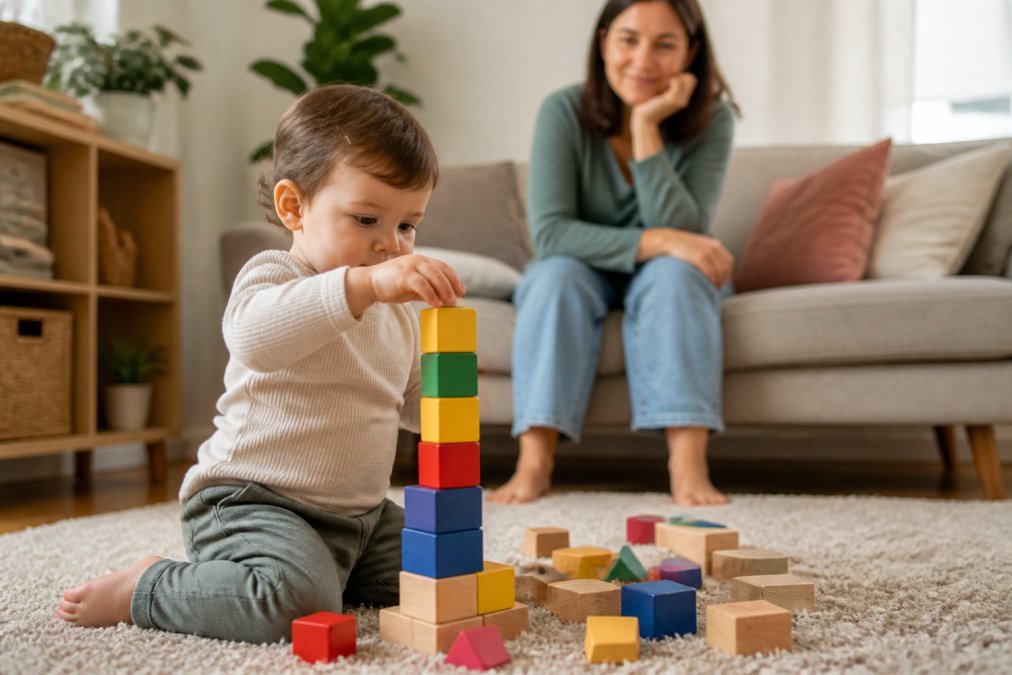
The benefits show up in ways you can actually see. Many parents find their toddler stays with an open-ended toy far longer than a flashing electronic one, because there is always another way to use it. That longer attention span is where problem-solving, persistence and language all get practised.
There is a practical bonus too. A small set of genuinely open-ended toys supports a minimalist toy rotation for toddlers, where you keep a handful out and store the rest. Fewer toys on the floor often means deeper play with each one.
Open-Ended vs Closed-Ended Toys: What's the Real Difference?
A closed-ended toy has one job and one correct result. A shape sorter that only accepts the right shape in the right hole is closed-ended. An open-ended toy has no fixed finish line, so the child sets the goal.
The distinction matters because the two types do different work. Closed-ended toys are excellent for teaching a specific skill, such as matching a star to a star-shaped hole. Open-ended toys build the broader skills: planning, trial and error, imaginative thinking and self-direction.
Most well-stocked playrooms need both. The mistake is buying only closed-ended toys, then wondering why your toddler loses interest after two minutes. A toy with one answer gets solved once.
That said, the line is not always clean. The Melissa & Doug Match & Roll Wooden Shape Sorter is a closed-ended puzzle at heart, but the rollable drum design turns it into something a toddler will chase, tip out and restart, which stretches the play well beyond the original task.
1. Six-Sided Activity Cube: Best All-in-One for Busy Toddlers
Verdict: If you want one toy that covers the most ground, this is it. Six sides, eight different activities, and a price that undercuts buying those activities separately.
The cube packs a shape sorter, bead maze, spinning gears, car maze, clock face, flip butterfly, number tray and graphic bead path into a single cube. That is the real argument for it: instead of six toys scattered across the rug, you get one compact cube that sits neatly on the shelf.
It grows with your child, which is where most toys fail. At 12 months they will spin the gears and flip the butterfly. At two they will sort shapes and drive the cars along the tracks. At three they will count the numbers and tell you what the clock says.
Pros:
- Eight activities in one toy, so it earns its floor space
- Compact footprint for smaller homes
Cons:
- Doing eight things well means no single side is as deep as a dedicated toy
- At £30.99 it is the second-highest price in this list
2. Stacker Blocks Play Set: Best Budget Starter Toy
Verdict: Ten blocks for £8.99, and they do more than the price suggests.
Stacking, nesting, sorting by number, sorting by colour, sorting by size, lining up, knocking down. The set covers early maths and colour recognition without a flashcard in sight. Each block is numbered one to ten and shaped differently, so a toddler can sort by three different criteria before they can even say the numbers out loud.
The motor skills piece is the part parents underestimate. Grasping, lining up, placing and balancing each block works the small muscles in the hands and fingers, the same ones they will later need for holding a spoon and gripping a pencil.
Made from sturdy, BPA-free plastic with no sharp edges and no small parts, it is wipe-clean and built for the chewing stage. Suitable from six months.
Pros:
- Lowest price in this list at £8.99
- Ten blocks, multiple sorting criteria
- BPA-free, no sharp edges, no small parts
Cons:
- Blocks will end up scattered across the room, every time
- Less structured than a cube, so some toddlers need you to start the game

3. The Domino Drop Express: Best for Cause-and-Effect Learning
Verdict: The simplest idea here, and possibly the most absorbing. Load the cartridge, pop it on the train, switch it on, and watch it lay a perfect row of dominoes. Then your toddler pushes one, and the whole line falls.
The steering is what makes it more than a gimmick.
Pros:
- Genuinely absorbing cause-and-effect play
- Steerable, so runs are designed rather than repeated
- Screen-free and battery-powered
- Bright dominoes make colour recognition part of the fun
Cons:
- Highest price in this list at £34.99
- Needs floor space for a proper run

4. Melissa & Doug Match & Roll Shape Sorter: Best Wooden Option
Verdict: The classic shape sorter, fixed. It rolls.
Most shape sorters sit still and wait to be solved. This one is a rollable drum, so once the shapes are posted in, your toddler can roll it across the floor, open the lid, tip them out and start again. That repeat cycle is what toddlers actually enjoy, and it keeps the toy in play far longer than a static puzzle would.
Pros:
- Wooden build that survives being rolled across every floor in the house
- Six shapes, more than most sorters offer
- No batteries, no noise, works anywhere
- Strong gift option for a first birthday
Cons:
- Still a shape sorter at heart, so less open-ended than the cube or marble run
- Wooden pieces are heavier if thrown
Melissa & Doug Match & Roll Wooden Shape Sorter
5. Marble Run: Best for Building and Engineering Play
Verdict: The clearest example of open-ended building on this list, and at £8.99 it is remarkable value.
It also grows with them.
Pros:
- Strongest open-ended building play in this list
- 29 pieces for £8.99
- Grows from age three to around seven
- Sturdy pieces that click together firmly
Cons:
- Loose pieces need a box or bag to stay together
Frequently Asked Questions
What are the benefits of open-ended toys for toddlers?
Open-ended toys support several areas of development at once. A stacking set builds fine motor skills, early maths through number sorting, and problem-solving as your toddler works out which block fits where. A marble run teaches cause-and-effect, spatial awareness, and persistence when the first build collapses. Because there is no single correct way to play, your child stays engaged for longer and returns to the same toy with a new idea each time.
What are examples of open-ended toys for 2-year-olds?
For a two-year-old, look for toys that can be used in more than one way. The Stacker Blocks Play Set (£8.99) works for stacking, nesting, sorting by number, and colour matching. The Melissa & Doug Match & Roll Shape Sorter (£12.99) combines posting shapes with rolling the drum across the floor. The Chunky Wooden Toy Car (£3.99) is simple enough for pushing, gripping, and imaginative play, and the Six-Sided Activity Cube (£30.99) offers eight activities across six sides.
Why are open-ended toys better than battery-operated toys?
Battery-operated toys often play a fixed script: press a button, hear the same sound, repeat. Open-ended toys put your child in charge of what happens next. A wooden car does not dictate how it should be played with, so your toddler decides whether it races, parks, or carries invisible passengers. This means the toy adapts to your child's stage rather than the other way around, and it stays useful as their skills develop.
Are wooden toys considered open-ended?
Many wooden toys are open-ended because they rely on your child's imagination rather than built-in sounds or lights. The Chunky Wooden Toy Car (£3.99) is a good example: no buttons, no instructions, just a smooth wooden car that can be pushed, raced, or lined up with blocks. The Melissa & Doug Match & Roll Shape Sorter (£12.99) is another, combining a classic posting puzzle with a rollable drum. Both are durable enough to pass down.
How can open-ended play help with toddler speech development?
Open-ended play creates natural opportunities for conversation. When your toddler builds a tower and knocks it down, you can narrate what happened, ask what comes next, or name the colours and numbers involved. Role-play toys like the AIYAPLAY Pretend Play Kitchen (£61.53) encourage storytelling and vocabulary as children describe what they are cooking. The back-and-forth of play gives you something concrete to talk about, which supports language development.


