

Table of Contents
- When to Pack Your Hospital Bag
- Hospital Bag Checklist for Mum and Baby
- Labour Snacks for Hospital Bag
- C-Section Recovery Kit
- Logistics for the Birth Partner
- Eco-Friendly and Budget-Friendly Packing Tips
- Conclusion
- Frequently Asked Questions
Last Updated: October 3, 2026
When to Pack Your Hospital Bag
The best time to pack a hospital bag is between 36 and 37 weeks of pregnancy, so it is ready well before your due date. At The Nook and Nurture Company, we suggest having it by the door from 36 weeks, because babies rarely check the calendar.
Most parents-to-be in their third trimester find that packing in stages works better than one rushed evening. Your maternity notes should travel with you from around 36 weeks, not sit in a drawer at home.
If you are planning a home birth or a birthing centre stay, pack a smaller bag, but pack it anyway. Transfers to a labour ward happen, and a bag already waiting removes one worry on the day.
Hospital Bag Checklist for Mum and Baby
A complete hospital bag checklist for mum and baby covers four things: documents, clothing, toiletries, and comfort items. Build it in that order and nothing essential gets missed.
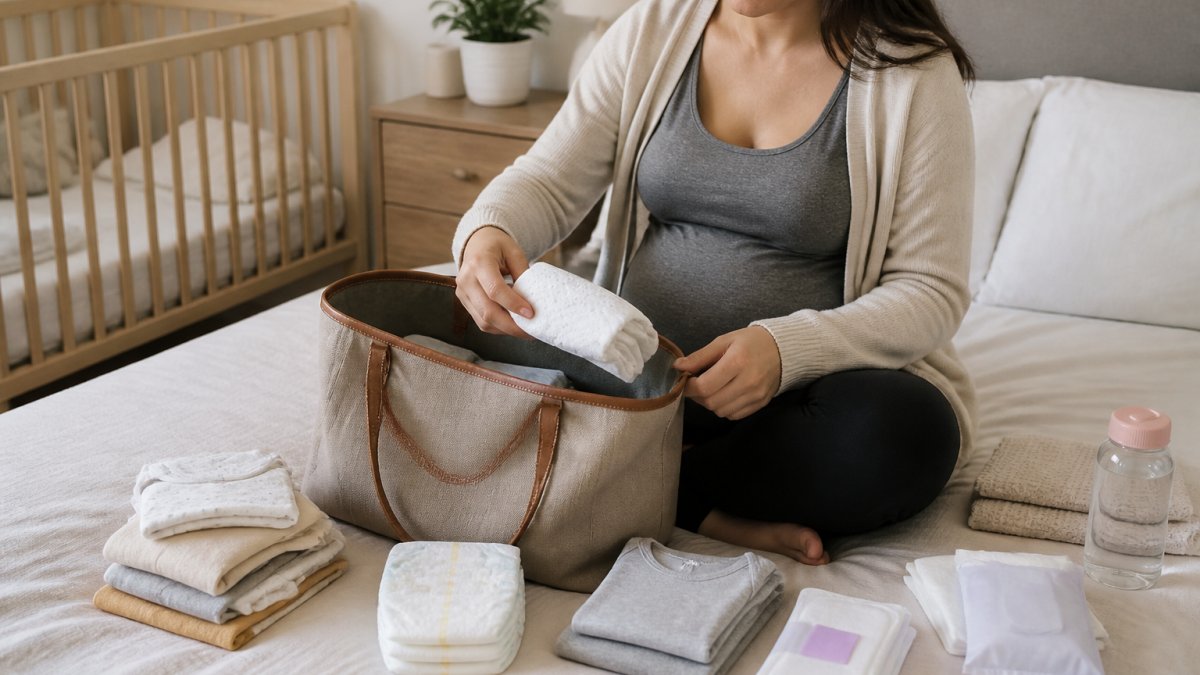
What to Pack for Mum
Start with the paperwork and the practical layers. For labour itself, you need:
- Maternity notes and your birth plan
- Loose-fitting nightgown or an old t-shirt you do not mind ruining
- Dressing gown and a pair of slip-on slippers
- Lip balm, hair bobbles, and a long phone charging cable
- Maternity pads, nursing bras, and breast pads
- Toiletries: toothbrush, toothpaste, deodorant, shampoo, and a towel
- Going-home outfit, ideally something that fitted at six months
A TENS machine helps many people manage early labour at home, though you will need to check whether your unit allows one on the ward. An eye mask and earplugs are the two items people forget and then wish they had packed, particularly on a shared postnatal ward.
What to Pack for Baby
Babies need far less than the shops suggest. Pack:
- Baby vests and baby grows, two to three of each
- A baby blanket and a swaddle or two
- Nappies, baby wipes, and cotton wool balls
- A hat for the journey home
- Formula and sterilised bottles if you are formula feeding
- A car seat, fitted and waiting, for the drive home
Skin-to-skin contact straight after birth keeps your baby warm and calm, so keep a vest accessible rather than buried. Our Mama Bear Travel Bag was designed for exactly this: multiple compartments, a lightweight build, and a shape that attaches to a pram, so everything has a home at 3am.

Essentials Versus Nice-to-Haves
Most guides blur the two, which makes it hard to know what to buy first. Here is the split we recommend.
Genuinely essential:
- Maternity notes and birth plan
- Two or three nighties or old t-shirts
- Dressing gown and slippers
- Maternity pads (around two packs to start)
- Nursing bras and breast pads if breastfeeding
- Basic toiletries and a towel
- Baby vests, grows, nappies, wipes, cotton wool, hat, blanket
- Car seat for the journey home
- Phone charger with a long cable
Nice-to-have, buy only if budget allows:
- A second going-home outfit
- Fancy toiletries or a specific pillow
- A tablet or e-reader for the postnatal ward
- A dedicated nursing pillow
- A small speaker or playlist device
If money is tight, spend on the essentials and borrow or buy second-hand for the rest. Blankets, bags, and clothing are fine pre-loved; maternity pads, car seats, and anything safety-related should be new.
Labour Snacks for Hospital Bag
Pack labour snacks that are easy to eat one-handed and do not need a fridge. Labour can run long, and hospital shops close.
Good options include cereal bars, dried fruit, crackers, and glucose tablets for a quick energy lift. A refillable water bottle with a sports cap beats a cup you cannot hold during contractions. Many midwives encourage small, frequent sips rather than large drinks.
Skip anything heavy, greasy, or strongly scented. Your birth partner should pack their own snacks too, because they will be there just as long as you are.
C-Section Recovery Kit
If you are having a caesarean, or want to be ready in case one becomes necessary, pack a separate recovery kit. This is one of the most overlooked parts of hospital bag preparation, and it makes the first week home far easier.
A caesarean is major abdominal surgery, so the recovery kit is less about comfort and more about not straining the incision. Build it around four needs: protecting the scar, moving without pain, managing bleeding, and keeping everything within reach.
What Goes in the Kit
- High-waisted underwear that sits well above the scar line, the single most useful item
- Loose, soft clothing that will not rub, including a nightie rather than pyjama bottoms for the first day or two
- Maternity pads, which you will still need for several weeks
- A small pillow for the journey home, to cushion the seatbelt against the scar
- Slip-on slippers, because bending to put on shoes is painful after surgery
- A long phone charging cable, so you are not reaching across the bed
- Lip balm and a water bottle with a sports cap, since sitting up to drink is awkward at first
- Any prescribed pain relief, kept in its original packaging
Planned Versus Emergency Caesarean
If your caesarean is planned, you will usually be given a date and can pack the kit in advance, often alongside your main hospital bag. If it becomes an emergency, you may not have the kit with you, which is exactly why we suggest packing it from around 36 weeks regardless of your birth plan.
A common pattern is that people who planned a vaginal birth and ended up with a caesarean are the least prepared, because the kit was never on their list. Packing it early costs nothing and removes one source of stress if plans change.
The First Few Days at Home
Once you are home, keep the kit in one place near where you will spend most of your time. Set up a station with pain relief, water, snacks, your phone, and the remote within arm's reach, so you are not getting up every few minutes.
Most practitioners find that gentle movement helps recovery, but lifting, driving, and heavy housework should wait until you have been cleared. Ask your midwife or health visitor what applies to you, as advice varies with how the surgery went.
Logistics for the Birth Partner
The birth partner's job is to know where everything is, keep the car fuelled, and stay calm. Pack the partner a small bag of their own: snacks, a change of clothes, a phone charger, cash or a card for parking, and a list of who to contact.
Agree in advance who is looking after pets, who is on standby for the school run, and how you will get to the labour ward at 2am. Have the route planned and the hospital bag in the boot from 36 weeks.
One practical detail most guides miss: the birth partner should carry the maternity notes, not the person in labour. During contractions, handing over a folder is the last thing on your mind.
Eco-Friendly and Budget-Friendly Packing Tips
You do not need to spend a fortune to pack well. Reusable cloth wipes, washable breast pads, and second-hand baby grows cut both cost and waste, and babies outgrow clothing within weeks.
For a budget-friendly bag, buy the essentials new and everything else second-hand. Maternity pads, car seats, and anything safety-related should be new, but blankets, bags, and clothing are fine pre-loved.
Our Nappy Caddy Organiser and Baby Changing Mat are both built to be wiped clean and reused, which keeps them out of landfill and out of your bin. For parents who want a sustainable option without the premium price, that combination covers the nappy-changing essentials for years, not months.

Conclusion
Packing a hospital bag for birth is one of the few parts of becoming a parent you can genuinely prepare for, and doing it early removes a real source of stress. Whether you are planning a labour ward, a birthing centre, or a home birth, having your bag ready by 36 weeks means you can focus on the moment rather than the packing list.
At The Nook and Nurture Company, we stock the practical essentials that make those first days easier, from the Mama Bear Travel Bag to our nappy caddy and changing mat, all covered by next-day shipping, secure checkout, and a 30-day risk-free trial. Get started with The Nook and Nurture Company and have everything ready before your due date arrives.

Frequently Asked Questions
Do you wear a bra during labour?
Many people choose to wear a comfortable, supportive bra during labour, especially if they plan to breastfeed soon after birth. A soft nursing bra or a crop top allows easy skin-to-skin contact and feeding access. Some prefer no bra at all for comfort. Pack at least two nursing bras in your hospital bag so you have a clean spare. Avoid underwired styles as they can press on milk ducts and cause discomfort.
How many knickers should I pack for a hospital bag?
Pack at least five to six pairs of high-waisted, full-coverage knickers. After birth you will bleed for several weeks, and maternity pads need secure, comfortable underwear that stays in place. High-waisted styles also avoid rubbing a caesarean scar. Disposable paper knickers are an option for the first day, but many find fabric ones more comfortable. Bring a few extra pairs in case your hospital stay is longer than expected.
What snacks are best for labour and recovery?
Choose snacks that are easy to eat one-handed, give quick energy, and do not require refrigeration. Good options include cereal bars, dried fruit, nuts, crackers, and glucose tablets. For labour, many people find isotonic drinks helpful for hydration. After birth, snacks like oatcakes and bananas support energy levels and digestion. Pack a mix of sweet and savoury items, and check if your hospital allows food in the labour ward.
Should I pack separate bags for labour and the postnatal ward?
Packing two separate bags can make your hospital stay more organised. Use a small bag for labour with immediate essentials like lip balm, snacks, water, and a tens machine. Keep a larger bag for the postnatal ward with clothes, toiletries, and baby items. If you have a straightforward birth and go home quickly, you may only need the labour bag. A separate postnatal bag helps your birth partner find things without disturbing you.


