

Table of Contents
- Why Testing Baby Gear Before Purchase Matters
- Create Your Baby Gear Shopping Checklist
- How to Test a Pram Before Buying
- Testing Car Seats, Carriers, and Cribs for Your Family
- Borrow or Hire Baby Equipment Before Committing
- Understanding Baby Equipment Return Policy
- Create Your Testing and Scoring Worksheet
- Frequently Asked Questions
Last Updated: October 10, 2026
Why Testing Baby Gear Before Purchase Matters
Testing baby gear before buying isn't a luxury, it's essential. A pram that looks perfect online might be awkward to fold in your car. A carrier that feels comfortable in a shop could cause strain during a full day of parenting. These discoveries after purchase mean wasted money, frustration, and lengthy returns.

The real cost of getting it wrong goes beyond the refund. You lose time, energy, and peace of mind during those early months when you need both. That's why hands-on testing before you buy is the smartest investment you can make.
When you test baby gear before buying, you eliminate guesswork. You'll know if the pram fits your car boot, the carrier works with your body type, and the crib fits your nursery. You'll spot safety issues or usability problems before they become your problem.
Create Your Baby Gear Shopping Checklist
A structured checklist keeps you focused when you're overwhelmed by options. Before you step into a shop or add items to your basket, know exactly what you're testing for.
Essential Items to Test in Store
Start with gear used daily: prams, car seats, carriers, and cribs. These determine your routine and nursery setup.
Create a simple list before you shop:
- Does it fit in my car?
- Can I operate it one-handed?
- How heavy is it?
- Does it fold or collapse easily?
- Are the safety features clear and secure?
- Will it work in my home's space?
These questions apply to nearly every piece of gear you'll buy. Write them down and bring them with you.
What to Bring When You Test
Bring your car keys to test fit in your actual vehicle, your partner to test comfort and operation, measurements of your bedroom and car boot, and your phone to photograph the product and model number.
If you're testing a carrier, wear it. If you're testing a pram, push it through the shop. Don't just look, use it the way you actually will at home.
How to Test a Pram Before Buying
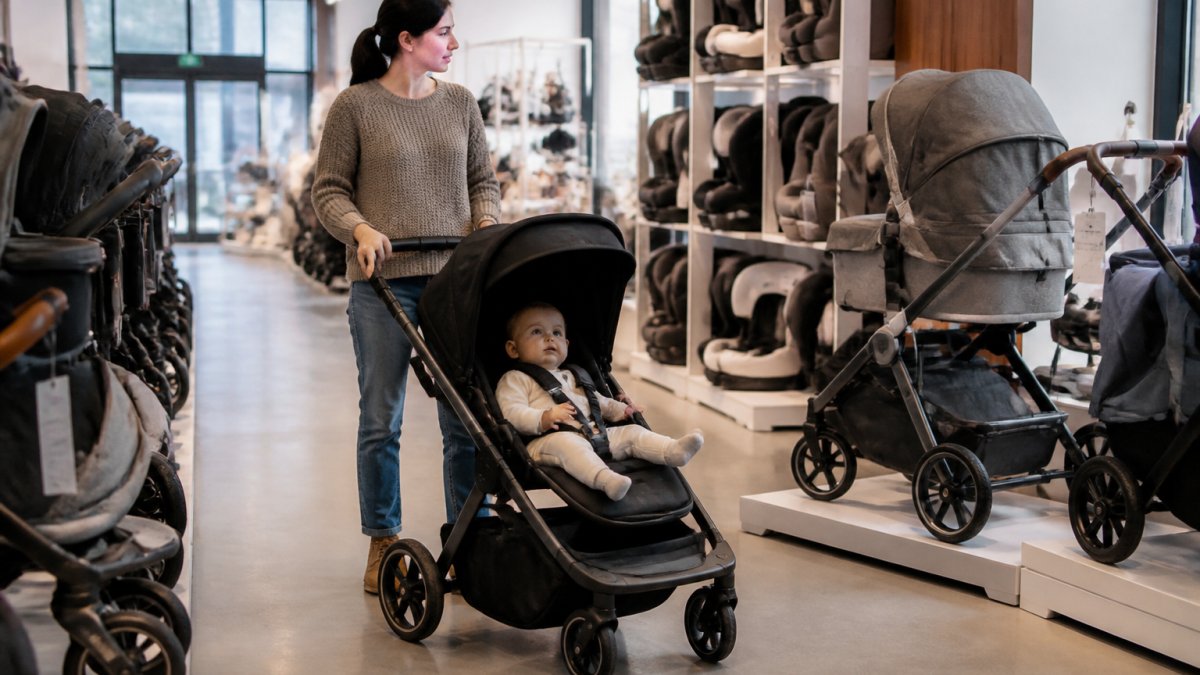
Testing a pram before buying takes about 10 minutes in-store, but it answers questions that affect you daily for months.
Push, Fold, and Fit Tests
Push the pram in a straight line and around corners. Does it steer smoothly and feel stable? Can you push it one-handed while holding a toddler's hand or carrying shopping?
Fold it yourself without help or instructions. Can you fold it intuitively with one hand while holding a baby? If it takes more than 30 seconds, you'll resent it on busy mornings.
Lift it. Can you, your partner, and your childcare provider comfortably lift it into your car boot? If anyone who uses it regularly can't manage the weight, it's the wrong pram.
Vehicle Compatibility Check
Put the pram in your actual car. Does it fit with the seat in your normal driving position? Does it fit with other items you regularly carry? Does the boot close properly?
Test both folded and unfolded, some prams fit better one way than the other.
Testing Car Seats, Carriers, and Cribs for Your Family
These three items have different testing priorities, but each one requires hands-on evaluation.
Car Seat Installation and Fit
Test the car seat in your vehicle before buying. Does it fit? Does it install securely with your seat belt or ISOFIX system? Does the installation feel stable when you push on it?
Confirm your car has ISOFIX if needed, and practice threading the seat belt. Can you do it quickly?
Test the recline angle, newborns need a specific angle for safe breathing. Can you adjust it easily as your baby grows?
Baby Carrier Comfort and One-Handed Operation
Wear the carrier yourself and adjust the straps. How does it feel on your shoulders, back, and hips? Can you wear it comfortably for an hour?
Test one-handed operation. Can you adjust straps and get the baby in and out with one hand while holding something else?
Crib Fit and Bedroom Space
Bring bedroom measurements to the shop. Place the crib in the display area and walk around it. Does it fit the way you imagined? Is there room to move around it and change sheets?
Test the mattress height. Can you comfortably reach your baby and lift them out without straining your back?
Borrow or Hire Baby Equipment Before Committing
If you're uncertain about a major purchase, borrowing or hiring removes the risk. Many parents lend gear to friends, and rental services exist for expensive items like prams and car seats.
Borrowing lets you test for weeks. You'll discover real issues: does the pram fit your lifestyle? Does the carrier work for your body type over hours? Does the crib fit your bedroom?
Hiring costs far less than buying and returning. A week's pram hire costs a fraction of the purchase price, so you lose only the rental fee if it's not right for you.
Understanding Baby Equipment Return Policy
Return policies vary widely. Know the rules before you buy, and use return policies strategically as part of your testing plan.
JOY Collapsible Playpen - Grey →
The Five Questions to Ask Before You Buy
1. What is the return window?
Ask the retailer for their return time limit in writing.
Write down the exact return deadline and mark it on your calendar. Confirm whether it's 30 days from purchase or from delivery.
2. What condition must the item be in?
Ask whether you can return used gear in good condition. If a retailer requires items unused, their policy doesn't allow real-world testing.
3. Who pays for return shipping?
Some retailers cover return shipping; others don't.
Ask who pays for return postage and whether the retailer provides a prepaid label.
4. What proof of purchase do you need?
Retailers requiring multiple forms of proof, advance notice, or original packaging are making returns deliberately difficult.
5. What is your refund method and timeline?
Ask whether refunds go back to your original payment method (credit card, debit card, bank transfer) or whether you receive store credit.
Store credit is less useful than a refund to your bank account, because it locks you into shopping with that retailer again.
Red Flags: When a Return Policy Is Not Fit for Testing
Do not buy from a retailer if any of these apply:
- No return window is specified. This suggests the retailer has no formal return policy, which is a serious red flag.
- Items must be unused and in original packaging. You cannot test gear this way. This is not a testing policy.
- The return window is shorter than 14 days. You need time to test gear in your actual routine.
- Return shipping costs are the customer's responsibility and are not prepaid. This creates a financial barrier to returns.
- The retailer requires advance notice or multiple forms of proof. This makes returns deliberately difficult.
- Refunds go to store credit only, not to your original payment method. This locks you into the retailer.
- The refund timeline is longer than 14 days after the retailer receives the item. This delays your money coming back.
How to Use Return Policies Strategically in Your Testing Plan
A good return policy is part of your testing toolkit. Here's how to use it:
Step 1: Test in-store (15 minutes). Use the five-point testing sequence to eliminate obviously unsuitable gear.
Step 2: Use the return window for home testing (7-30 days). Buy the pram, carrier, or crib that passed your in-store test. Take it home and use it in your actual routine. Test it with your car, your bedroom, your daily schedule. This is where you discover real problems that a shop test cannot reveal.
Step 3: Return if it doesn't work (before the deadline). If the gear doesn't fit your life, initiate a return before the window closes. A good return policy means you lose only the return shipping cost, not the full purchase price.
This three-step approach turns a return policy into a genuine testing tool. You're not gambling on an expensive purchase. You're testing it with a safety net.
Create Your Testing and Scoring Worksheet
Use this framework to evaluate gear consistently. Score each item across key criteria, then compare your scores.
| Criteria | Importance (1-5) | Score (1-5) | Weighted Score |
|---|---|---|---|
| Fits in car boot | 5 | ? | ? |
| Easy to fold/collapse | 4 | ? | ? |
| Comfortable to use | 5 | ? | ? |
| Weight manageable | 4 | ? | ? |
| Safety features clear | 5 | ? | ? |
| Price acceptable | 3 | ? | ? |
| Fits bedroom/home | 4 | ? | ? |
Rate each item 1-5 on each criterion. Multiply the score by importance. Add up the weighted scores. The highest total wins.
This removes emotion from the decision. You're not choosing based on colour or brand name. You're choosing based on how well the gear actually works for your family.
When you test baby gear before buying, you protect your budget and your peace of mind. The Nook and Nurture Company supports this approach completely, our 30-day risk-free trial on most items means you can test gear at home and return it with full refund if it doesn't work for your family. The UK Consumer Rights Act 2015 gives you protection on returns, and our policy goes further to give you genuine peace of mind.
Frequently Asked Questions
How early is too early to buy baby gear and start testing?
Most parents begin shopping between 20 and 28 weeks of pregnancy, which gives time to research, test products, and make informed decisions without rushing. Testing during this window lets you identify what works for your home and lifestyle before the baby arrives. Avoid buying everything at once; focus on essentials first (car seat, cot, pram), test those thoroughly, then add secondary items like playmats and carriers as you understand your specific needs.
What should I check when testing a pram or pushchair in a shop?
Test the pram's push feel and steering with one hand, check how smoothly it folds and unfolds, measure whether it fits your car boot, and assess the seat recline and harness. Bring your partner or the person who'll use it most so they can test it too. Ask the retailer about wheel suspension (especially if you'll use it on uneven ground), brake responsiveness, and whether the basket holds your typical shopping load. Always test with the actual caregiver and vehicle before committing.
Can I try a car seat before I buy it, and how do I check if it fits my car?
Yes, most retailers allow in-store testing of car seats. Bring your vehicle's manual or visit the shop with your car so you can test the actual installation using your vehicle's seat belt or ISOFIX points. Check that the seat sits level, the harness adjusts properly, and you can access the buckles easily. Verify the model is certified to UK safety standards. Some retailers offer installation checks, and many brands provide free guidance on proper fitting, take advantage of this before purchasing.
Is it worth borrowing or hiring baby equipment instead of buying?
Borrowing or hiring is excellent for testing expensive items like prams, travel systems, or specialised carriers before committing to purchase. Libraries, community groups, and rental services let you try gear in your real home environment for days or weeks. This approach is especially valuable for items your baby might outgrow quickly (like newborn-specific carriers) or equipment you'll use only occasionally. Once you've tested and confirmed what works, you can then purchase with confidence, or continue renting if it suits your budget and lifestyle.


