

Table of Contents
- Is a Baby Registry Worth It for Second Babies? The Honest Answer
- What Actually Changes With a Second Baby Registry
- Second Baby Essentials Checklist: What to Replace and What to Reuse
- How to Save Money on Baby Gear With Completion Discounts and Timing
- Baby Registry Etiquette for Second Child: Showers, No-Gift Events, and Wording
- Managing Storage, Space, and Hand-Me-Downs Without the Clutter
- Choosing the Right Registry Platform for a Second Pregnancy
- Verdict: When a Second Baby Registry Pays Off and When It Does Not
- Frequently Asked Questions
Last Updated: October 2, 2026
Is a Baby Registry Worth It for Second Babies? The Honest Answer
Yes, a baby registry is worth it for second babies, but for different reasons than the first time. It is a logistics and budgeting tool, not a gift-gathering exercise. This guide from The Nook and Nurture Company explains how to use one well.
The first registry built a nursery from nothing. The second fills specific gaps: replacing what wore out, covering a different season or gender, and locking in completion discount savings.
What Actually Changes With a Second Baby Registry
The core shift is that your registry stops being a wish list and becomes a replacement plan. Most of what you need already exists: the cot, the pram, and the bulk of the clothing. What is missing tends to be consumables, safety items past their usable life, and anything specific to a new arrival's needs.
Why the Second Registry Is a Logistics Tool, Not a Gift Grab
Registry etiquette for a second child is the sticking point for most families, and many parents feel awkward creating a second list at all. The solution: frame the registry as a practical checklist rather than a request for gifts. Keep it private to organise your own purchases and claim completion discounts, share it only with close family who ask, or build it around a nappy fund and gift cards.
Second Baby Essentials Checklist: What to Replace and What to Reuse
The second baby essentials checklist is short if you are honest about condition. Reuse anything still safe, functional, and clean; replace anything degraded, expired, or impossible to sanitise. Start with the items you used every day, as those wore hardest.
- Reuse: Cot and mattress if the mattress is firm and stain-free, pram frame, playpen, high chair, bath support, reusable muslins, and larger clothing
- Replace: Mattress if it is soft, sagging, or was used by a heavy sleeper, bottle teats and dummies, anything with cracked plastic or broken seams, and car seats that have been in a collision
- Add: A nappy caddy for downstairs changes, a portable changing mat for the changing bag, and a few new sensory items for the newborn stage
A Royal Society for the Prevention of Accidents guidance on second-hand nursery equipment is worth reading before you pass anything down, particularly on sleep surfaces.

Worn-Out Items You Should Never Pass Down
Car seats are the one category where second-hand is genuinely risky. A seat that has been in any impact, however minor, may have invisible structural damage, so never pass down one with an unknown history. Mattresses are the second: a soft or indented mattress is a safety concern for a newborn, not just a comfort one.
Other items to retire rather than reuse:
- Bottle teats and dummies that have gone cloudy, sticky, or misshapen
- Anything with a cracked or brittle plastic shell
- Toys with loose parts, frayed fabric, or peeling paint
- Nappy bins and changing mats that cannot be fully wiped clean
How to Save Money on Baby Gear With Completion Discounts and Timing
Learning how to save money on baby gear comes down to two levers: the completion discount and the timing of your purchases. Together they are the strongest financial argument for keeping a second registry open, but only if the maths beats borrowing or buying second-hand. Most registry platforms offer a completion discount, typically a percentage off remaining items for a set window around your due date.
The timing rules that matter:
- Add big-ticket replacement items early so they sit on the list when the discount window opens
- Buy consumables in bulk during the discount window rather than as you run out
- Check whether the discount stacks with sale prices, since policies vary by platform
- Keep the list live until the window closes, even if you have already bought most of it
The Cost-Benefit Test: Discount vs. Second-Hand vs. Borrowing
Before you add anything to a second registry, run it through a three-way test: the discount is only right when it beats buying second-hand or borrowing on total cost, safety, and convenience.
- Safety-critical items (car seats, mattresses): buy new, use the discount. Second-hand is not worth the risk, and borrowing is not possible for a mattress. The discount is the only saving available, so use it.
- Durable gear with a long life (prams, cots, high chairs): borrow or buy second-hand if the condition is good. A discount on a new pram rarely beats a free hand-me-down from a trusted friend. Register only if nothing suitable is available.
- Consumables (nappies, wipes, creams, muslins): use the discount to bulk-buy. These are the items where the discount delivers a genuine saving, because you would buy them anyway and the discount applies to volume.
- Small, cheap items (bottle teats, dummies, changing mats): buy new regardless. The discount saving is trivial and the hygiene argument for replacing them is strong.
Second-time parents often over-register for durable gear and under-register for consumables. The discount is most valuable on what you will use up, not what you will keep.
Baby Registry Etiquette for Second Child: Showers, No-Gift Events, and Wording
There is no rule that says a second baby needs a second shower. Increasingly, parents prefer low-key alternatives that let people celebrate without gift pressure. The harder problem, which most guides skip, is handling friends and family who feel they have already celebrated your first child and are quietly reluctant to do it again. That reluctance is normal. The etiquette challenge is to give people a way to participate that does not feel like an obligation. The three formats that work best:
- A "sprinkle": a small, casual gathering with close friends, often with a specific theme such as nappies only or books only
- A no-gift event: a meet-the-baby gathering after the birth, explicitly gift-free
- A virtual registry share: no event at all, just a link sent to those who ask
Handling the 'Showered Out' Problem
The phrase "showered out" captures a real dynamic: guests who bought generously for the first baby may feel a second registry is asking for a second round. The way through is to remove the expectation of a gift entirely and make any contribution optional and specific. A few approaches:
- Lead with what you already have. Open any conversation with "We have almost everything from [older sibling]" before mentioning the registry. It signals you are not asking for a repeat performance.
- Make the ask small and specific. "We are only short of a few consumables" is easier to accept than a full list. A nappy fund or a gift card request reads as practical, not greedy.
- Give people a no-gift option that still feels generous. A meal train, a hand-me-down offer, or an hour of childcare cost less than a gift and often mean more.
- Do not send the registry unprompted. Share it only when someone asks. This single rule removes most of the awkwardness.
If you do create a registry, the wording matters more than the format. Keep it simple and specific: "We have most of what we need from [older sibling]. If you would like to contribute, we have set up a small list of the bits we still need." For a no-gift shower, say so on the invitation, "Your company is the gift" is clear.
When to Skip the Registry Entirely
There is a point at which the social cost of a second registry outweighs the savings. If your circle is small, the first baby's gifts are still in use, or you would feel uncomfortable sharing a list at all, a private registry used only for your own completion discount is the cleaner answer: you keep the financial benefit and skip the etiquette problem.
Managing Storage, Space, and Hand-Me-Downs Without the Clutter
Space is the quiet problem with second babies. You are storing two children's worth of gear in a home sized for one, and hand-me-downs arrive faster than you can sort them.
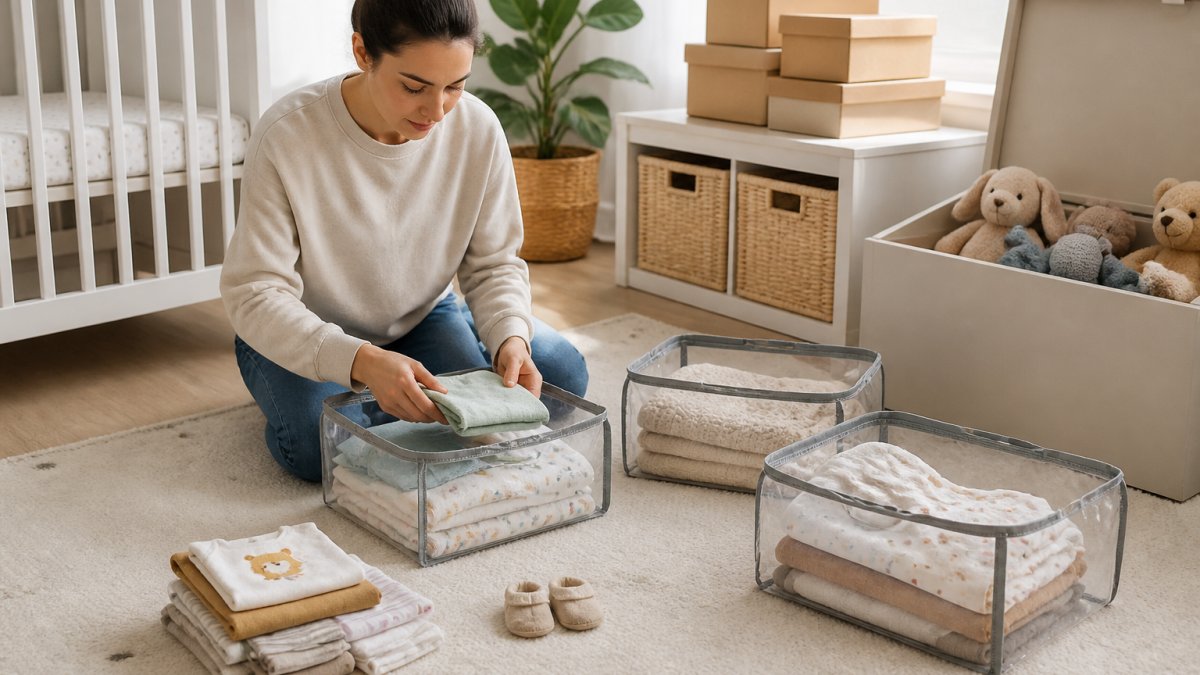
The approach that holds up is a three-bin system, sorted by size rather than item type.
- Bin one: outgrown and keep. Clothes and gear the older child has finished with, washed, bagged, and labelled by age range
- Bin two: coming up. Items the second baby will need within the next three months, kept accessible
- Bin three: pass on. Anything you will not use again, ready to donate or give to another family
Labelling by age range rather than month is the detail most people miss: it makes the bins reusable across children without re-sorting.
For the clutter that accumulates in living spaces, a deep storage chest does more than a basket. The AIYAPLAY Lion Toy Box has a 57 x 31 x 30cm interior, safety hinges that hold the lid open, and a 20kg weight capacity, so it doubles as a seat. At £44.99, it is the kind of item that solves a problem you will have for the next five years rather than the next five months.

Choosing the Right Registry Platform for a Second Pregnancy
The right platform for a second pregnancy offers a usable completion discount, allows privacy, and supports a nappy fund or gift cards. Everything else is secondary.
Features worth checking before you commit:
| Feature | Why It Matters for a Second Registry |
|---|---|
| Completion discount | The main financial reason to keep a registry open |
| Privacy settings | Lets you keep the list private and avoid gift pressure |
| Cash or nappy fund option | Lets people contribute without buying physical items |
| Gift card support | Useful when you need consumables rather than gear |
| Discount window length | Determines how long you have to use the savings |
A smaller, curated retailer can beat a large general marketplace. When the list is short and specific, browsing thousands of near-identical options costs more time than it saves. At The Nook and Nurture Company, the deliberately narrow range makes it faster to find the replacement items a second baby actually needs.
Two practical items that come up repeatedly for second-time parents are the Nappy Caddy Organiser at £19.99, which keeps nappies, wipes, and creams in one portable place, and the Baby Changing Mat at £15.99, a foldable, wipe-clean mat measuring 70cm by 50cm. Both fall into the category of things that wore out the first time and are worth replacing rather than reusing.

Verdict: When a Second Baby Registry Pays Off and When It Does Not
A second baby registry pays off when you have a specific list of replacements and a completion discount to apply to them.
Use one if:
- You need to replace safety-critical items such as a mattress or car seat
- You want to use a completion discount on consumables and big-ticket replacements
- Family and friends have asked how they can help, and you would rather give them a specific answer
Skip it if:
- You genuinely need nothing beyond consumables you will buy anyway
- The social pressure of a second list outweighs the savings for you
- You would be building it out of obligation rather than need
The honest answer: a second registry is worth it for most families, but only as a planning document.
The second baby arrives with less fanfare and more logistics, and the gear that carried you through the first time will not always carry you through the second.
Frequently Asked Questions
Is it considered rude to have a registry for a second baby?
Not if you frame it as a practical list rather than a gift demand. Most friends and family want to help but do not know what you already own, so a second baby registry removes the guesswork. Keep the wording low-key, share it only when someone asks what you need, and avoid posting it unprompted on social media. A registry is simply a list of what would genuinely help, and people are free to use it or ignore it.
What items are actually worth adding to a second baby registry?
Focus on consumables and safety-critical replacements. Nappies, wipes, creams, and nappy sacks get used daily and never survive from a first baby. Car seats should be replaced if they have been in a collision or have an unknown history, and mattresses lose firmness over time. A second baby essentials checklist should also cover anything the first child still uses, such as a playpen or a changing mat, plus a nappy caddy organiser to keep the new baby's kit separate from the toddler's belongings.
How do you announce a second baby registry without sounding greedy?
Let the registry do the work quietly. Include the link on a baby shower invitation if one is being held, or share it one-to-one when someone asks what you need. If you are hosting a no-gift shower, say so clearly on the invitation and mention that a registry exists for anyone who insists. Avoid group messages that read as a request for presents, and never follow up with reminders.
Do completion discounts make a second baby registry worth it financially?
They can. Many registry platforms offer a completion discount on remaining items close to your due date, which effectively reduces the cost of anything you buy yourself. Combine that with the fact that a registry gives you one consolidated list, and the savings on a few larger purchases, such as a playpen or a toy box, can outweigh the effort of setting it up. Check the discount terms before you commit, because rates and eligibility windows differ between platforms.
What should you avoid putting on a registry for a second baby?
Skip anything you already own in good condition, and leave out big-ticket items that close friends or family may have offered to pass down. Avoid listing clothing in newborn sizes, since hand-me-downs usually cover that stage. Do not add items you would not buy yourself, and keep the list short. A focused registry of twenty to thirty items reads as thoughtful; a list of a hundred reads as a wish list.


