

Table of Contents
- Why Non-Toxic Nursery Storage Matters for Your Family
- Natural Materials That Keep Your Nursery Safe
- Plastic-Free Toy Storage Ideas That Actually Work
- How to Organise Toddler Toy Clutter Without Overwhelm
- Sustainable Nursery Organisation Tips for Small Spaces
- Nappy Changing Station Organization
- Maintenance and Care for Natural Storage Materials
- Conclusion
Last Updated: August 18, 2026
Why Non-Toxic Nursery Storage Matters for Your Family
When you're setting up a nursery, storage feels like a practical problem to solve. But the materials you choose matter far more than just fitting things into boxes. Many parents don't realize that conventional plastic storage solutions, adhesives, and treated wood can off-gas harmful chemicals, formaldehyde, volatile organic compounds (VOCs), and other substances that accumulate in enclosed spaces where your baby sleeps and plays for hours every day.
Non-toxic nursery storage isn't about being precious or extreme. It's about making informed choices that protect your child's health without adding complexity to your life. At The Nook and Nurture Company, we've seen how many families want to create safe spaces but feel overwhelmed by the options. The good news: choosing safer materials doesn't require sacrificing functionality or aesthetics.
The real difference between standard storage and non-toxic alternatives comes down to what's in the materials themselves. Natural fibres, untreated wood, and low-VOC finishes don't release harmful substances into your nursery air. They're also typically more durable, which means they'll outlast cheaper plastic alternatives and can be passed along to younger siblings or other families.
This guide covers practical approaches to non-toxic nursery storage, from seagrass baskets to wooden shelving to sustainable fabric organizers. You'll learn how to evaluate materials for safety, organize your space efficiently, and make choices that fit your budget and aesthetic.
Natural Materials That Keep Your Nursery Safe
The foundation of non-toxic storage starts with understanding which materials are genuinely safer. Three categories consistently deliver both safety and functionality: seagrass and wicker, solid wood, and organic fabric.
Seagrass and Wicker Baskets
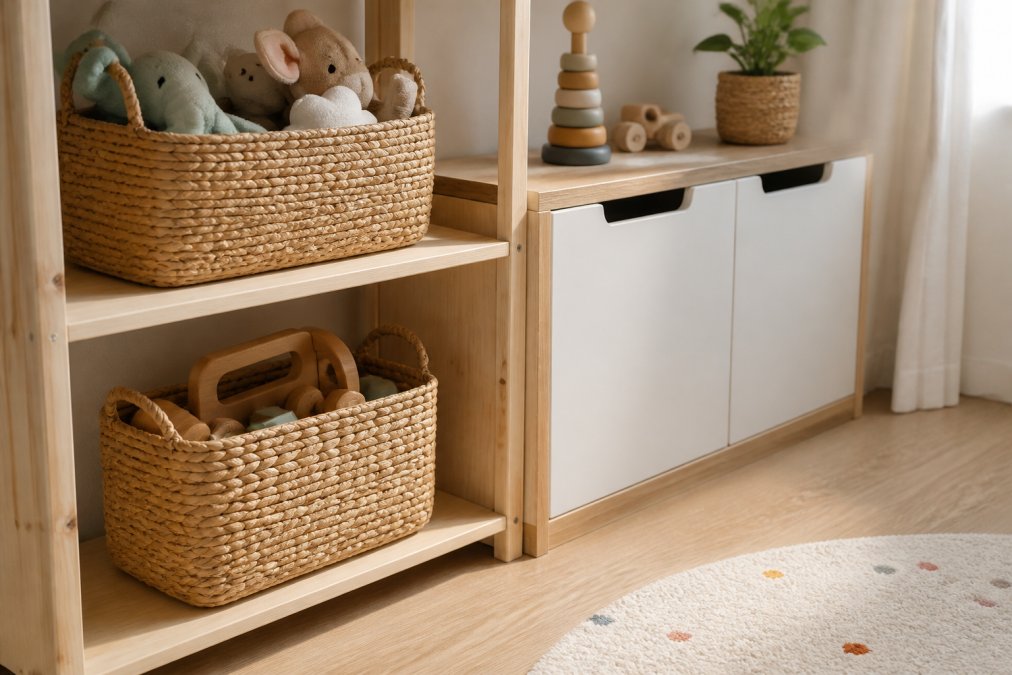
Seagrass baskets are one of the most practical choices for nursery storage. They're lightweight, durable, and naturally free from chemical treatments. Unlike plastic bins, they don't off-gas, and they're gentle enough to handle even delicate items without scratching.
When you're selecting seagrass storage, look for baskets that are tightly woven, this prevents small toys or items from slipping through gaps. The natural colour variation in seagrass also means minor marks from handling don't show as obviously as they would on plastic. Many parents use seagrass baskets for everything from nappies to soft toys to clothing, and they hold up well to daily use.

The Nook and Nurture Company offers Natural Seagrass Storage Basket Sets in multiple sizes and colours, natural, soft grey, and orange options at £13.95 per set. These sets include three baskets in graduated sizes, which lets you organize by category or item type without needing to buy separate storage units.
Wicker baskets function similarly to seagrass but are often slightly more decorative. Both materials are breathable, so moisture doesn't trap inside, which is particularly useful for storing cloth nappies or damp items after washing.
Solid Wood Storage and Shelving
Solid wood is the gold standard for nursery storage, but not all wood is created equal. The key distinction is between solid wood (which is just wood) and engineered wood products like plywood or MDF, which use adhesives and resins that can contain formaldehyde.
When you're choosing wooden storage, ask whether it's solid wood and whether it's been treated with water-based or low-VOC finishes. Untreated or naturally finished wood is ideal, though it may require occasional maintenance to prevent staining. Many wooden storage units designed for nurseries are finished with non-toxic oils or waxes that protect the wood while keeping off-gassing minimal.
Floating shelves made from solid wood create excellent vertical storage without taking up floor space. They work particularly well for displaying books, organizing frequently-used items, or storing baskets that contain smaller things.
Organic Fabric Bins and Canvas Organizers
Canvas and organic cotton bins offer a middle ground between hard storage and soft baskets. They're typically treated with minimal or no chemical finishes, and they collapse flat when not in use, useful if you need to adjust your storage layout as your child grows.
Look for canvas organizers that are made from unbleached or naturally dyed fabric. Some brands use organic cotton certified to standards that exclude synthetic dyes and chemical treatments. These bins are particularly good for storing seasonal items, extra nappies, or soft toys because they protect contents from dust while remaining breathable.
Plastic-Free Toy Storage Ideas That Actually Work
Moving away from plastic storage requires rethinking how you organize. The advantage of plastic-free approaches is that they're often more flexible and can adapt as your child's interests change.
Wicker hampers work well for soft toys and stuffed animals. They're open-top, which makes it easy for toddlers to grab and return items without needing to lift a heavy lid. Canvas storage ottomans serve double duty, they provide seating for you while storing items inside. Wooden toy boxes with safety hinges (so the lid won't slam shut) are traditional for a reason: they're durable and they teach children to open and close storage independently.
For smaller items like building blocks or puzzle pieces, use multiple smaller baskets rather than one large plastic container. This approach, sometimes called "rotation storage," lets you swap out which toys are accessible, reducing overwhelm and keeping things fresh.
The key to plastic-free toy storage is accepting that you'll need multiple types of containers rather than relying on one universal solution. A combination of baskets, wooden boxes, and fabric bins typically covers most storage needs.
How to Organise Toddler Toy Clutter Without Overwhelm
Organization systems fail when they're too complicated or require constant maintenance. The most sustainable approaches are simple enough that a toddler can help put things away.
Sort by Category and Sensory Type
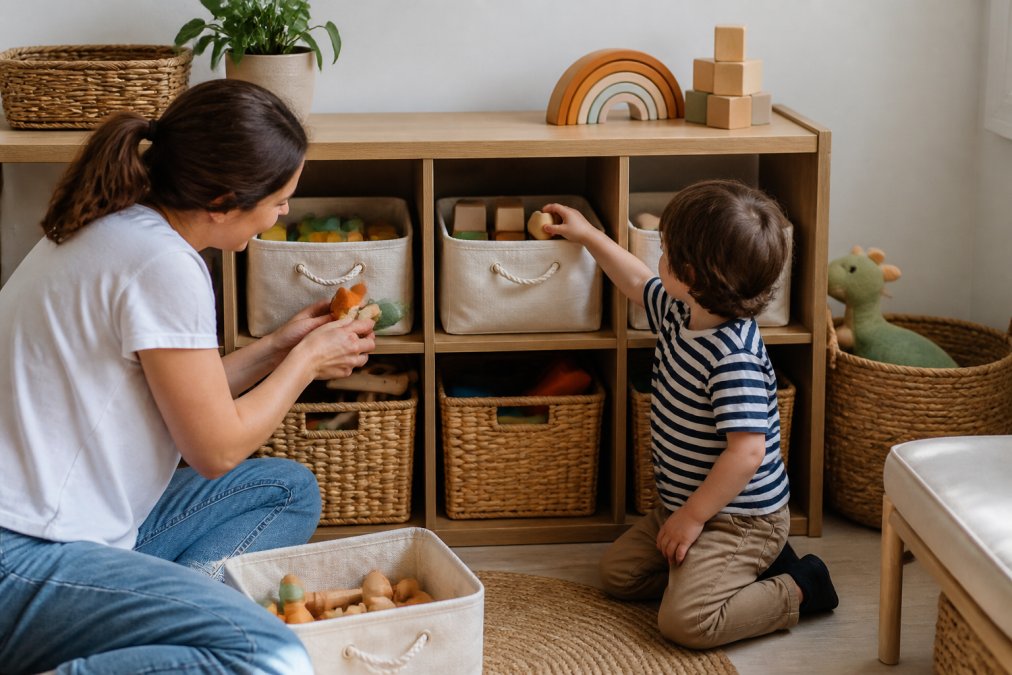
Start by grouping toys by how your child uses them rather than by brand or size. Categories might include: soft toys, building blocks, vehicles, sensory toys, and books. This system works because toddlers think in terms of play type, not storage efficiency.
Within each category, consider sensory characteristics. Toys that make noise go together. Soft textures group together. Items with similar weight or size are easier for small hands to manage. This approach reduces decision fatigue for your child and makes cleanup faster because everything has a clear home.
Label each basket or bin with words and pictures. Even pre-reading children can recognize images and learn to associate a picture with a storage location. This speeds up tidying and teaches organizational thinking early.
Rotation Systems to Reduce Clutter
A rotation system involves keeping only a portion of toys accessible while storing others away. Every few weeks or months, you swap which toys are out. This approach has several benefits: your nursery stays less cluttered, toys feel "new" when they come back out, and you're not overwhelmed by too many options at once.
To implement rotation, divide toys into three groups. Group one stays accessible. Groups two and three go into storage boxes in a cupboard, under the crib, or in another out-of-sight location. After three to four weeks, rotate which group is accessible. This keeps your active storage needs manageable and gives you time to deep-clean and assess which toys your child has genuinely outgrown.
Many parents find that rotation systems also reduce the pressure to buy new toys constantly. When toys rotate back into view, children engage with them differently and often play longer than they would with a constant supply of new items.
Sustainable Nursery Organisation Tips for Small Spaces
Small nurseries require strategic thinking about vertical space and multi-purpose storage. The goal is to maximize usable storage without making the room feel cramped or overwhelming.
Maximizing Vertical Space with Floating Shelves
Floating shelves are one of the most effective ways to add storage without eating into floor space. Install them at heights your child can reach (typically 60-90 centimetres high) so they can access toys and books independently. Higher shelves work for items you want to keep out of reach or for decorative storage.
Shelves work best when you combine them with baskets or bins. A bare shelf with loose items looks chaotic. The same shelf with three seagrass baskets looks organized and calm. The baskets also contain smaller items, so nothing gets lost behind or under things.
For very small nurseries, consider corner shelving or wall-mounted storage that doesn't protrude as far as standard shelves. Even 15 centimetres of depth can make a difference when you're working with limited square footage.
Under-Crib and Wardrobe Storage Solutions
The space under a crib is often wasted. Low-profile storage boxes or flat baskets fit perfectly in this area and keep items like extra sheets, blankets, or off-season clothing accessible but out of sight. Make sure whatever you store under the crib is in sealed containers so dust doesn't accumulate.
Wardrobe storage deserves its own attention in a small nursery. Rather than keeping all sizes of clothing accessible, store out-of-season items and larger sizes elsewhere. Use drawer dividers to keep current clothing organized by type. Vertical hanging organizers on the inside of wardrobe doors add surprising storage capacity without taking up floor or shelf space.
Nappy Changing Station Organization
A well-organized changing station saves time and reduces stress during frequent nappy changes. The key is having everything you need within arm's reach so you're never fumbling while holding your baby.
Store nappies in a basket or bin on the changing surface itself. Wipes, creams, and other essentials go in a caddy or small container beside the nappies. Many parents use a tiered organizer or a wooden caddy for this purpose. Keep a small basket for soiled nappies or items you need to wash.
For storage below the changing table, use drawers or low baskets for backup supplies, extra nappies, clothing, and changing pads. Label these clearly so anyone caring for your child knows where things are. A rotation system works well here too: keep one set of backup supplies accessible, store others elsewhere.
The non-toxic consideration at the changing station is particularly important because you're handling supplies frequently and your baby is nearby. Choose organizers made from natural materials or low-VOC finishes. Avoid plastic caddies if possible, or choose BPA-free options if plastic is necessary.
Maintenance and Care for Natural Storage Materials
Natural materials require different care than plastic, but the maintenance is straightforward and often simpler than you'd expect.
Seagrass and wicker benefit from occasional vacuuming with a soft brush attachment to remove dust. If they get damp, air-dry them completely before using again. Most seagrass baskets can handle occasional light wiping with a damp cloth, but they shouldn't be soaked. The natural oils in seagrass help it resist moisture, so it's more durable than it appears.
Wooden storage needs protection from excessive moisture and direct sunlight, which can fade or warp the wood. Dust wooden pieces regularly with a soft cloth. If your wooden storage has a natural oil or wax finish, you can occasionally re-oil it following the manufacturer's instructions. This keeps the wood nourished and maintains its appearance.
Canvas and organic fabric bins can usually be spot-cleaned with a damp cloth and mild soap. Check the manufacturer's care instructions before washing, as some fabrics require gentle handling. Many canvas organizers are durable enough for light machine washing on a gentle cycle, though air-drying is preferable.
The beauty of natural materials is that they often improve with age. A wooden toy box develops character and patina. Seagrass baskets become softer and more pliable. This aging process means your storage investments often look better over time rather than worse.
Creating a non-toxic nursery storage system takes intentionality, but it doesn't require perfection or a massive budget. Start with one or two key pieces, perhaps a set of seagrass baskets and one wooden shelf, and build from there as your needs become clearer.
The Nook and Nurture Company's curated selection of natural storage solutions, including our Seagrass Storage Basket Sets available in multiple colours at £13.95, makes it easy to start with materials you can trust. With our 30-day risk-free trial and next-day shipping, you can test what works for your space without worry. Every storage piece is chosen with your family's wellbeing in mind, so you can focus on what matters: creating a calm, safe space where your child can grow.
Frequently Asked Questions
What materials should I avoid when choosing non-toxic nursery storage?
Avoid storage items with polyvinyl chloride (PVC), which releases volatile organic compounds (VOCs). Steer clear of products with formaldehyde-based adhesives, common in cheap particleboard furniture. Plastic bins, especially older ones, may contain bisphenol A (BPA) or phthalates. Look for certifications like FSC (Forest Stewardship Council) for wood or GOTS (Global Organic Textile Standard) for fabrics. Always check product labels for off-gassing warnings and request safety documentation from sellers.
Are wicker and rattan safe for nursery storage?
Yes, wicker and rattan are generally safe for nursery storage when untreated or finished with non-toxic stains. Natural seagrass baskets are particularly popular because they're durable, free from harmful chemicals, and don't require chemical treatments. Ensure baskets have smooth, finished edges so they don't splinter or catch tiny fingers. Check that any dyes used are natural or low-VOC. Seagrass basket sets like those from The Nook and Nurture Company offer affordable, safe storage starting at £13.95.
How do I organize a small nursery without using plastic bins?
Use vertical storage with floating shelves to maximize wall space, then fill them with natural fabric bins, canvas organizers, or seagrass baskets. Utilize the space under the crib for flat storage boxes made from untreated wood or cardboard. Install a wall-mounted pegboard to hang frequently used items. Choose multi-functional furniture like storage ottomans or benches. Rotate toys regularly to reduce what needs storing at once. Label each basket by category (blocks, soft toys, musical instruments) so everything has a designated home and clutter stays manageable.
What's the difference between low-waste and sustainable nursery storage?
Low-waste storage focuses on reducing single-use items and excess packaging, using durable containers you'll keep long-term. Sustainable storage considers the entire lifecycle: how materials are sourced (FSC-certified wood, responsibly harvested seagrass), how they're manufactured (minimal chemicals, ethical labour), and whether they can be repurposed or recycled. Sustainable options often last through multiple children and can be passed on or composted at end-of-life. Both approaches reduce environmental impact, but sustainability is the broader commitment that includes ethical production and material longevity.
This article was written using GrandRanker


