

Table of Contents
- Pottery Barn Kids vs Alternatives: Quick Comparison
- What Makes Pottery Barn Kids Popular
- How to Save Money on Baby Gear Without Compromising Quality
- Nursery Furniture Safety Standards UK: What You Need to Know
- Best Pottery Barn Kids Alternatives for Every Budget
- Secondhand and Resale Options for Nursery Furniture
- Shipping, Returns, and Customer Service Comparison
- Conclusion
- Frequently Asked Questions
Last Updated: September 4, 2026
Pottery Barn Kids vs alternatives comes down to more than price. This guide breaks down what justifies the premium cost, where cheaper options genuinely deliver, and how to stretch your budget without compromising safety standards.
Below, we show how to evaluate furniture stores, compare material quality, and identify pieces that survive the toddler years, covering budget options under £100, mid-range pieces, premium aesthetics, and the secondhand market.
Pottery Barn Kids vs Alternatives: Quick Comparison
Pottery Barn Kids excels at aesthetic consistency and designer collaborations, but many alternatives now match their durable materials and non-toxic finishes at a fraction of the cost.
| Factor | Pottery Barn Kids | Budget Options | Mid-Range Alternatives |
|---|---|---|---|
| Price Point | High-end | Under £100 | £100-£250 |
| Material Quality | Solid wood, premium | MDF, engineered wood | Solid MDF, some solid wood |
| Safety Standards | Meets UK standards | Check EN71 certification | EN71 certified common |
| Aesthetic | Designer, cohesive | Basic, functional | Playful, parent-approved |
| Longevity | Grows with child | 2-3 years | 3-8 years typical |
What Makes Pottery Barn Kids Popular
Pottery Barn Kids built its reputation on cohesive nursery aesthetics and exclusive designer collaborations, which appeal to parents planning complete room designs.
The premium often pays for brand name and marketing as much as craftsmanship. Many parents replicate the look using alternatives that offer similar playful aesthetics and sturdy builds for significantly less.
How to Save Money on Baby Gear Without Compromising Quality
Saving money means understanding which items deliver genuine value over time. Allocate budget to pieces that endure multiple children or transition beyond the nursery, while choosing cost-effective options for items outgrown quickly.
Understanding True Cost of Ownership
Assembly time, durability, and maintenance affect true cost of ownership. A budget cot at £80 that fails after 18 months is more expensive than a mid-range cot at £180 lasting through three children. A premium dresser at £400 is poor value if bought secondhand for £120 in excellent condition.
Calculate cost per year of use. A £150 storage unit used for eight years costs £18.75 per year; a £60 unit deteriorating after three years costs £20 per year. Solid MDF lasts 5-8 years; budget particle board fails after 2-3 years.

Which Items Deserve Investment
Cots and mattresses are non-negotiable investment pieces. A quality cot (£150-£300) meets BS EN 716 standards, has sturdy joints, and converts to a toddler bed, extending life to 8+ years. Budget cots under £80 have weaker joints and may not fit standard mattresses correctly. A firm, well-fitting mattress (£60-£120) should never be bought secondhand due to dust mites and allergens.
Dressers that double as changing surfaces are the second priority. A sturdy dresser with solid wood or reinforced MDF (£120-£250) survives daily wear and transitions to bedroom or hallway use. Budget dressers with particle board and plastic runners develop wobbles or broken drawers within two years.
Anti-tip straps and wall anchors are mandatory for any storage unit over 60cm tall. These cost £5-£15 and take 10 minutes to install.
Where You Can Safely Economise
Storage units, bookcases, and toy organisers are excellent places to save money. A £50 unit with six bins serves the same function as a £200 alternative if both are EN71 certified with anti-tip design. Budget units in neutral colours pair well with any nursery and transition easily to playrooms.
Bedding, wall art, and decorative accessories are the most cost-effective category. A £15 duvet cover is functionally identical to a £45 designer version. Wallpaper and wall stickers cost £10-£30 and can be changed as interests evolve.
Curtains and blinds can be budget-friendly if you prioritise blackout function. A £20 blackout roller blind serves the same sleep-promotion purpose as an £80 designer blind.
Multi-Functional Pieces and Space Efficiency
A dresser that doubles as a changing table saves £100-£150 compared to buying separate pieces, while reducing floor space.
Storage units with removable bins allow you to adjust organisation as your child grows, extending useful life and justifying slightly higher initial investment.
Wall-mounted shelving costs £30-£80 for three shelves, less than a tall bookcase, and creates the illusion of more floor space while encouraging independent access.
Timing and Seasonal Discounts
Nursery furniture goes on sale in January, July-August, and November-December, reducing prices by 15-30%. However, do not delay essential purchases like cots waiting for a sale.
End-of-line items and discontinued colours sell at 20-40% discounts. Bundle discounts when buying multiple pieces can save 10-15% on a full setup.
Maintenance and Longevity
Budget furniture requires more maintenance. A £150 dresser with solid wood drawers and metal slides requires minimal maintenance and outlasts a £60 dresser with plastic slides that jam after two years.
Nursery Furniture Safety Standards UK: What You Need to Know
Nursery furniture safety standards UK requirements exist to protect children from the most common furniture hazards: tipping, entrapment, and toxic finishes. The key standard to look for is BS EN 716 for cots, which covers both the structural integrity and the spacing between bars. For storage and other nursery pieces, EN71 certification indicates the product has been tested for stability and material safety.
The UK government guidance on child safety and furniture emphasises that furniture should be anchored to the wall to prevent tipping accidents. This applies regardless of whether you buy a premium cot or a budget-friendly bookcase. Anti-tipping straps are inexpensive and should be fitted to any unit over 60cm tall.
Non-toxic finishes are another critical factor. Many budget retailers use water-based paints and varnishes that are perfectly safe for children. The Royal Society for the Prevention of Accidents guidance recommends checking for the absence of lead-based paints and ensuring that any finish is labelled child-safe. If a product does not list its finish materials, contact the retailer before purchasing.
Best Pottery Barn Kids Alternatives for Every Budget
You do not need to spend designer prices to create a nursery that is safe, functional, and beautiful. The best alternatives focus on material quality, safety certifications, and ergonomic sizing for children, rather than the brand name. Below is a breakdown of options across three price brackets, with our top pick leading the way.
Budget-Friendly Options Under £100
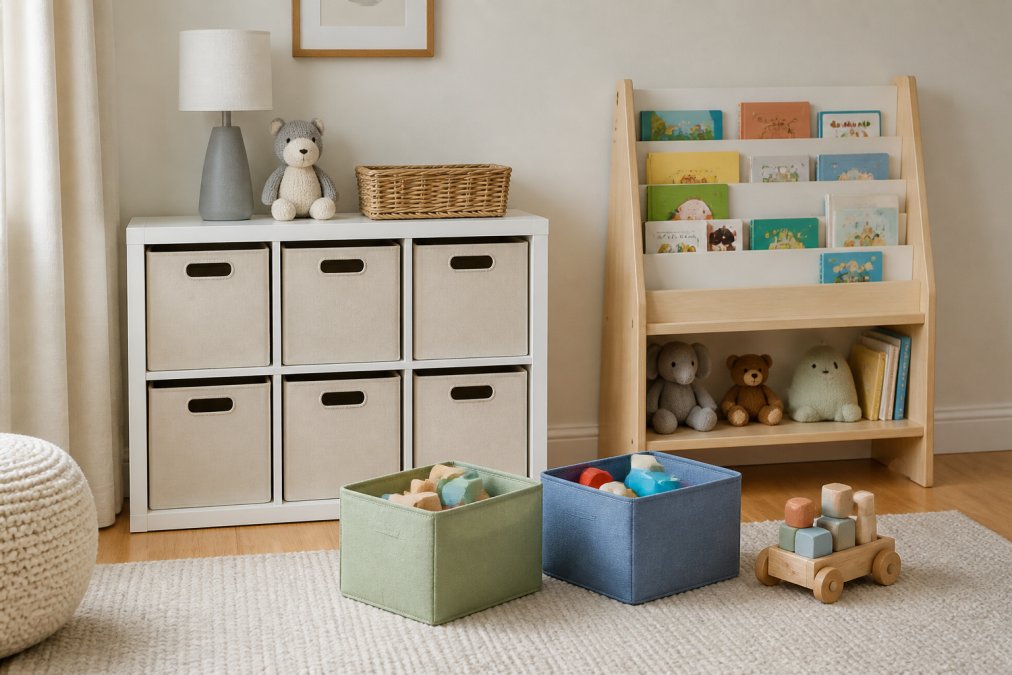
The Nook and Nurture Company offers the Explorers Storage Unit with 6 Boxes at £49.99, which is our top pick for combining value with genuine functionality. It features six separate bins in three sizes, a sturdy MDF frame with steel tube reinforcement, and EN71-1-2-3 certification. At 66cm tall, it is ergonomically sized for children aged 3-8, allowing them to reach every bin independently.
Another strong option is the AIYAPLAY Bear Bookcase, also £49.99. This three-tier bookcase holds up to 30kg total, features anti-tipping design with front guardrails, and is just 15cm deep, making it perfect for narrow gaps. The bear-shaped design brings playful aesthetics to a toddler bedroom without the premium price tag.
Mid-Range Alternatives £100-£250
The Isla 4-Coloured Box Storage Unit at £110.95 turns tidying into a colour-coded game, which works brilliantly for toddlers who cannot read labels yet. The white frame keeps the look clean, while the four coloured boxes teach categorisation skills. Each box is lightweight enough for small hands to manage independently.

For a more sophisticated look, the Padstow Storage Unit with 6 Water Hyacinth Drawers at £149.95 brings natural texture and warmth to a nursery or playroom. The woven baskets are easy for children to pull out, and the neutral finish pairs well with existing interior design. This is an investment piece that works beyond the nursery years, transitioning to a living room or hallway organiser.

Premium Alternatives That Match the Aesthetic
The ZONEKIZ Storage Unit with 9 Removable Baskets at £49.99, despite its low price, offers nine baskets across three tiers in a clean white and grey finish. Each basket holds up to 5kg, and the solid MDF frame with rounded edges delivers the sturdy build parents expect from premium brands. It is a reminder that cost-effective options can match the aesthetic consistency of high-end retailers.
Premium alternatives to Pottery Barn Kids typically come from specialist UK nursery retailers and sustainable furniture brands. These companies focus on sustainable sourcing and solid wood construction, charging more but offering furniture that genuinely lasts through multiple children. If the designer aesthetic is non-negotiable, look for independent makers who sell directly online, bypassing the retail markup.
Secondhand and Resale Options for Nursery Furniture
The secondhand market for nursery furniture is strong, and it is where savvy parents find genuine investment pieces at a fraction of the retail price. Many families sell barely used cots and dressers after their child transitions to a bed, which means you can often find premium furniture with minimal wear. Websites like Gumtree, Facebook Marketplace, and local NCT nearly-new sales are excellent starting points.
When buying secondhand, always check the item against current nursery furniture safety standards UK requirements. Cots manufactured before 2010 may not meet updated safety regulations, so verify the manufacturing date and look for the BS EN 716 standard. Check that all parts are present, including anti-tip mechanisms, and inspect for any damage to the frame or finish. The Child Accident Prevention Trust advice on secondhand nursery items recommends replacing mattresses rather than buying them used, as they can harbour allergens and may not fit the cot frame correctly.
Shipping, Returns, and Customer Service Comparison
Shipping costs and return policies are often overlooked when comparing nursery furniture retailers, yet they can add 10-20% to your total spend or create friction if you need to send an item back. Understanding these logistics upfront helps you avoid surprise costs and choose retailers that align with your risk tolerance.
Delivery and Assembly Logistics
Premium retailers typically offer white-glove delivery (£50-£150 per item) including assembly and packaging removal. This eliminates DIY assembly but is built into the advertised price.
Mid-range and budget retailers offer standard courier delivery (£8-£25) with customer assembly. A bookcase takes 15-20 minutes; a dresser requires 45-90 minutes. Budget £40-£80 per item for professional assembly if needed.
Some retailers offer next-day delivery on in-stock items, faster than the 5-10 business days typical of larger retailers.
Return Windows and Risk-Free Trials
Return policies differ markedly. Most retailers offer 28-30 day returns; some budget retailers enforce 14 days, which is tighter if you need time to assess durability or fit.
Some specialist nursery retailers offer risk-free trial periods of 30-60 days, allowing you to return items for a full refund if they do not suit your needs. This removes guesswork from online shopping, particularly for storage units where depth and height feel different in person.
Check whether the retailer covers return shipping. Premium retailers typically do; budget retailers often require you to pay £15-£40 return postage for large items.
Real-World Assembly Feedback
Assembly difficulty ratings can be misleading. A simple bookcase takes 20 minutes; a storage unit with multiple drawers and anti-tip brackets takes twice as long, especially with unclear instructions.
Look for retailers providing video assembly guides or detailed step-by-step instructions with photographs. Some offer assembly support via chat or phone. Stagger delivery across weeks if buying multiple pieces.
Customer Service and Problem Resolution
When furniture arrives damaged, premium retailers process replacements within 5-7 days and collect damaged items. Budget retailers may require you to arrange return postage and take 2-3 weeks to refund.
Check whether the retailer offers live chat or phone support. Email-only support means 24-48 hour response times, which is frustrating for safety concerns or missing parts.
Conclusion
Furnishing a nursery is a balance between aesthetic dreams and practical budgets. The best approach is to prioritise safety-certified furniture for the cot and changing areas, then allocate remaining funds to storage and accessories that match your style. While premium retailers offer beautiful design, the alternatives reviewed here demonstrate that cost-effective options can deliver the same durable materials, playful aesthetics, and parent-approved functionality.
At The Nook and Nurture Company, we curate nursery and playroom essentials that combine quality, functionality, and care, with the convenience of next day shipping and a risk-free trial. Whether you need a colour-coded storage unit to teach tidying habits or a sturdy bookcase that puts stories at your child's height, our collection supports every corner of family life. Explore our range and furnish a nursery that works as hard as you do.
Frequently Asked Questions
What are the best UK-based alternatives to Pottery Barn Kids?
Several retailers offer nursery furniture that rivals Pottery Barn Kids' quality and aesthetics. The Nook and Nurture Company specialises in curated storage solutions like the Isla 4-Coloured Box Storage Unit (£110.95) and Padstow 6-Basket Storage Unit (£149.95), which combine durability with playful design. Other options include independent furniture makers focusing on sustainable sourcing and bespoke pieces. When comparing, check whether each retailer offers safety certifications, clear return policies, and next-day shipping to match Pottery Barn's convenience factor.
How do I find high-quality nursery furniture that matches the Pottery Barn aesthetic?
Pottery Barn's appeal lies in its cohesive design language: soft colours, natural materials, and playful-but-refined styling. To match this aesthetic, look for retailers offering neutral colour palettes (soft greens, whites, natural wood tones) and mixed-material construction. The Padstow Storage Unit features water hyacinth baskets and natural finishes that echo this style. Visit showrooms or request detailed product photos to assess design consistency. Prioritise retailers with parent-approved reviews and clear product descriptions that detail materials, dimensions, and assembly requirements.
Are there affordable alternatives to Pottery Barn Kids furniture in the UK?
Yes. The Nook and Nurture Company offers storage solutions starting at £49.99 for the Explorers Storage Units with 6 Boxes and the ZONEKIZ 9-Basket Storage Unit, both certified for safety and durability. These cost significantly less than Pottery Barn's typical price points whilst meeting safety standards. Secondhand marketplaces also yield quality pieces at 40-60% discounts. When buying budget alternatives, verify that items carry EN71 safety certifications and have clear return policies in case they don't fit your space or aesthetic.
What should I look for when comparing nursery furniture brands?
Evaluate brands on five criteria: safety certifications (EN71-1-2-3 for toys and furniture), material quality (solid MDF or natural wood rather than hollow particle board), design consistency (does the range feel cohesive?), return policy (30-day trials or longer reduce risk), and shipping logistics (next-day delivery saves time and cost). Also check whether the brand offers storage solutions that grow with your child, from toddler to school age. Read parent reviews on durability, how well does the furniture withstand daily use, assembly difficulty, and whether handles or edges splinter over time?
This article was written using GrandRanker


