

Table of Contents
- When to Start Baby Proofing Your Home
- Room-by-Room Baby Proofing Checklist
- Best Baby Safety Gates for Stairs
- How to Secure Furniture to Walls
- Essential Baby Proofing Checklist Items
- Common Baby Proofing Mistakes to Avoid
- Conclusion
Last Updated: August 19, 2026
When you become a parent, the world suddenly feels more dangerous. Sharp corners, open stairways, and kitchens full of scalding water and sharp implements transform into hazards. A baby proofing checklist isn't about eliminating every possible risk, that's impossible, but about addressing the most serious hazards systematically, room by room, so you can actually enjoy your child's early years. The Nook and Nurture Company provides a curated selection of baby, parent, and home essentials designed to make a meaningful difference in your family life.
When to Start Baby Proofing Your Home
The ideal time to start is around six months, when your baby might begin rolling or crawling. Starting early lets you work methodically rather than scrambling when your child suddenly becomes mobile. There's no such thing as "too early" to begin.
Your baby's developmental stage determines which hazards matter most. A six-month-old doesn't need stair gates, but does need protection from falls off changing tables. By nine months, when crawling begins, protect what's within arm's reach at floor level. By eighteen months, furniture anchoring becomes critical.
Work room by room, starting where your baby spends the most time. Your bedroom comes before the guest bedroom. This phased approach keeps the task manageable.
Room-by-Room Baby Proofing Checklist
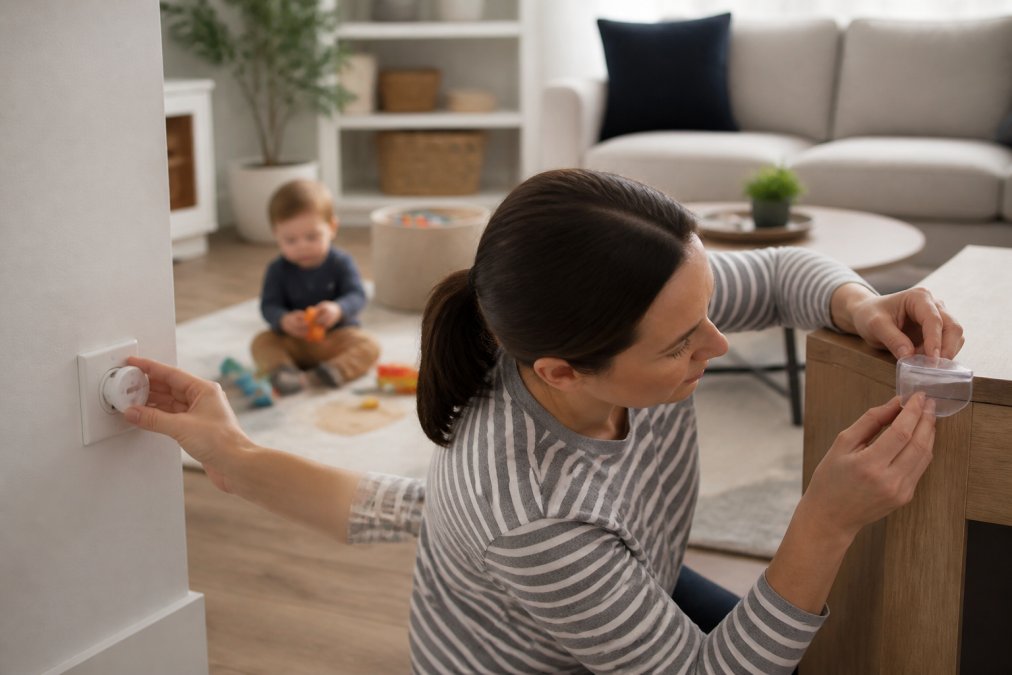
Living Areas and Bedrooms
Living rooms and bedrooms are your priority. Start with furniture anchoring: every piece that could tip, bookcases, dressers, entertainment units, side tables, needs to be secured to the wall. A falling bookshelf can cause serious injury. The Nook and Nurture Company offers 10x Door Safety Latches (£12.99).

Electrical outlets are next. Babies are drawn to them. Outlet plug covers are harder to dislodge than simple covers, or use tamper-resistant outlets if renovating.
Corner guards and edge padding reduce impact severity from inevitable bumps. The Nook and Nurture Company's 10x Silicone Table Corner Protectors (£7.99) offer durable protection.

Remove small choking hazards, coins, buttons, small toys, batteries, anything smaller than a toilet paper roll. Secure heavy items on shelves and keep cords from blinds and electronics out of reach. Blind cords pose a strangulation risk; tie them up high or use cordless blinds.
In bedrooms, ensure the cot meets current safety standards with a firm mattress and no pillows, blankets, or bumpers.
Kitchen Safety Essentials
The kitchen concentrates the most dangerous hazards: heat, sharp objects, toxic substances, and heavy appliances. Start with appliance latches and locks on ovens, dishwashers, refrigerators, and cabinets. Cabinet locks are essential, securing cleaning supplies is pointless if cabinets open easily.
Keep all cleaning products, medications, and toxic substances locked away, including dishwasher tablets. Install a cooker guard to prevent reaching hot pots. Keep pot handles turned inward and never leave cooking food unattended.
Store knives and sharp utensils in locked drawers or high cabinets. Keep the floor clear of tripping hazards and spills.
Bathroom Hazards to Address
Never leave your child unattended in or near water. A child can drown in as little as two centimetres of water in less than two minutes. Keep the bathroom door closed and locked when not in use.
Adjust your water heater to a maximum of 48°C to prevent scalding. Install a non-slip mat in the bathtub and keep the floor dry. Lock up all medications, supplements, and toiletries in a locked cabinet. Install a toilet lock if your child has unsupervised bathroom access. Keep electrical appliances unplugged and stored away.
Best Baby Safety Gates for Stairs
Install gates at the top and bottom of every staircase. Ensure gates are securely mounted to the wall, not just pressure-fitted. Choose gates tall enough your child can't climb over them, with vertical bars rather than horizontal ones.
Ensure the gate closes and latches securely every time. If the latch is difficult, you'll be tempted to leave it open. Test gates regularly to ensure they remain secure.
For doorways where you want to restrict access but don't need maximum security, pressure-fitted gates work. The Nook and Nurture Company offers solutions to help create safe play areas and restrict access where needed.
How to Secure Furniture to Walls
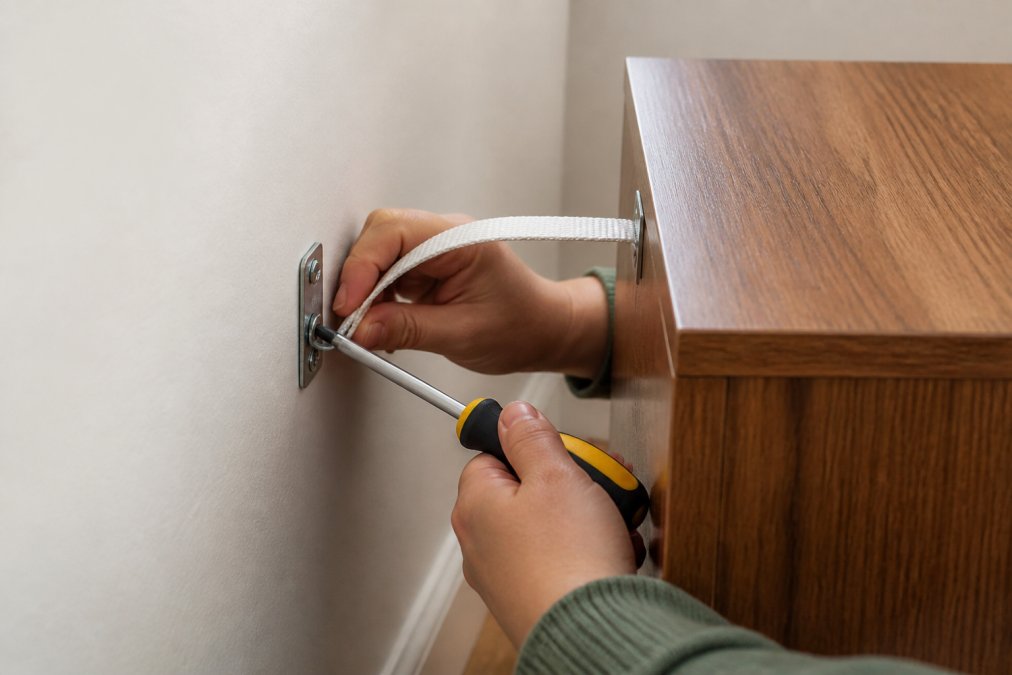
Furniture anchoring is one of the most important baby proofing tasks, yet many parents skip it. Every tall or heavy piece, bookcases, dressers, entertainment units, wardrobes, needs to be secured. If it could tip and cause injury, it needs anchoring.
Most furniture comes with pre-drilled holes for wall anchors. Use appropriate anchors for your wall type. Anti-tip straps are the simplest solution: heavy-duty straps that attach to furniture and wall, preventing tipping. L-brackets are another option for heavier pieces, providing very secure anchoring.
Don't assume furniture is stable because it's heavy or hasn't tipped yet. Test your anchoring by gently pushing. It should not move at all.
Essential Baby Proofing Checklist Items
| Item | Purpose | Priority | Approx. Quantity |
|---|---|---|---|
| Outlet covers or tamper-resistant outlets | Prevent electrical shock | High | 15-20 |
| Cabinet and drawer locks | Restrict access to hazards | High | 8-12 |
| Safety gates | Control access to stairs and dangerous areas | High | 2-4 |
| Anti-tip straps or L-brackets | Secure furniture to walls | High | 6-10 |
| Corner guards and edge padding | Reduce injury from falls | Medium | 8-12 |
| Cooker guard | Prevent burns from hot pots | High | 1 |
| Toilet locks | Prevent drowning risk | Medium | 1-2 |
| Blind cord clips | Prevent strangulation | High | 4-6 |
| First aid kit | Treat minor injuries | Medium | 1 |
| Non-slip mats | Prevent slips in bathtub | Medium | 1-2 |
Consider your specific home layout. Do you have a fireplace? You'll need a fireguard. Low windows? You might need window guards. Pets? Think about pet-related hazards.
The Nook and Nurture Company's Fingerprint Lock (£34.99) offers a modern solution for securing cabinets without visible latches. For safe play areas, the JOY Collapsible Playpen - Grey (£59.99) or All Stars Playpen - Grey (£99.99) provide contained spaces where your child can play safely.

Common Baby Proofing Mistakes to Avoid
Assuming your child can't reach something. Children are more flexible, creative, and determined than you think. Work on the assumption that anything they're interested in, they'll eventually access.
Installing gates but not using them consistently. A gate left open defeats its purpose. Choose one you'll actually use.
Forgetting less obvious hazards. Blind cords, pet food bowls, houseplants, and low-shelf decorative items are easy to overlook. Get down to your child's eye level and assess what they can reach.
Skipping furniture anchoring. This is the most common serious mistake. Anchor your furniture.
Using recalled products. Check product safety recalls regularly. If you've bought second-hand, verify the item hasn't been recalled.
Over-relying on baby proofing instead of supervision. Baby proofing creates a safer environment but isn't a substitute for watching your child.
Choosing aesthetics over safety. Safety comes first. A room full of visible safety equipment is better than a beautiful room where your child gets hurt.
Conclusion
Baby proofing your home is one of the most practical things you can do as a parent. It's about systematically addressing the most serious hazards so you can relax and enjoy your child's early years. The Nook and Nurture Company provides a curated selection of baby, parent, and home essentials designed to make a meaningful difference in your family life. Start with furniture anchoring and safety gates, then work through each room systematically. Use the checklist above as your guide, and don't hesitate to ask for help if needed.
Frequently Asked Questions
What do I actually need for baby proofing?
Start with the essentials: safety gates for stairs, outlet covers, cabinet locks, corner guards, furniture anchoring straps, and cordless blind alternatives. Add door safety latches for hazardous rooms like the kitchen and bathroom. Your specific needs depend on your home layout and your child's age. A hazard assessment room-by-room helps you prioritise what matters most for your space.
At what age should you start baby proofing your house?
Begin baby proofing around 3-4 months, before your baby becomes mobile. Early preparation prevents scrambling when crawling begins. Focus first on areas where your baby spends the most time. As your child grows and reaches new developmental milestones, reassess hazards and adjust your setup. Toddlers present different risks than crawlers, so ongoing vigilance matters.
How do I secure heavy furniture to prevent tipping?
Use anti-tip straps or brackets rated for your furniture's weight. Install them securely into wall studs using appropriate fixings for your wall type. Most furniture anchoring kits include everything needed. Test the installation by gently pulling the furniture forward to ensure it's properly secured. Check straps regularly for wear, especially if you have multiple children or pets.
What are the most common baby proofing mistakes parents make?
Parents often forget to secure furniture, overlook window blind cord hazards, and install gates incorrectly. Many also miss poison prevention by leaving household chemicals accessible or fail to monitor older siblings who might undo safety measures. Another common mistake is assuming one room is fully child-resistant when hazards exist in cupboards, drawers, or behind furniture. Regular safety audits catch these oversights.
Is it necessary to baby proof every room in the house?
Prioritise rooms where your child spends the most time and areas with the highest hazards: bedrooms, living spaces, kitchens, and bathrooms. Hallways and entryways need basic safety measures. Less-used rooms can be managed by keeping doors closed and using safety gates. A complete hazard assessment helps you decide which areas need immediate attention and which can be managed through supervision and restricted access.
Do I really need to baby proof my house?
Baby proofing significantly reduces the risk of accidental injuries like falls, poisoning, drowning, and choking. While supervision is essential, environmental hazards exist even with watchful parents. Unintentional injuries are a leading cause of harm to young children. Combining baby proofing with active monitoring creates the safest environment. Every home has unique risks, but systematic childproofing protects your child during the critical developmental years when curiosity outpaces caution.
This article was written using GrandRanker


