

Table of Contents
- What Makes Curated Baby Gear Different
- Essential Baby Items for Newborns: What Actually Matters
- Resale Value and Cost-Per-Use: The Financial Case
- How to Save Money on Baby Gear Without Sacrificing Quality
- Minimalist Nursery Essentials: Less Clutter, More Impact
- Safety Standards, Durability, and Multi-Child Usability
- Second-Hand vs New: When to Splurge and When to Save
- Conclusion
- Frequently Asked Questions
Last Updated: August 31, 2026
What Makes Curated Baby Gear Different
Curated baby gear isn't just a collection of products thrown together. It's a thoughtfully selected range designed with both parents and babies in mind, where every item serves a genuine purpose rather than filling shelf space. The difference lies in the curation process itself, someone with real experience has already done the filtering work for you.
When you shop curated baby gear, you're getting products that have been vetted for safety, functionality, and longevity. This matters because the average first-time parent faces overwhelming choice. Major retailers stock thousands of items, many of which duplicate functions or add unnecessary complexity to your nursery. A curated selection cuts through that noise.
The Nook and Nurture Company takes this approach by selecting items that work together as a system. Rather than buying random pieces, you're building a nursery where products complement each other, a playmat that grows with your baby, sensory toys that support development, storage solutions that actually fit your space. This interconnected approach reduces buyer's remorse and means fewer returns.
What separates true curation from a basic product list is transparency about why items were chosen. Price point matters, but so does durability, ease of cleaning, developmental appropriateness, and resale potential. A curated retailer will explain these trade-offs rather than simply listing features.
Essential Baby Items for Newborns: What Actually Matters
The first three months require surprisingly little. Newborns need feeding, nappies, sleep, and safe handling, everything else is either convenience or developmental support. Understanding this distinction saves money and reduces clutter.
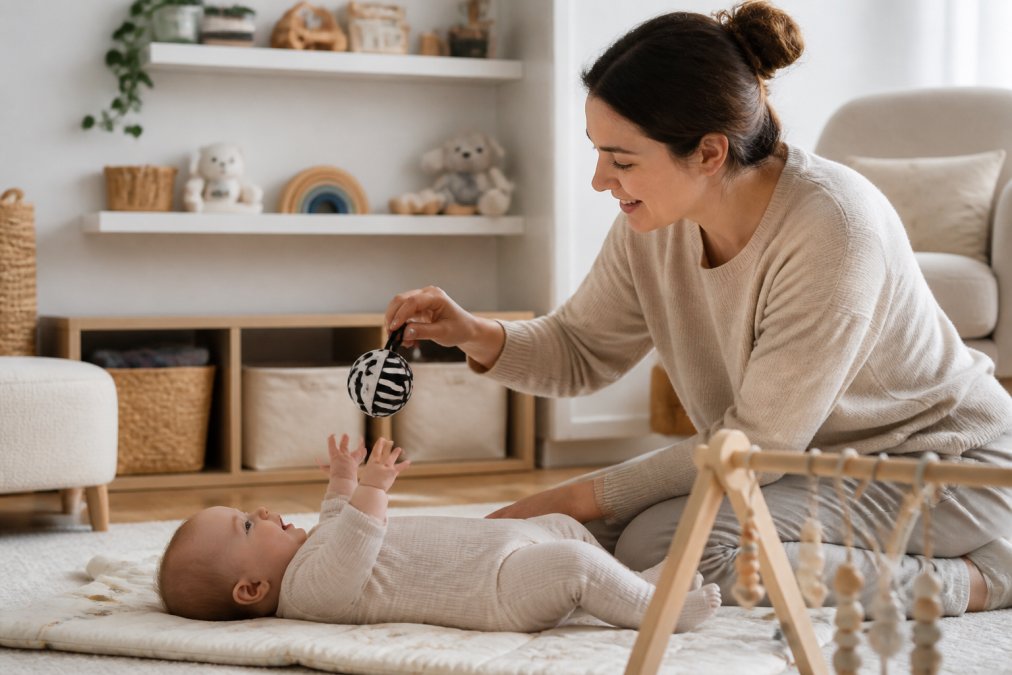
Essential items for newborns fall into three categories: sleep safety, feeding support, and sensory development. A safe sleep space (cot, bassinet, or co-sleeper) is non-negotiable. Feeding equipment depends on whether you're breastfeeding, bottle feeding, or combining both. Sensory items, high-contrast cards, rattles, soft textures, support brain development during the critical early weeks.
The Newborn Sensory Box from The Nook and Nurture Company (£48.99) consolidates sensory development into one curated set. Rather than hunting for individual items, you get high-contrast cards, tactile toys, and engagement tools designed for 0-6 months. This approach costs less than buying equivalent items separately and ensures developmental appropriateness.

Common items people buy but rarely use include wipe warmers, bottle sterilizers (if using a dishwasher), and specialty nursery furniture. These add cost and take up space without meaningfully improving your baby's outcomes. A focus on essentials, quality cot sheets, a safe sleep surface, basic feeding tools, delivers better value.
Temperature regulation matters more than most guides acknowledge (peer-reviewed research). Babies lose heat quickly, so appropriate clothing and a room thermometer (not a space heater) are genuinely useful. Beyond that, the best investment is in items you'll use daily: nappy changing supplies, burp cloths, and safe places to put your baby down when your hands are full.
Resale Value and Cost-Per-Use: The Financial Case
This is where curated baby gear often wins on pure economics. Quality items hold resale value, meaning your actual cost is lower than the purchase price suggests.
Calculate cost-per-use by dividing the item's purchase price by the number of times you'll actually use it. A £200 pram used daily for 18 months works out to roughly 13 pence per use. Compare that to a cheaper pram that breaks after 6 months, the cost-per-use is significantly higher despite the lower sticker price.
Resale value varies dramatically by category. Prams, cots, and travel systems typically retain 40-60% of their original value if kept in good condition (peer-reviewed research). Feeding chairs, play equipment, and storage solutions often resell for 30-50%. Clothing and soft goods depreciate faster, typically 10-20%.
The key insight is that durable, well-designed items recover more of their cost through resale. A £300 cot that sells for £150 secondhand costs £150 net. A £150 cot that sells for £20 costs £130 net, you've saved almost nothing by buying cheap. When you factor in the time spent managing the sale and the frustration of a product that doesn't last, the financial advantage flips entirely.
Storage solutions and nursery furniture designed for multi-child use add another financial layer. A changing table that converts to a desk, or storage that works in multiple rooms, extends usability beyond infancy. These items command higher resale prices because buyers see long-term value.
The Yookidoo Urban Gymotion Lay to Sit-Up Playmat (£69.99) exemplifies this approach. It's a 3-in-1 space that adapts as your baby grows, reducing the need for multiple play surfaces. Higher upfront cost, but lower total spend across your child's first year when you factor in what you don't have to buy separately.

How to Save Money on Baby Gear Without Sacrificing Quality
The false choice between budget and quality trips up most parents. You can do both by being strategic about where you invest and where you compromise.
Start by identifying which items will see heavy use. Sleep surfaces, feeding chairs, and daily clothing deserve investment. Items used occasionally, special occasion clothing, seasonal gear, rarely-used tools, can be budget options or secondhand purchases.
Buy secondhand strategically. Prams, cots, and travel systems are safe buys used if you inspect them carefully for wear and verify they meet current safety standards. Soft goods like blankets, sheets, and clothing are genuinely lower-risk secondhand. Avoid used car seats, mattresses, or items with electronic components unless from trusted sources.
Borrow when possible. Newborn clothes are worn for weeks before outgrowing. Rather than buying every size, borrow from friends or rent specialty items you'll use briefly. This is especially true for seasonal gear, winter coats or summer sun protection that your baby outgrows before the next season.
Resist buying "just in case" items. Every product you purchase "just in case" is money spent on something you might never use. Newborns need less than you think. Start minimal and add only when you identify a genuine gap.
Compare cost-per-use across similar items. A £40 toy used daily for two years costs roughly 5 pence per use. A £20 toy used weekly for six months costs about 15 pence per use. The more expensive item wins financially if it holds up and keeps your baby engaged.
Curated selections from retailers like The Nook and Nurture Company reduce decision fatigue and often bundle related items at better value than buying individually. The curation work has already been done, meaning you're not paying for items that don't work together or duplicate function.
Minimalist Nursery Essentials: Less Clutter, More Impact
A minimalist nursery isn't about deprivation, it's about intentionality. Every item serves a purpose, and the space remains calm and functional rather than overwhelming.
Start with the absolute essentials: a safe sleep surface, storage for nappies and clothing, a place to change your baby, and a few developmentally appropriate toys. Everything else is negotiable. This foundation takes up far less space than most nurseries and costs significantly less to set up.
Storage solutions matter more in a minimalist space because they're doing heavy lifting. Open shelving with labeled containers keeps items visible and accessible. Vertical storage maximizes small rooms. Multi-functional furniture, a dresser that doubles as a changing table, shelving that holds both storage and display, reduces the total piece count.
Toy rotation works beautifully in minimalist nurseries. Rather than having all toys available, keep a small rotating set accessible. This reduces visual clutter, keeps your baby engaged (novelty matters), and makes cleanup manageable. The Sensory Busy Book (£34.99) from The Nook and Nurture Company works well in rotation systems because it offers extended engagement without taking up much space.

Lighting matters more when you have less visual stimulation. Good task lighting for changing and feeding, soft ambient lighting for sleep, and natural light during the day create a functional space without clutter. Blackout blinds for sleep time are essential; decorative elements are optional.
The minimalist approach often costs less upfront because you're buying fewer items. It also costs less long-term because you're not replacing things you don't use or managing clutter. Parents report that minimalist nurseries feel calmer, make bedtime routines easier, and reduce the mental load of managing too many options.
Safety Standards, Durability, and Multi-Child Usability
Safety standards in the UK are set by the British Standards Institution (BSI) and enforced through product regulations (bsigroup.com). Any baby gear sold legally must meet these standards, but quality varies significantly within compliant products.
Look for items that exceed minimum standards. A cot that meets safety requirements is fine; a cot designed for long-term durability and adjustable mattress heights is better. The difference isn't just comfort, it's longevity. Products built to last through multiple children hold value and reduce total spending.
Durability indicators include material quality, construction methods, and warranty coverage. Solid wood furniture lasts longer than particle board. Double-stitched seams outlast single stitches. Finishes that resist staining and wear matter if you're planning to use items for years or resell them.
Multi-child usability is a hidden financial advantage. Cots with adjustable mattress heights, changing tables that convert to desks, and storage that works in any room extend the useful lifespan. When you're planning a second child, these adaptable items mean you're not replacing everything.
The Rattles and Teethers Gift Set (£9.99) demonstrates durability in a small format. Rather than buying individual rattles that break or get lost, a curated set of tested pieces lasts through multiple children and costs less per item than buying separately.
Check product reviews specifically for longevity comments. Parents who've owned items for years provide the most useful perspective on whether something actually holds up. Avoid products with consistent complaints about durability issues or safety concerns.
Second-Hand vs New: When to Splurge and When to Save
The decision between secondhand and new depends on the item category, your risk tolerance, and the actual price difference.
Buy new: sleep surfaces (cots, mattresses, car seats), items with safety certifications that expire, anything with electronic components, and items where you need warranty coverage. These categories matter too much for safety or functionality to compromise.
Buy secondhand: prams (inspect carefully), travel systems, furniture, clothing, and toys. These items hold value, are lower-risk, and the savings are typically substantial. A secondhand pram in good condition saves hundreds of pounds and performs identically to a new one.
Inspect secondhand items carefully. For prams and travel systems, check for smooth operation, intact safety features, and no signs of damage. For furniture, verify stability and that all parts are present. For toys, ensure no pieces are missing and materials are clean.
Factor in your time. Hunting for secondhand deals takes hours. If your hourly value is high, buying new from a curated retailer might cost less when you account for your time investment. If you enjoy the hunt or have flexible time, secondhand shopping delivers better financial returns.
Timing matters. Buying secondhand right after the peak baby season (January-February) means better selection and lower prices as parents clear out items. Buying new during sales periods (Black Friday, Boxing Day) can match or beat secondhand prices for certain items.
The true hybrid approach: buy new from retailers like The Nook and Nurture Company for items you'll use intensively and want to customize, then resell them secondhand when you're done. Your net cost is lower than buying cheap upfront, and you've had the product you actually wanted.
Conclusion
Curated baby gear is worth the investment when it reduces decision fatigue, lasts through multiple children, and holds resale value. The real question isn't whether curation costs more, it's whether the items you're buying actually serve your family's needs.
At The Nook and Nurture Company, we've built our selection around this principle: every item earns its place through functionality, safety, and longevity. Our 30-day risk-free trial means you can test whether our curated approach works for your family without financial risk. With next-day shipping and 100% secure payments, you're not just getting thoughtfully chosen products, you're getting peace of mind. Start with essentials like The Newborn Sensory Box or the Yookidoo playmat, and build your nursery intentionally rather than reactively.
Frequently Asked Questions
What baby gear is actually worth spending more money on?
Items your baby uses daily for an extended period justify higher investment. Sleep solutions, car seats, and prams see months or years of use, making cost-per-use favourable. Safety-critical items like car seats must meet UK safety standards (ECE R44/04 or i-Size), where quality directly impacts protection. Sensory toys and developmental items used in the first year, like the Newborn Sensory Box (£48.99), support infant development during critical growth periods. Conversely, decorative items or single-use gear rarely justify premium prices.
How do I decide which baby items to buy new versus second-hand?
Buy new for items with safety certifications, hygiene concerns, or unknown history. Car seats, mattresses, and feeding equipment should always be new to ensure they meet current safety standards and haven't been damaged. Second-hand works well for clothing, storage furniture, and toys in good condition. Check for recalls and certification marks on pre-loved items. Consider resale value when buying new: high-quality prams and playmats often retain 40-60% of their value, making the true cost lower than the initial price.
What are the benefits of buying from a curated baby boutique?
Curated selection saves time by filtering out poor-quality or unsafe options, which is valuable for first-time parents overwhelmed by choice. Boutiques typically stock items tested for durability and developmental benefit, reducing the risk of purchasing toys or gear that won't hold up or engage your baby. Many offer expert guidance on what you actually need versus marketing hype. The Nook and Nurture Company's 30-day risk-free trial and next-day shipping reduce purchase anxiety. However, verify that curation includes third-party certifications and safety standards rather than relying solely on retailer claims.
How can I avoid overspending on baby gear?
Start with essential items only: feeding equipment, sleep solutions, sensory toys, and safe storage. The Rattles and Teethers Gift Set (£9.99) and Sensory Busy Book (£34.99) provide engagement without excess spending. Calculate cost-per-use: a £70 playmat used daily for a year costs £0.19 per day, while a decorative item used twice costs far more per use. Buy multi-functional gear like the Yookidoo Urban Gymotion Playmat (£69.99), which grows with your baby from newborn to sitting up. Plan for resale: quality items recover 30-50% of their cost when sold, effectively lowering your net spend.
This article was written using GrandRanker


